
Best Hairstyles for Fine Hair: Choose the Right Shape for You
Fine hair describes strand diameter, not how much hair you have. You can have very fine strands with high density, or fine strands with lower density. Those two heads of hair may need completely different cuts. Hair loss is another issue again: a haircut can change the silhouette, but it cannot diagnose or treat a cause of shedding.
The best hairstyle for fine hair is the one that uses your actual amount of hair, texture, and routine deliberately. A clean perimeter can make the outline look substantial, while carefully placed movement keeps the shape from feeling heavy or flat. There is no single age-based rule or universally “best” length.
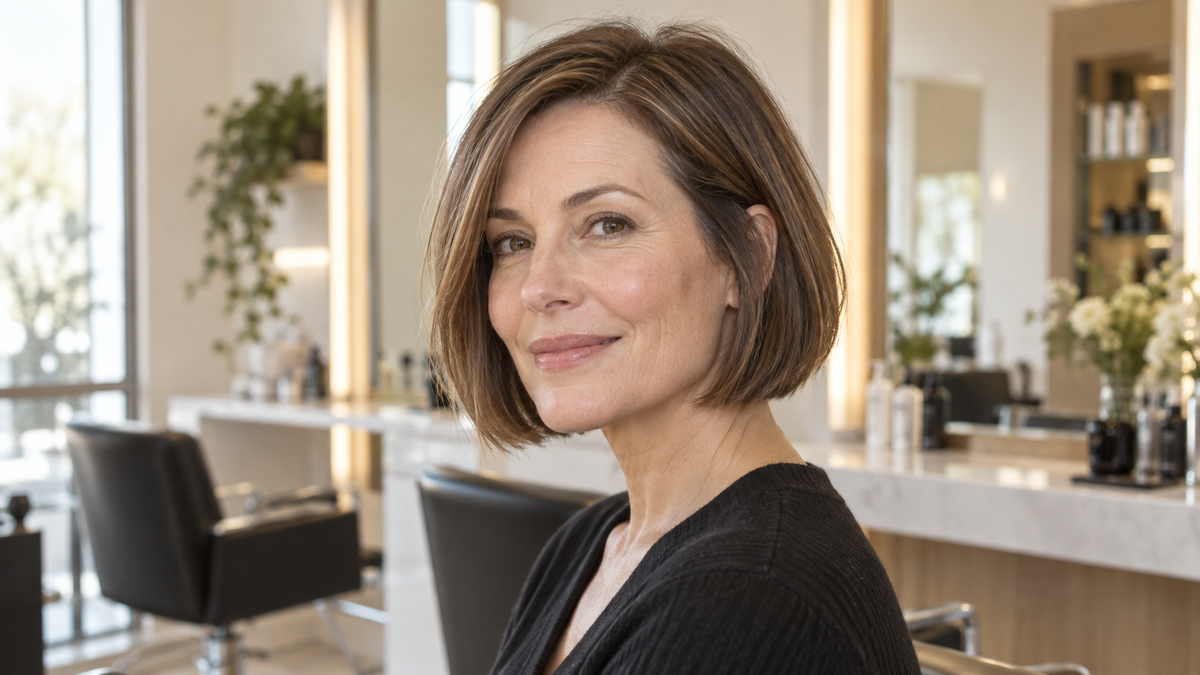
This image is an illustrative hairstyle reference, not an actual client result or a measurement of fine hair.
Fine strands, density, and hair loss are different
Before choosing a cut, describe three separate things to your stylist:
- Strand diameter: Fine strands feel small individually and can lose shape under heavy products or weight.
- Density: Density is how many strands grow across an area. Fine hair can be dense, medium-density, or low-density.
- Change over time: If you are seeing new shedding, a widening part, or a patch, that is a hair-health concern rather than a styling category.
A fine, dense head can often support more internal movement than fine, low-density hair. If you are concerned about active thinning, read the guide to haircuts for women with thinning hair rather than treating fine-hair styling advice as a solution.
What shapes tend to work well on fine hair?
A strong outline is often more useful than adding layers everywhere. A blunt bob, a collarbone lob, or a one-length midi cut keeps the ends visually connected. If you want movement, ask for selective face framing or long internal layers instead of automatically removing weight from the perimeter.
Fine hair is also not the same as straight hair. Fine waves and curls need room to bend, and a cut that looks full when brushed smooth may collapse or expand when worn in its natural pattern. Ask to see the shape on dry hair and discuss whether the cut will be air-dried, diffused, or blow-dried most days.
A quick cut comparison
- Fine, dense, straight hair: For a quick blow-dry or air-dry routine, start with a blunt bob, polished lob, or one-length midi. Too much thinning can make the ends look see-through.
- Fine, medium-density, straight hair: If you enjoy a round-brush finish, consider a collarbone lob with light face framing. A long, heavy shape may fall flat at the roots.
- Fine, low-density, straight hair: For minimal styling, compare a bob or shorter lob with a strong perimeter. Short crown layers can expose more scalp or separate.
- Fine, dense, wavy hair: For air-drying or diffusing, try a soft bob or shoulder cut with a few long layers. A rigid blunt line may not follow the wave pattern.
- Fine, medium-density, curly hair: A curl-shaped bob or rounded medium cut can fit a wash-day curl routine. Discuss shrinkage before deciding the finished length.
- Fine, coily hair: Start with a shape that follows your curl pattern and has a clear outline. Explain how you usually wear it so the plan does not depend on repeated pulling at the hairline.
These are starting points, not formulas. Your stylist should adapt the angle, perimeter, and layering to your growth pattern and the way your hair dries.
Five silhouettes to compare
1. The blunt bob
A jaw-length or just-below-chin bob gives fine strands a clear edge. It is especially straightforward on straight hair because the baseline stays visible. Ask whether your natural wave needs a tiny amount of graduation so the line does not kick out.
2. The collarbone lob
A lob keeps more length while removing ends that no longer feel substantial. It is a useful middle step if a short bob feels too big a change. Keep the face framing long enough to blend into the perimeter, and test whether the length drags down your roots before adding layers.
3. The one-length midi
A cut between the shoulders and upper chest can be low maintenance when your hair is dense enough to carry the length. It works well for someone who wants to tie hair back occasionally. Keep the shape simple and soften only the final edge if you do not want a severe line.
4. A soft, selective layered cut
Fine, dense hair can benefit from a few long layers that create movement without breaking up the bottom. Ask where the shortest layer will sit and how the cut will look without a blowout. Layer placement should follow your texture, not a generic diagram.
5. A short crop or bixie
Shorter hair can feel lighter and more intentional, particularly when long ends lie flat. A bixie leaves more length on top than a traditional pixie, giving you options for a side sweep or soft fringe. Ask how cowlicks and the nape will behave between trims.
Styling choices matter as much as the cut
Fine strands often prefer light products used sparingly. A root spray or mousse can support lift, while heavy oils and rich creams may make the shape collapse sooner. That is not a reason to avoid conditioning; it is a reason to match the amount to your hair and wash schedule.
Try the cut in the way you will actually wear it. If you do not want daily heat, ask for an air-dry version. If you like a polished finish, confirm how long a round-brush blow-dry takes and what happens on day two. A haircut that only works after a long appointment is not low maintenance just because it is short.
Questions to take to your stylist
Bring a clear reference and ask:
- “Is my main issue fine strands, lower density, or both?”
- “Where will the perimeter sit when my hair is dry?”
- “How much weight would layers remove from the ends?”
- “Can I wear this shape in my natural texture?”
- “What will it look like as it grows for the next six to eight weeks?”
- “Does this plan require heat or product every morning?”
If you have sudden shedding, scalp symptoms, or a rapidly changing part, arrange medical advice as well. A stylist can shape your hair, but a dermatologist is the right professional to assess a hair-health concern.
Preview the silhouette before you commit
When the decision is between a bob, lob, and longer cut, a visual comparison can make the choice less abstract. Naee lets you preview hairstyle directions on your own photo, compare lengths, copy a reference look, and explore hair color or an AI Hair Consultant conversation. Use the result as a planning reference, not a promise of how every fine strand will behave. Your stylist still needs to assess your real texture, density, current length, and upkeep preferences.
Download Naee for iPhone (free download, in-app purchases) →
FAQ
Is fine hair the same as thinning hair?
No. Fine hair means each strand has a small diameter. Thinning or low-density hair means fewer strands are present in an area or the amount has changed. A person can have fine, dense hair or coarse, low-density hair.
Are layers good for fine hair?
They can be, especially when fine hair is dense or naturally wavy. Long, selective layers add movement while preserving the perimeter. Many short layers can remove the visual weight you want at the ends, so discuss the shortest layer and your natural texture first.
Is a blunt cut always best for fine hair?
Not always. A blunt bob or lob can give straight fine hair a strong outline, but curly and wavy hair may need a texture-aware shape. Density, shrinkage, and your styling routine matter more than the label “blunt.”
Can an app tell me which haircut will make my fine hair look fuller?
An app can help you compare visible silhouettes on your own photo. It cannot measure every strand, predict movement, or replace a stylist’s assessment. Use a Naee preview to shortlist ideas, then ask a stylist to adapt one to your density and texture.