
Fall and Winter Hair Colors 2026: Shades That Carry You From Copper to Cold Months
The easiest fall and winter hair colors are the ones that sit one or two steps from your natural base: copper or auburn if you already run warm, chocolate or mushroom brown if you want depth without commitment, and cool espresso or soft black if you like contrast. Pick by skin undertone first, then by how often you can realistically get to the salon. A color you love in October should still look intentional in January, after a few washes and a lot of dry indoor heat.
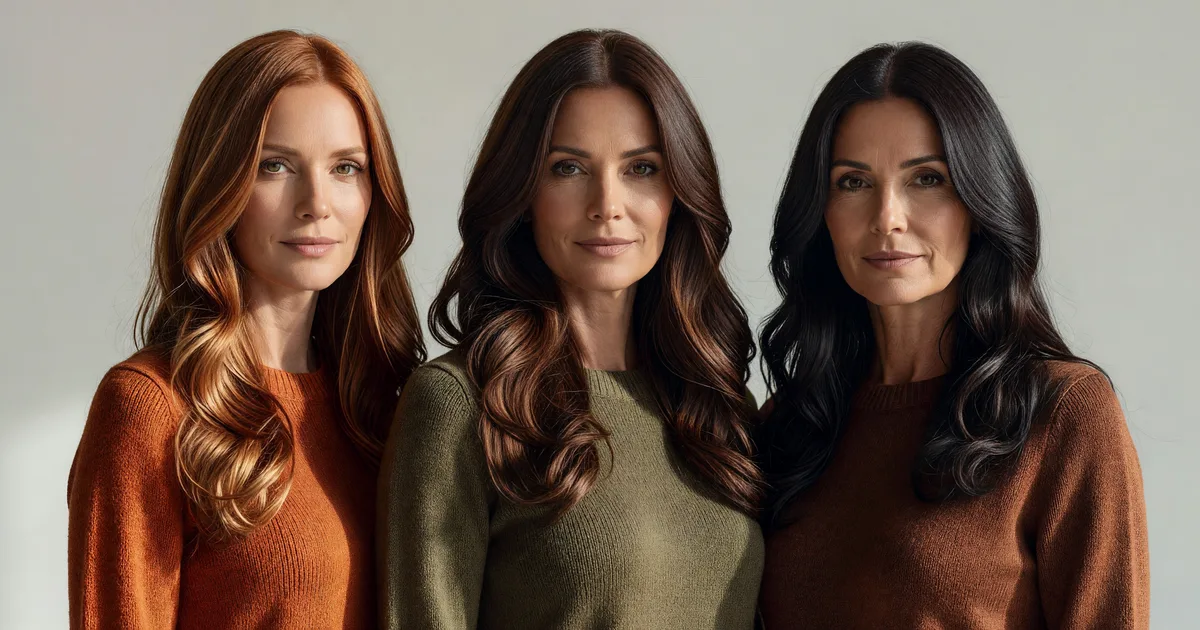
Generated editorial illustration, not Naee output or an actual hair color result. The three shades represent a range of seasonal depth, not a recommendation for any person.
Seasonal color is less about following a single trend and more about shifting your existing color a little warmer, deeper or glossier as the light changes. This guide walks through the shades people ask for most in the colder months, how to match them to your skin and routine, and how to plan a color that fades gracefully from fall into winter.
Publisher disclosure: This is the Naee blog, and we have a commercial interest in Naee. We have not tested these shades in the app or run a color-matching study. All images below are original generated editorial illustrations of hypothetical adults, not customer results.
Contents
- Why hair color shifts in fall and winter
- Copper and auburn
- Chocolate brown and mushroom brown
- Cool espresso and soft black
- Expensive brunette and warm blonde to winter honey
- Choose by skin undertone
- Choose by maintenance
- Gray blending for fall and winter
- Planning the fade from fall to winter
- Preview the color on your own photo first
- FAQ
Why hair color shifts in fall and winter
Most people do not change their whole color in autumn. They deepen it, warm it or add gloss. Summer often leaves hair lighter at the ends from sun and swimming, and brassier than planned if it is lifted blonde. Going into fall, a stylist can use that as a starting point: a gloss to tone down brass, a root shade to soften regrowth, or a richer all-over color that hides uneven ends.
Winter brings its own conditions. Daylight is shorter and cooler, clothing gets darker, and indoor heating dries hair out. Shades that looked bright in July can look flat or dull under gray skies, which is part of why deeper browns and richer reds feel natural this time of year. Dry hair also shows faded color more quickly, so gloss and moisture matter more than they did in summer.
If you want the broader picture of what is popular this year beyond the cold months, see hair color trends for 2026. This guide narrows that down to shades that work from October through February.
Copper and auburn
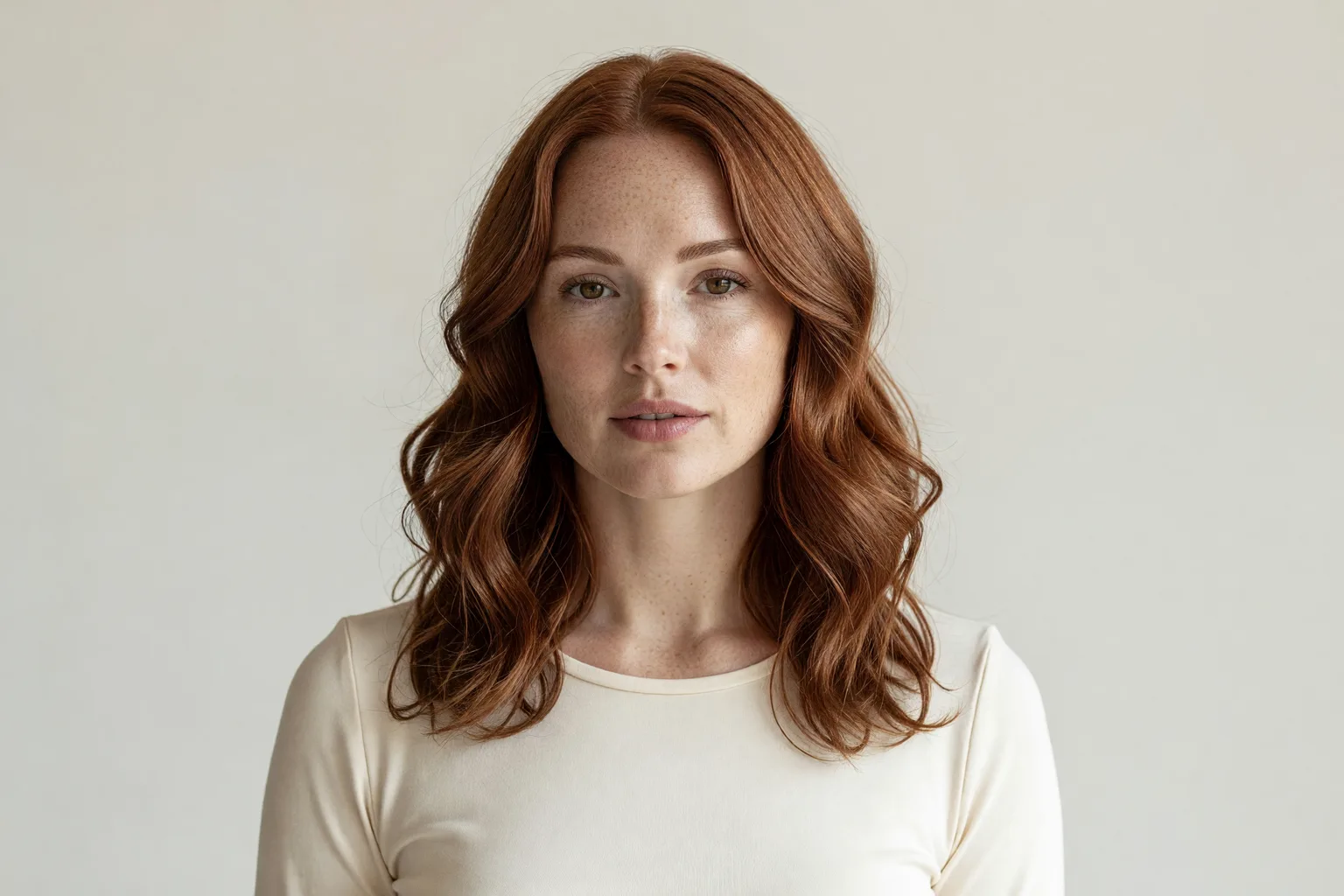
Generated editorial illustration, not Naee output or a real transformation. Copper and auburn read differently on every base and skin tone.
Copper is orange-led red; auburn is red-brown with more depth. Both are classic fall choices because they echo autumn leaves and look warm against knitwear and camel coats.
Copper suits people with warm or neutral undertones who already have some gold or red in their natural color. On a light or medium blonde base it can be reached without much lift. On darker hair, a stylist will usually need to lighten first, which raises the commitment and the maintenance.
Auburn is often the gentler entry point. It adds warmth without going fully bright, and it sits well on medium to dark brown bases. Ask for a "soft auburn" or "brown auburn" if you want something that reads as a rich brunette indoors and shows red mainly in sunlight.
Things to know before you book:
- Red pigment tends to fade faster than brown. Expect the shade to soften within a few weeks, especially if you wash often or use hot water.
- A color-depositing conditioner or a gloss between visits can stretch the result.
- Going from copper back to brown later is usually easier than going from copper to pale blonde.
Chocolate brown and mushroom brown
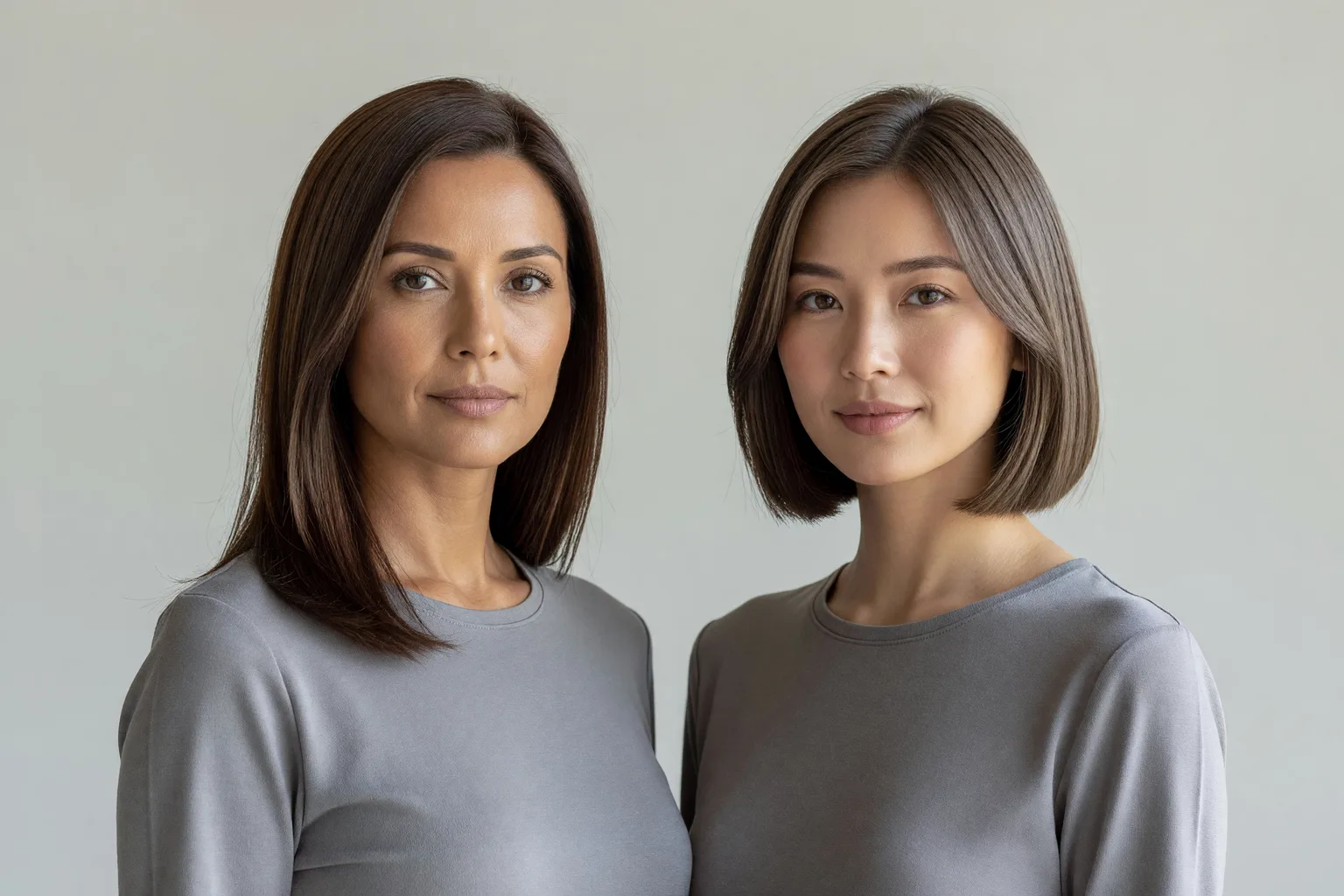
Generated editorial illustration, not Naee output. The pair shows a warm brown and a cool brown on different hypothetical adults, not a same-person comparison.
Chocolate brown is a rich, warm-to-neutral brown; mushroom brown is a soft, ashy brown with gray-beige tones. They are opposite ends of the brunette family and both are popular when people want to go darker for the season.
Chocolate brown works well if you are coming off summer highlights and want to bring the ends closer to your root color. It adds shine, covers some brassiness and grows out softly on natural brown bases. It tends to suit warm and neutral undertones, though a neutral chocolate can work on most people.
Mushroom brown is a good option if your skin leans cool or olive, or if warm brown tends to turn orange on you. Ash tones fade toward warmer shades over time, so mushroom brown often needs a toner or gloss to stay cool. It also blends nicely with early grays, which we cover below.
If you are torn between adding dimension with lighter pieces or going all-over, the balayage vs highlights guide explains how each placement grows out, which matters a lot when you are deciding how dark to go.
Cool espresso and soft black
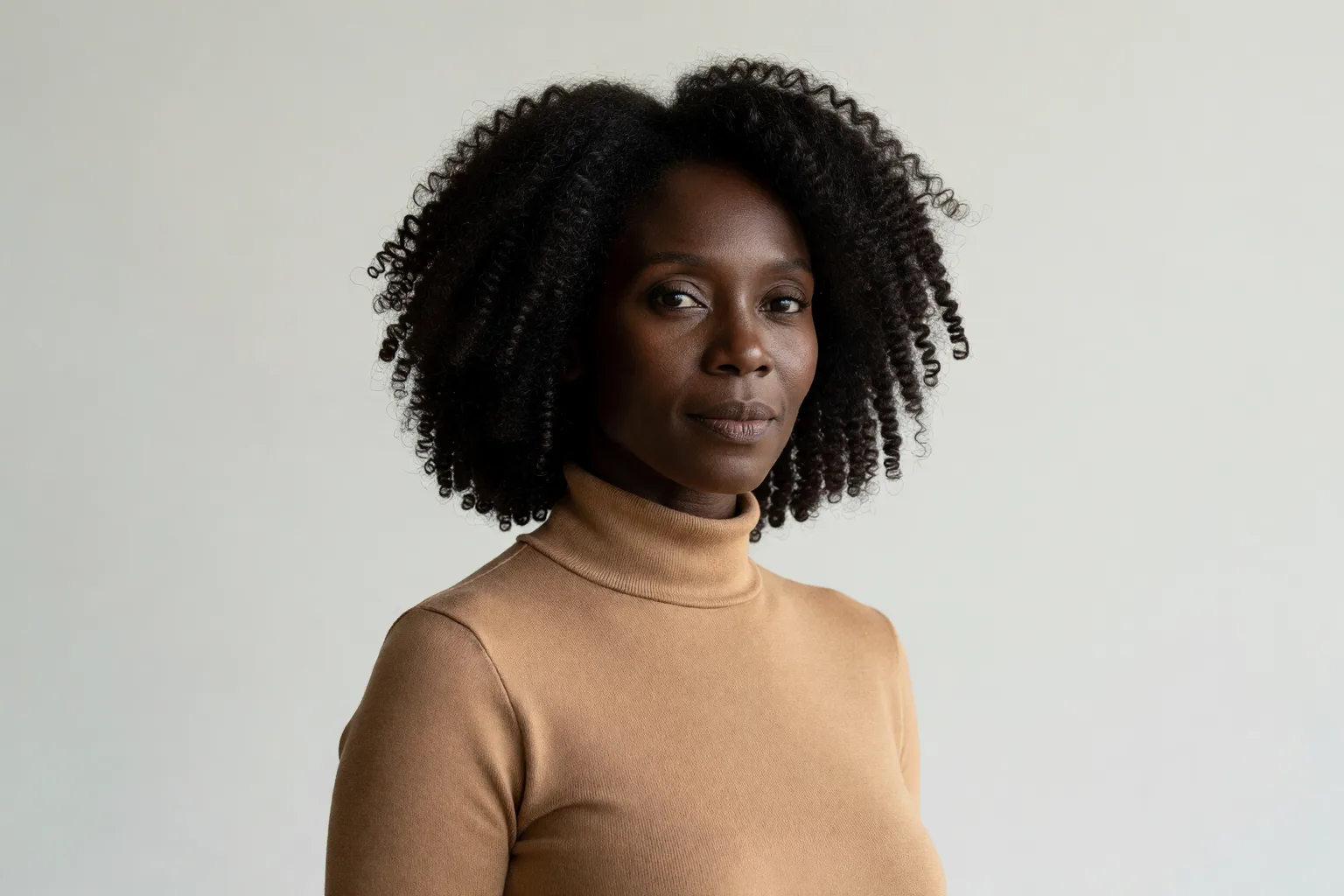
Generated editorial illustration, not Naee output or a real color result. Deep shades show shine and texture more than lighter ones.
Cool espresso is the darkest brown before black; soft black is black with a slightly diffused, less inky finish. Both suit winter well because they look glossy under low light and pair with dark clothing.
Cool espresso is a good step if you want depth but worry that true black will look too harsh. It has a hint of brown that softens the edges around the face. It suits many deep and medium skin tones and also gives fair skin a striking contrast if that is the look you want.
Soft black keeps the drama of black while avoiding the flat, single-tone look of jet black box dye. Ask your stylist about a soft black with a touch of brown or blue-black depending on your undertone.
The trade-off with very dark colors is the exit. Dark artificial pigment is harder to remove than it is to apply. If you might want to be lighter by spring, tell your stylist now. They may suggest a demi-permanent formula or a slightly lighter espresso so you have more options later.
Expensive brunette and warm blonde to winter honey
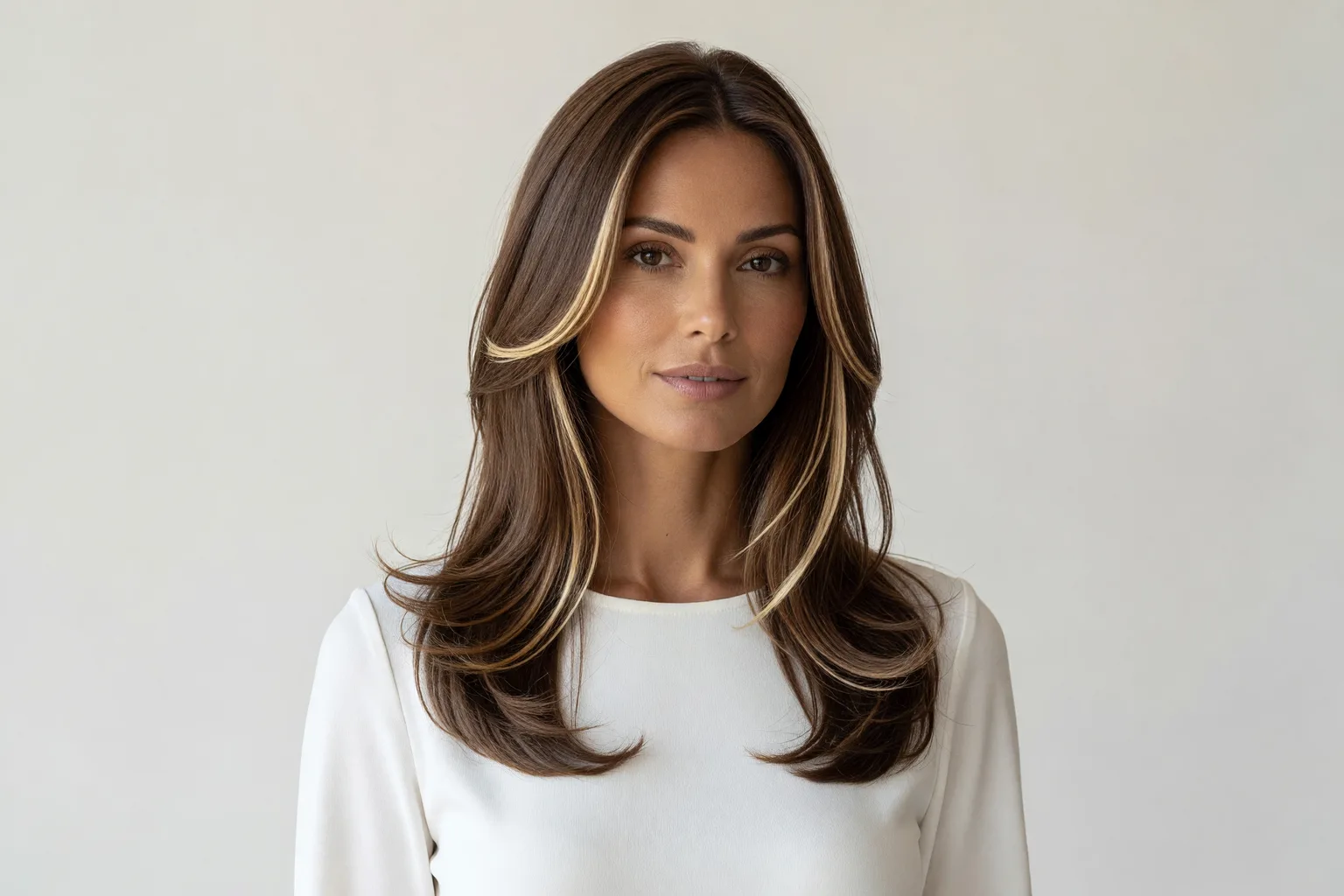
Generated editorial illustration, not Naee output. Face-framing ribbons are one placement option among several.
"Expensive brunette" means a glossy, multi-tonal brown with soft dimension and no harsh lines. It is less a single shade and more a finish: a deeper root, slightly lighter mid-lengths and a few fine brighter pieces, all toned so nothing looks brassy or stripy. It reads as polished and grows out gently, which is why it suits people who want a low-drama salon schedule.
For blondes, the usual cold-weather shift is from bright summer blonde to winter honey. That can mean:
- Adding a slightly deeper root shadow so regrowth looks planned.
- Toning brassy ends to a warm golden honey rather than chasing icy platinum.
- Placing a few lowlights through the mid-lengths to add depth under winter light.
Winter honey is a good choice for warm and neutral undertones and for anyone who wants to stay blonde without monthly lightening. If you love cool blonde, a beige or sand blonde can give a similar softened effect while keeping a cooler tone.
Choose by skin undertone
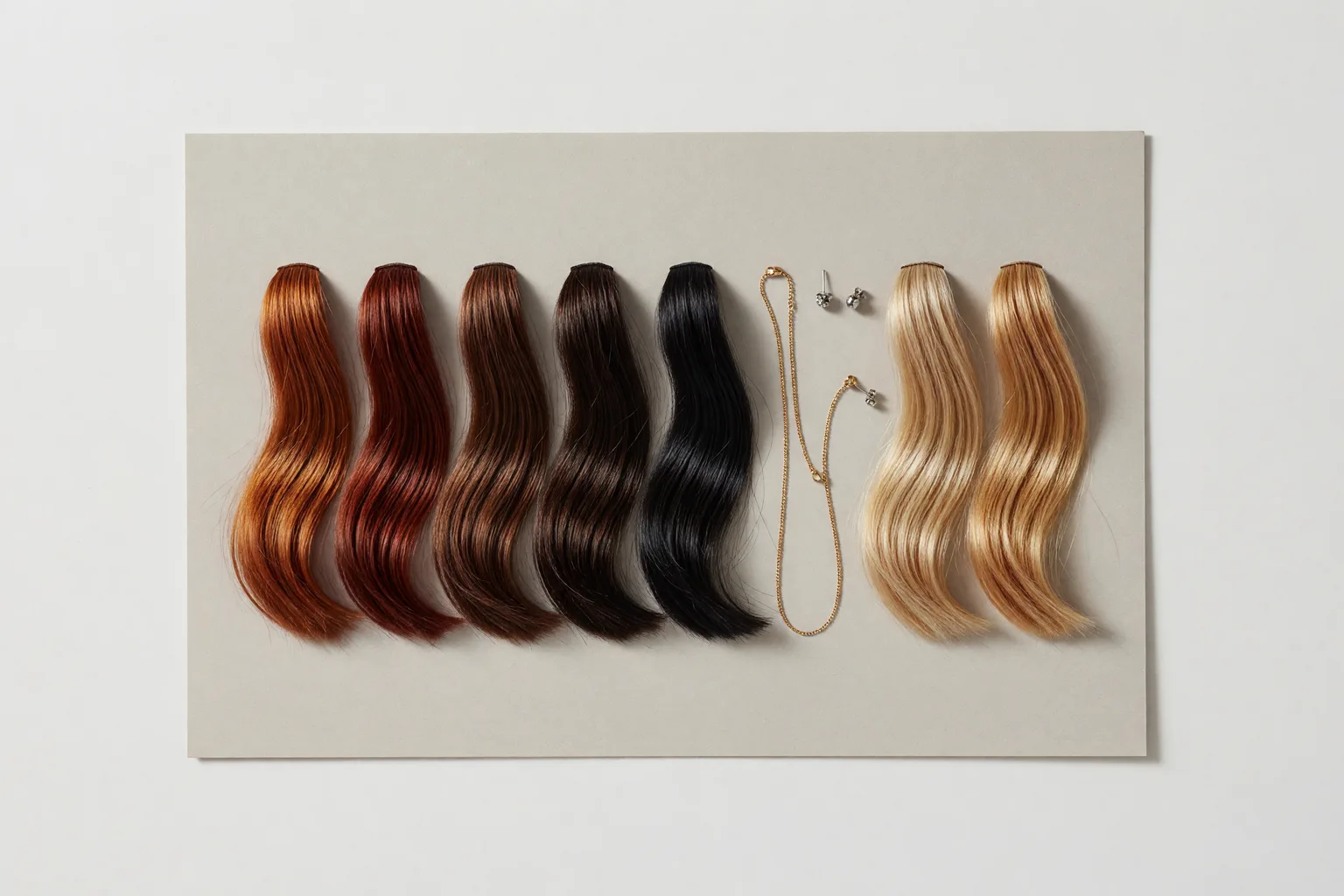
Generated editorial illustration. Jewelry and swatches are a starting conversation, not a test.
Undertone is the color beneath the surface of your skin, and it stays the same even when you tan. It is a useful filter, not a rule. Plenty of people wear shades outside their "category" and look great.
A few quick checks people use at home:
- Jewelry: Does gold or silver look better next to your face? Gold often points to warm, silver to cool, and both to neutral.
- White fabric: Bright white can flatter cool undertones; off-white or cream can flatter warm ones.
- Veins in daylight: Greenish suggests warm, bluish or purple suggests cool, a mix suggests neutral. This one is unreliable for many people, so do not rely on it alone.
Once you have a rough idea, use it as a starting point:
| Undertone | Shades that often sit easily | Shades to approach with a tweak |
|---|---|---|
| Warm | Copper, auburn, chocolate brown, warm blonde, winter honey | Ashy mushroom brown (ask for a neutral version) |
| Cool | Mushroom brown, cool espresso, soft black, beige blonde | Bright copper (ask for a cooler red or burgundy-leaning auburn) |
| Neutral | Expensive brunette, chocolate brown, soft auburn, honey | Very extreme ash or very orange copper |
| Olive | Mushroom brown, espresso, soft black, deep chocolate | Gold-heavy blonde that can pull the skin greener |
Your natural base, eye color and the clothes you wear most also matter. A stylist will look at all of these together, which is why a quick consultation is worth more than any online quiz.
Choose by maintenance
The most flattering color is the one you can keep looking good between appointments. Before choosing a shade, be honest about how often you can visit the salon and how much time you want to spend on at-home care.
| Maintenance level | Good options | What it usually involves |
|---|---|---|
| Low | Chocolate brown close to your natural base, expensive brunette, soft balayage | Visits every few months, gentle shampoo, occasional gloss |
| Medium | Auburn, mushroom brown, winter honey with root shadow | Gloss or toner between color appointments, color-safe products |
| High | Bright copper, icy or cool blonde, jet black over a lighter base | Frequent refreshes, toning, root touch-ups every few weeks |
Simple habits help every option last longer:
- Wash with lukewarm rather than hot water.
- Use a sulfate-free, color-safe shampoo.
- Add a weekly mask, since indoor heating dries hair.
- Use heat protection before styling.
- Consider a gloss appointment halfway between color visits.
Your hair type changes the picture too. Fine hair can grab color quickly and fade quickly. Dense or coarse hair may need longer processing and can hold pigment longer. Curly and coily hair benefits from extra moisture because lightened curls can lose definition when dry.
Gray blending for fall and winter
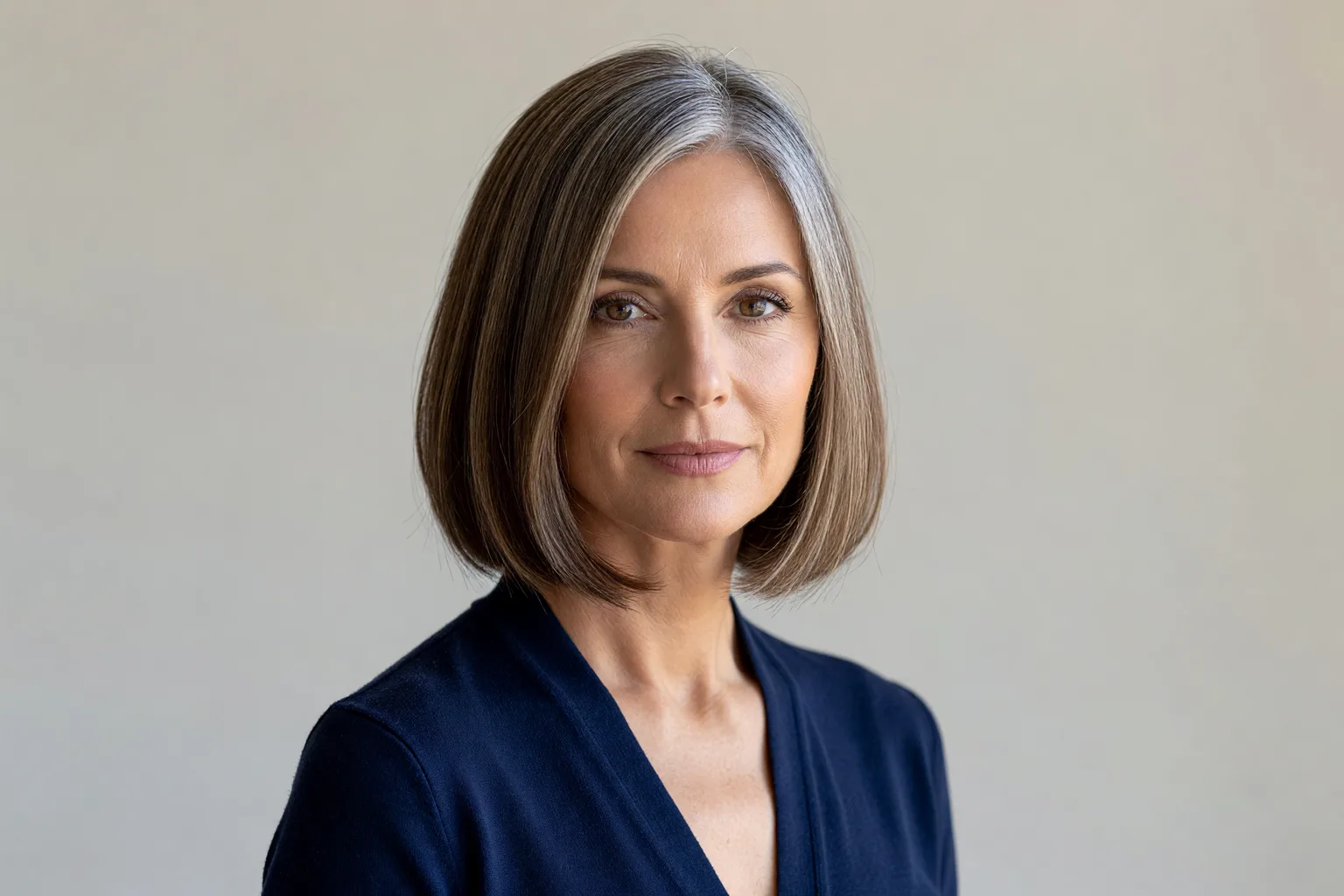
Generated editorial illustration, not Naee output or a real result. Blending looks different depending on how much gray you have and where it grows.
Gray blending softens the line between natural gray and color instead of covering every strand. It is a popular choice for women who are tired of root touch-ups every three or four weeks, and it works especially well with fall and winter shades.
Approaches stylists often use:
- Lowlights: Darker strands woven through gray add depth without full coverage. Mushroom brown and soft ash shades blend especially well.
- Highlights: Fine lighter pieces make gray look like intentional brightness. This works when your base is already light to medium.
- Demi-permanent gloss: A sheer color that softens gray rather than hiding it completely, and fades without a hard regrowth line.
- Warm blending: Soft honey or caramel tones can make gray look warmer if silver feels too cool against your skin.
If you have been covering gray with very dark color, moving to blending usually takes more than one visit. Ask your stylist for a plan with realistic steps. The same advice applies if you are thinking about going fully silver later: tell them, so they can choose formulas that make the transition easier.
Planning the fade from fall to winter
A smart seasonal color is chosen with its faded version in mind. Most salon color looks its brightest in the first week and settles over the next month. That is not a problem if you plan for it.
Here is a simple way to think about the season:
- Early fall (September to October): Start with your richest shade. Copper, auburn and warm chocolate look their best now, and the fade into a softer tone carries you into November.
- Late fall (November): Refresh with a gloss rather than a full color. You can push the tone slightly deeper or cooler at the same time, for example shifting copper toward auburn, or chocolate toward espresso.
- Winter (December to February): Go deeper or glossier if you want contrast with darker clothing, or let the color soften naturally if you are planning to lighten up in spring.
Questions to ask your stylist at the first appointment:
- What will this shade look like after four to six weeks?
- Will my regrowth be obvious, and when?
- If I want to go lighter in spring, what does this formula make easier or harder?
- Is a gloss enough for a mid-season refresh, or will I need full color?
The answers help you avoid a common winter disappointment: a bright fall shade that faded to something brassy or flat by the holidays.
Preview the color on your own photo first
A swatch on a card or a stranger's photo cannot show how a shade sits next to your own skin, eye color and haircut. Seeing the idea on your face first makes the salon conversation easier, because you can point to what you like and what you do not.
The hair color preview guide for 2026 explains how to use a photo-based preview well: good lighting, a neutral expression and a realistic idea of what any generated image can and cannot show.
The official Naee website describes previews and saving references for a stylist. If you want to see copper, auburn, espresso or winter honey on your own photo before booking, Naee for iPhone is a free download with in-app purchases. Its listing describes a trial with limited credits and continued generation through a subscription or credit purchase. This is not unlimited free generation. Check the current terms before purchasing, and treat any saved result as a conversation aid rather than proof of what your hair can achieve in one appointment.
Your next step: save one favorite shade, one safer fallback and a note on how often you can get to the salon. Bring all three to your stylist and ask them to check them against your real base color, hair history and texture before mixing anything.
FAQ
What hair color is most popular for fall?
Copper, auburn and rich chocolate brown are among the shades people ask about most in autumn, along with glossy brunettes. The right one for you depends on your base color, undertone and how much upkeep you want.
Should I go darker in winter?
You do not have to, but many people do because deeper shades look glossy under low winter light and grow out softly. If you might want to be lighter by spring, ask for a demi-permanent or slightly softer dark shade so you have more options later.
Which fall hair color is lowest maintenance?
A chocolate brown or expensive brunette that stays close to your natural base is usually the easiest. Bright copper and cool blonde tend to need the most refreshing.
Can I wear copper if I have cool undertones?
Often yes, with a tweak. Ask for a cooler red, a burgundy-leaning auburn or a muted copper. A stylist can adjust the tone so it sits better against your skin.
Does gray blending work with fall colors?
Yes. Mushroom brown lowlights, soft ash tones and warm honey highlights all blend gray well. It usually takes a few visits to move from full coverage to a soft blend.
How do I keep red hair from fading in winter?
Wash less often and in cooler water, use color-safe products, add a color-depositing conditioner and book a gloss between appointments. Red pigment fades faster than brown, so some softening is normal.