
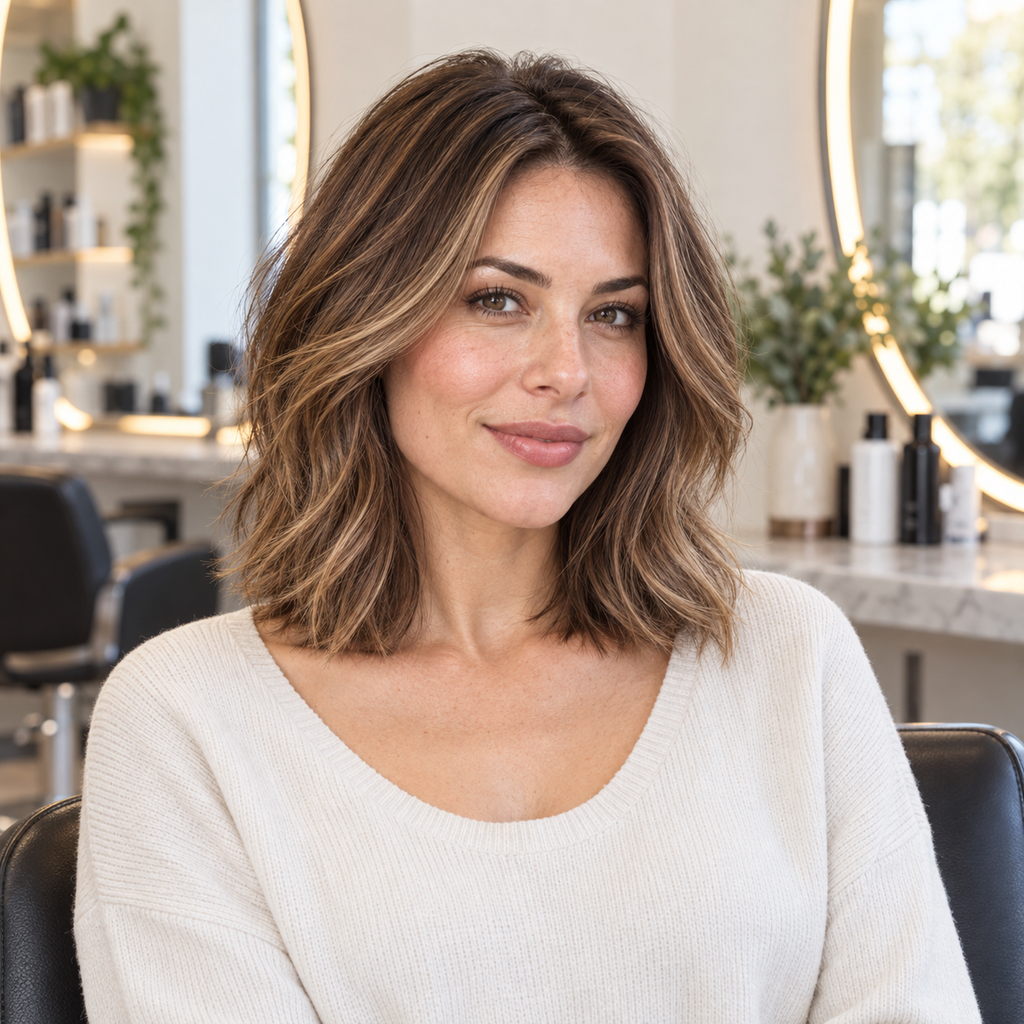
Hairstyles by Face Shape: Find the Best Cut for You
The best hairstyle for your face shape creates the balance you want without fighting your natural hair. Round faces often suit length and diagonal lines. Square faces can be complemented by soft movement. Heart and diamond faces may benefit from fullness near the jaw, while oblong faces can use fringe and side volume. Oval faces have balanced proportions that work with many cuts.
Face shape is a starting point, not a rule. Your texture, density, hairline, growth pattern, glasses, maintenance routine, and personal style matter just as much. Use this guide to build a shortlist, then preview the options and ask a stylist how each cut will behave on your hair.
Table of Contents
- How to identify your face shape
- Quick guide to hairstyles by face shape
- Hairstyles for round faces
- Hairstyles for oval faces
- Hairstyles for square faces
- Hairstyles for heart-shaped faces
- Hairstyles for diamond faces
- Hairstyles for oblong faces
- Why texture and density still matter
- How to preview a hairstyle with Naee
- What to ask your stylist
- FAQ
How to identify your face shape
Pull your hair away from your face and look straight at a mirror or a level, front-facing photo. Focus on three comparisons:
- Length versus width. Is your face close to equal in both directions, or noticeably longer than it is wide?
- The widest area. Is the forehead, cheekbone area, or jaw the broadest point?
- The jaw and chin. Do they look rounded, angular, broad, narrow, or tapered?
Use the closest description:
- Round: Length and width are similar, with full cheeks and a soft jaw.
- Oval: The face is longer than it is wide, with balanced proportions and a softly rounded jaw.
- Square: The forehead, cheekbones, and jaw are similar in width, with a defined jawline.
- Heart: The forehead is wider and the face tapers toward a narrower chin.
- Diamond: The cheekbones are the widest point, while the forehead and chin are narrower.
- Oblong: The face is clearly longer than it is wide, with relatively straight sides.
Many faces sit between two categories. You might be oval-heart, round-square, or oval-oblong. That is normal. Choose ideas from both shapes instead of forcing an exact label.
Quick guide to hairstyles by face shape
| Face shape | A useful styling direction | Cuts to consider |
|---|---|---|
| Round | Add length or diagonal lines | Long layers, angled bob, side part, layered pixie |
| Oval | Preserve balance | Bob, lob, pixie, long layers, curtain bangs |
| Square | Add softness or movement | Wavy lob, rounded layers, side fringe, soft shag |
| Heart | Add balance near the jaw | Collarbone cut, chin bob, curtain bangs, chin-level layers |
| Diamond | Balance cheekbones with softness above and below | Side fringe, soft bob, layered lob, textured pixie |
| Oblong | Add width and reduce extra height | Fringe, shoulder cut, waves, side-volume layers |
These are visual directions, not features you need to hide. If you like a bold jaw, full cheeks, a high forehead, or prominent cheekbones, choose a cut that emphasizes them.
Hairstyles for round faces
A round face is approximately as wide as it is long, with softer transitions through the cheeks and jaw. Hairstyles with vertical movement, asymmetry, or height can create a longer-looking outline. Our dedicated round-face hairstyle guide includes more examples.
Good options include:
- Long layers that begin below the chin
- A lob or bob that falls below the jaw
- Curtain bangs that open into longer face-framing pieces
- A side part or side-swept fringe
- A layered pixie with controlled height on top
- A soft shag with less bulk at cheek level
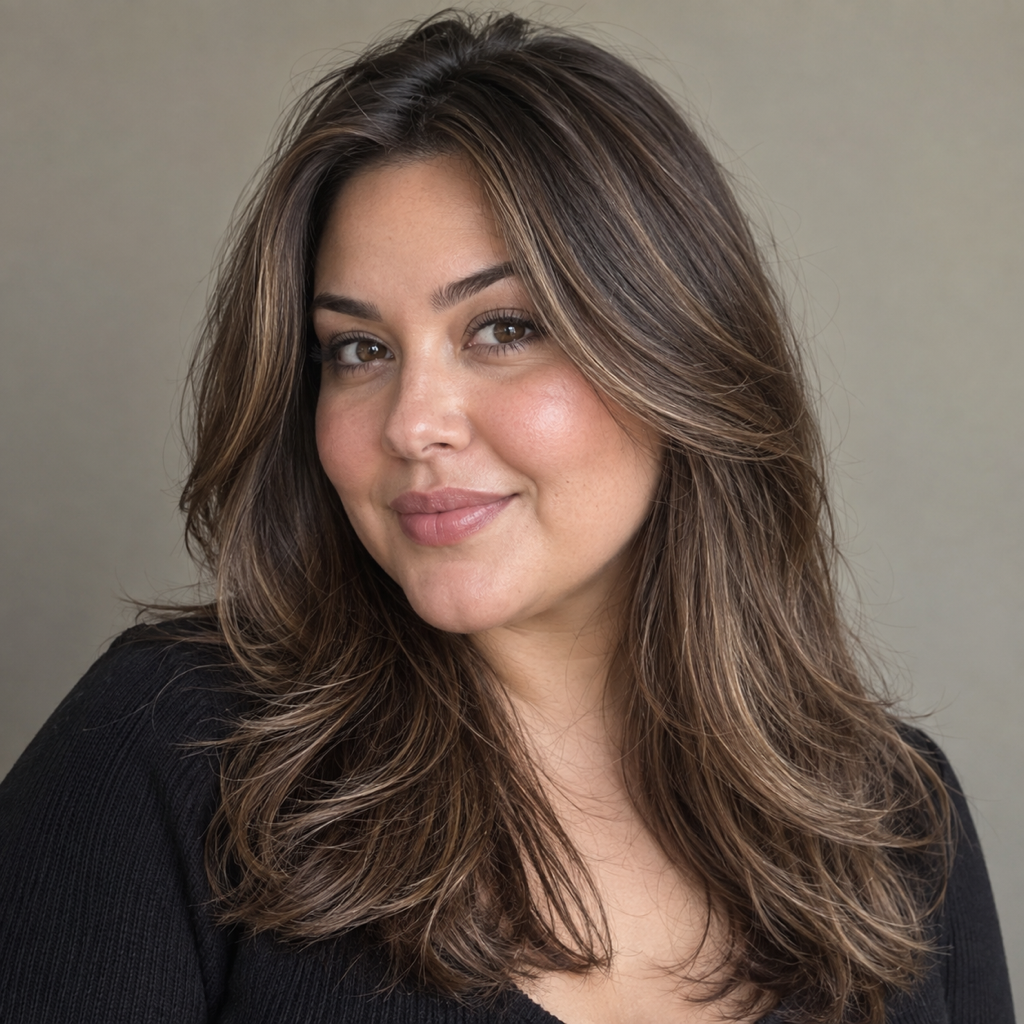
If you want to create length, ask for movement that travels downward rather than a rounded shape that stops at the widest part of the cheeks. A chin-length bob or straight full fringe can still work, but it will emphasize width rather than reduce it.
Ask your stylist: “Can we keep the face-framing layers below my cheekbones and create a little lift without adding too much width at the sides?”
Hairstyles for oval faces
An oval face is longer than it is wide, with balanced proportions and a gently rounded jaw. Most lengths can work, so hair texture, density, and maintenance are often more useful deciding factors than face shape alone.
Good options include:
- A blunt bob or collarbone lob
- A short pixie or textured crop
- Long layers with face framing
- Curtain bangs or a soft full fringe
- Natural curls or coils shaped around their existing volume
- A shoulder-length cut with minimal layering
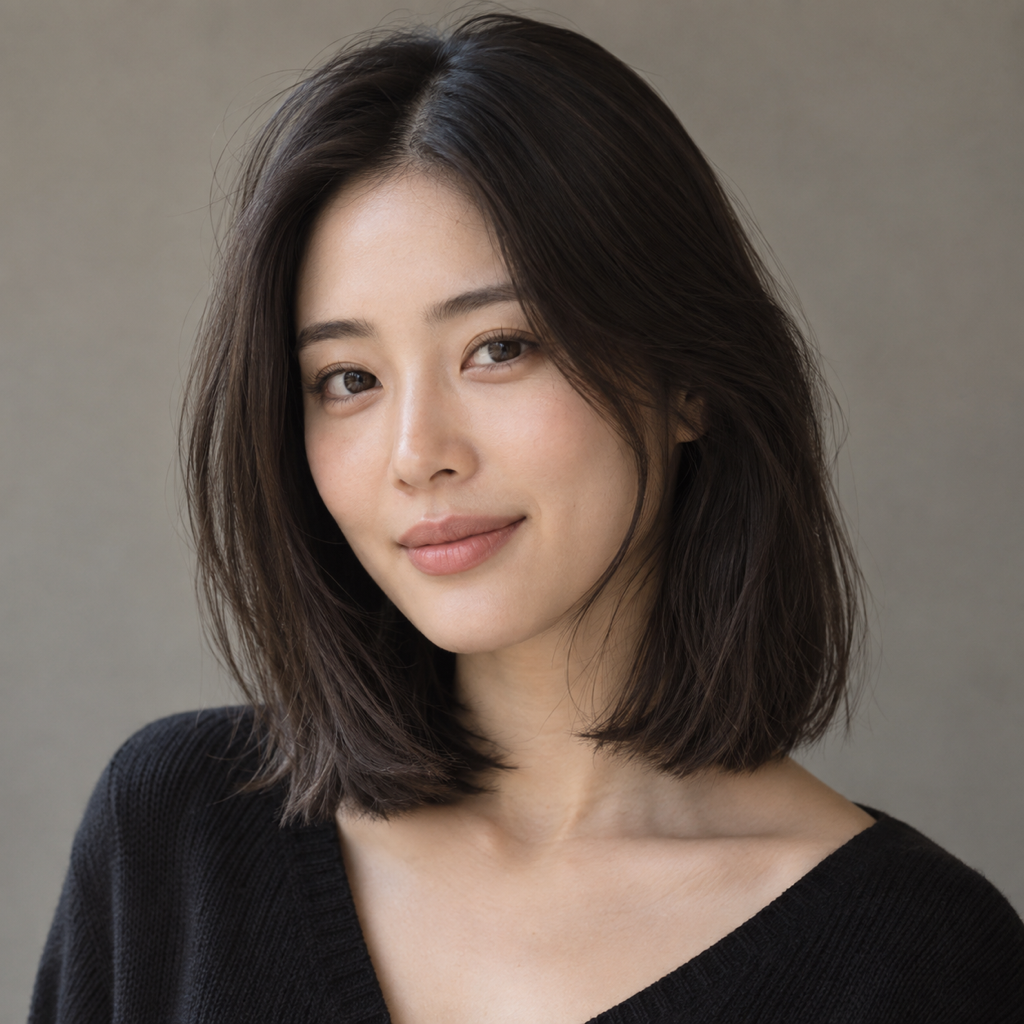
The main risk is choosing a cut from a reference photo without considering how it will behave on your hair. Very long, flat hair may make an oval face appear narrower, while excessive height can make it look longer. Neither effect is wrong if it matches the look you want.
Ask your stylist: “Which version of this cut will work with my natural texture and still look intentional when I do not heat-style it?”
Hairstyles for square faces
A square face usually has a broad forehead, defined jaw, and similar width across the forehead, cheekbones, and jaw. Soft layers, curves, and diagonal lines can complement those angles. A blunt geometric cut can also highlight them deliberately.
Good options include:
- A collarbone-length lob with soft waves
- Long, rounded layers
- A side-swept fringe
- Curtain bangs with blended edges
- A soft shag with movement around the jaw
- A layered pixie with a light, textured finish
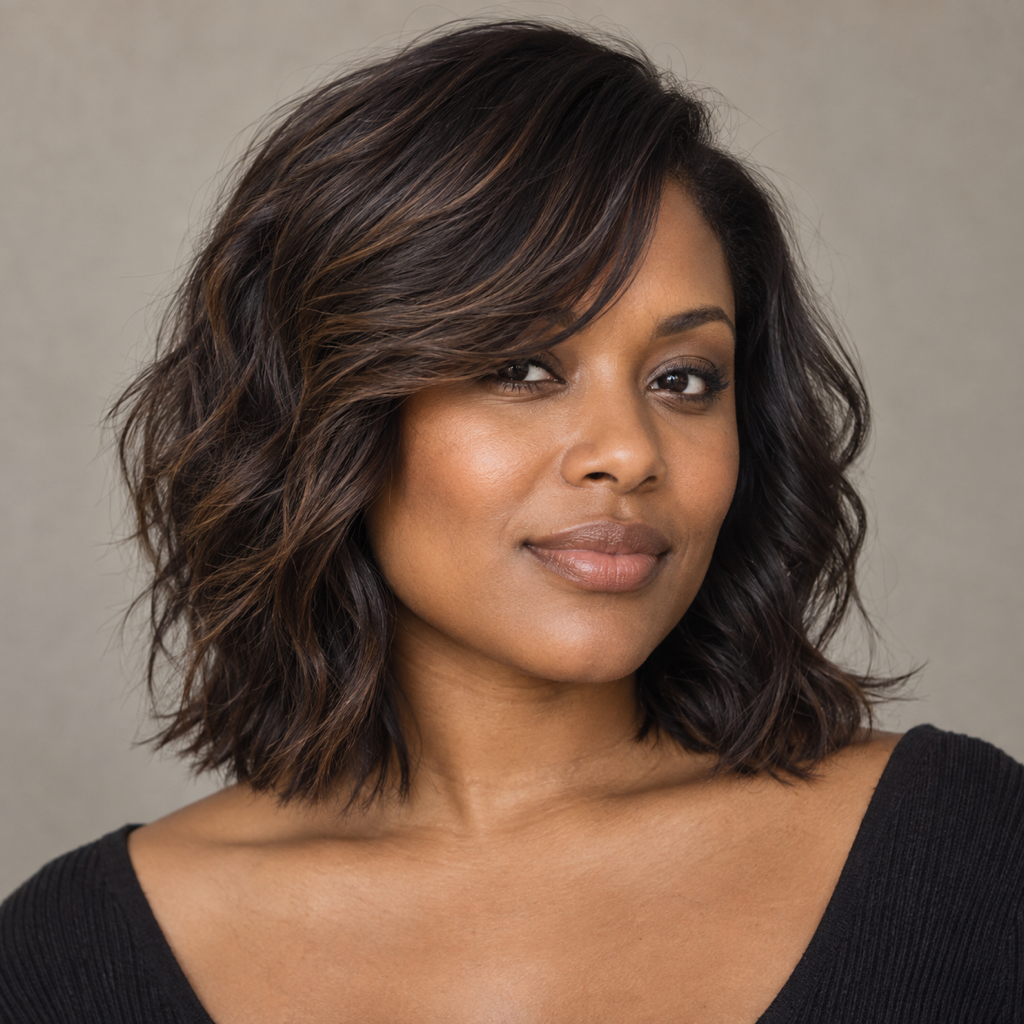
If your goal is softness, avoid placing the heaviest horizontal line directly at the widest part of the jaw. Curved ends, airy movement, and an off-center part can break up a boxy outline. If you want to showcase a strong jaw, a crisp bob or slick style can do that instead.
Ask your stylist: “Can we add movement around my temples and jaw without removing too much weight from the ends?”
Hairstyles for heart-shaped faces
A heart-shaped face is wider through the forehead and cheekbones, then tapers toward a narrower chin. Cuts that add movement or fullness around the lower half of the face can create balance.
Good options include:
- A chin-length bob with soft ends
- A collarbone cut with waves
- Curtain bangs or side-swept fringe
- Layers that begin near the cheekbones or chin
- A wavy lob with fullness toward the ends
- A soft shag that is not overly top-heavy
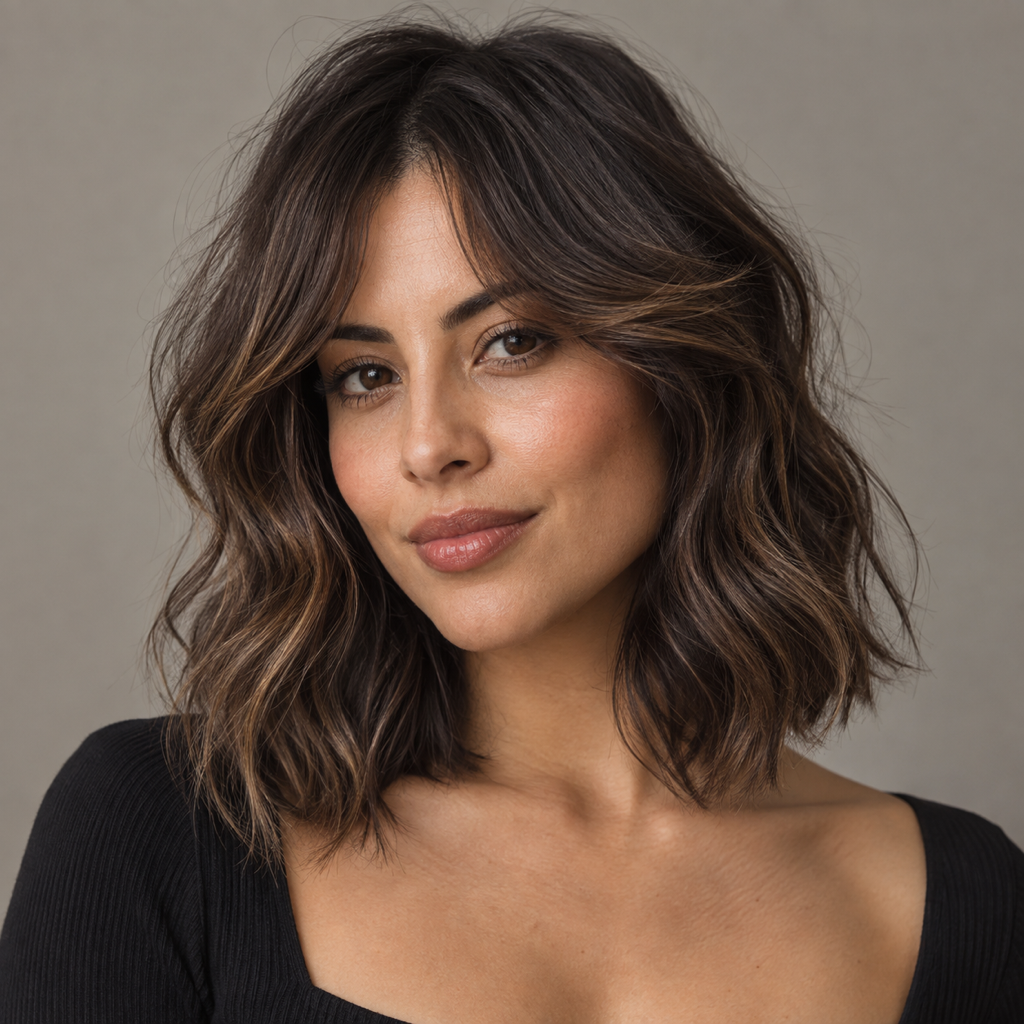
A fringe can reduce the visual width of the forehead, while chin-level movement brings attention toward the lower face. Avoid adding all the volume at the crown if your goal is balance. Fine or low-density hair may need fewer layers to keep the ends looking full.
Ask your stylist: “Can we keep softness around my forehead and place some movement near my chin without making the crown too full?”
Hairstyles for diamond faces
A diamond face is widest at the cheekbones, with a narrower forehead and chin. The cheekbones are already a strong focal point. Soft volume near the forehead and jaw can balance them without covering them completely.
Good options include:
- A chin-length softly layered bob
- A layered lob with gentle waves
- Side-swept or curtain bangs
- A textured pixie with softness near the temples
- Face-framing layers that move past the cheekbones
- Curls or coils shaped with balanced width above and below the cheeks
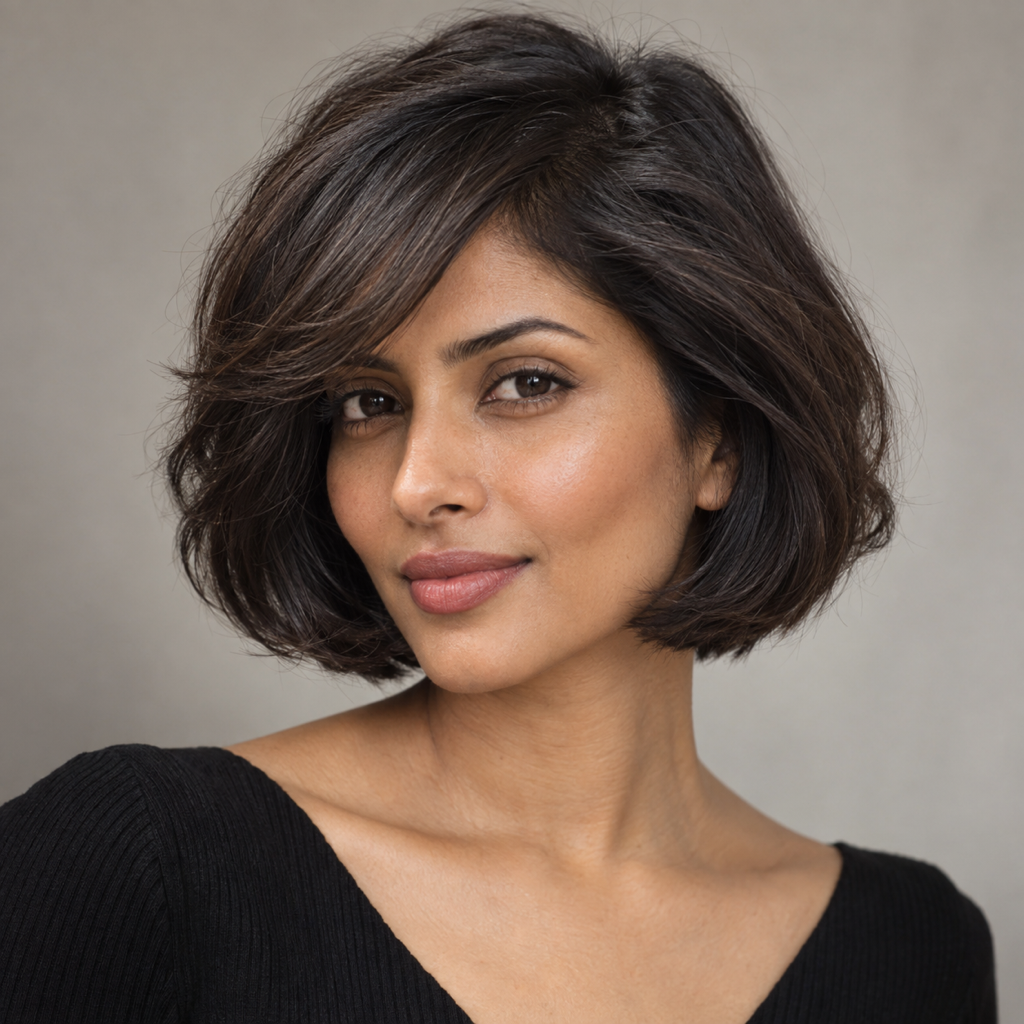
Very heavy volume directly beside the cheekbones can make the center of the face look wider. A severe slicked-back style will emphasize the cheekbones and tapered chin, which may be exactly the effect you want. Choose whether you want balance or emphasis before deciding on the cut.
Ask your stylist: “Can we keep my cheekbones visible while adding softness near my forehead and jaw?”
Hairstyles for oblong faces
An oblong face is noticeably longer than it is wide, often with a forehead, cheekbone area, and jaw that are relatively similar in width. Fringe, waves, curls, and side volume can create a wider-looking silhouette.
Good options include:
- A shoulder-length cut with waves
- A chin-length or jaw-length bob
- Curtain bangs, full fringe, or a side-swept fringe
- A layered lob with volume at the sides
- A soft shag with moderate crown height
- Rounded curls or coils shaped to keep width through the sides
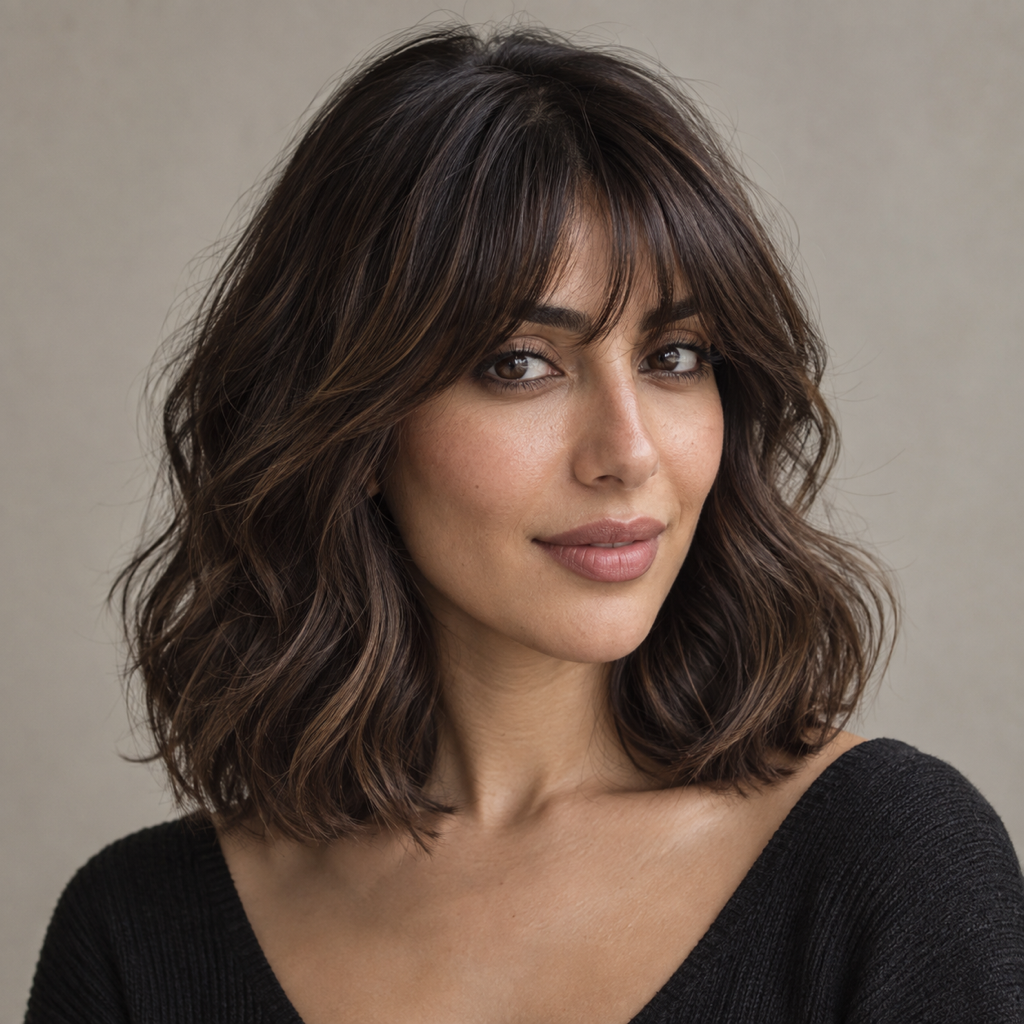
Very long, straight hair and high crown volume can make the face appear longer. If that is not your goal, keep some fullness around the cheeks and jaw. A fringe can visually shorten the forehead, but it should still suit your hairline, cowlicks, and willingness to style it.
Ask your stylist: “Can we create width through the sides and keep the top from becoming too tall?”
Why texture and density still matter
Face-shape advice describes a silhouette. It does not tell you how a cut will behave.
- Straight hair shows blunt lines and precision clearly. Small changes in length or graduation can strongly affect the outline.
- Wavy hair creates movement naturally, but the finished length may rise as the wave pattern settles.
- Curly and coily hair need shaping that accounts for shrinkage, curl pattern, and how volume changes between wash days.
- Fine hair may benefit from a stronger perimeter and controlled layering.
- Dense hair may need internal weight removal so the intended shape does not become too wide or triangular.
- Low-density or thinning hair may need fewer short layers to preserve visual weight. See our guide to haircuts for women with thinning hair.
Your normal routine matters too. A cut that needs a round-brush blowout every morning is not low maintenance if you usually air-dry. Bring reference photos that match your texture, then ask what the style will look like without salon styling.
How to preview a hairstyle with Naee
A hairstyle preview helps you compare overall shapes before making a permanent change.
- Use a clear front-facing photo. Keep your face, hairline, and jaw visible.
- Start with silhouette. Compare short, medium, and long options before focusing on small details.
- Try two directions. Test one cut that follows traditional face-shape guidance and one you simply like.
- Compare one change at a time. Change the length, fringe, or part separately so you can tell what affects the result.
- Save two or three favorites. Show them to a stylist and ask how each can be adapted to your texture and density.
Naee analyzes visible face and hair features to suggest hairstyle directions, then lets you preview options on your own photo. The result is a visual reference, not a guarantee of the final salon outcome.
For a detailed walkthrough, read how to choose a hairstyle with AI.
What to ask your stylist
Use this short brief at your appointment:
- “My face shape seems closest to ___, but I may be a blend.”
- “I want to emphasize or soften ___.”
- “My natural texture is ___, and I usually wear it ___.”
- “I spend about ___ minutes styling my hair.”
- “I need the cut to work when air-dried or minimally styled.”
- “How will this fringe work with my hairline or cowlick?”
- “Will these layers preserve enough fullness at the ends?”
- “How often will the shape need trimming?”
If you wear glasses regularly, bring them. Frames change the visual lines around the temples and cheekbones, so they are part of the overall balance.
Hair health comes first. The American Academy of Dermatology advises using care with styles that pull tightly because repeated tension can contribute to breakage and hair loss. Review its healthy hair tips if your preferred look depends on tight ponytails, braids, extensions, or pulled-back styles.
FAQ
What hairstyle suits my face shape?
Start with the shape closest to your proportions, then choose a cut that works with your texture, density, and routine. Round faces often suit length and diagonal movement. Square faces can use soft layers or intentionally sharp lines. Heart and diamond faces can add fullness near the jaw. Oblong faces often suit fringe and side volume. Oval faces work with many silhouettes.
How do I know if my face is round or oval?
A round face is close to equal in length and width, with full cheeks and a soft jaw. An oval face is noticeably longer than it is wide, with balanced proportions and a softly rounded jaw. If you fall between them, use ideas from both categories.
What is the most versatile face shape for hairstyles?
Oval faces are often described as versatile because their proportions are balanced, but every face shape can wear short, medium, or long hair. The cut details, texture, and styling direction matter more than following one fixed list.
Should I choose bangs based on face shape?
Face shape can help you choose the visual effect. Curtain or side-swept bangs create diagonal lines, while a full fringe creates a stronger horizontal line and can visually shorten a long face. Hairline, cowlicks, texture, and daily styling matter just as much.
Can a hairstyle change my face shape?
A hairstyle does not change your physical face shape, but it can change the surrounding silhouette. Length, fringe, part placement, and volume can make the face appear longer, wider, softer, or more angular.
Can AI tell me which hairstyle suits me?
AI can suggest and preview hairstyle directions based on visible features, but it cannot fully predict how your hair will move, shrink, or respond to a cut. Use the preview to create a shortlist, then ask a stylist what is realistic for your hair.
Choose the effect, not just the label
Identifying your face shape gives you useful vocabulary, but the better question is what you want your haircut to do. Decide whether you want more length, softness, width, structure, or emphasis. Then choose a version that respects your natural texture and everyday routine.
Download Naee for iPhone (free download, in-app purchases) →