
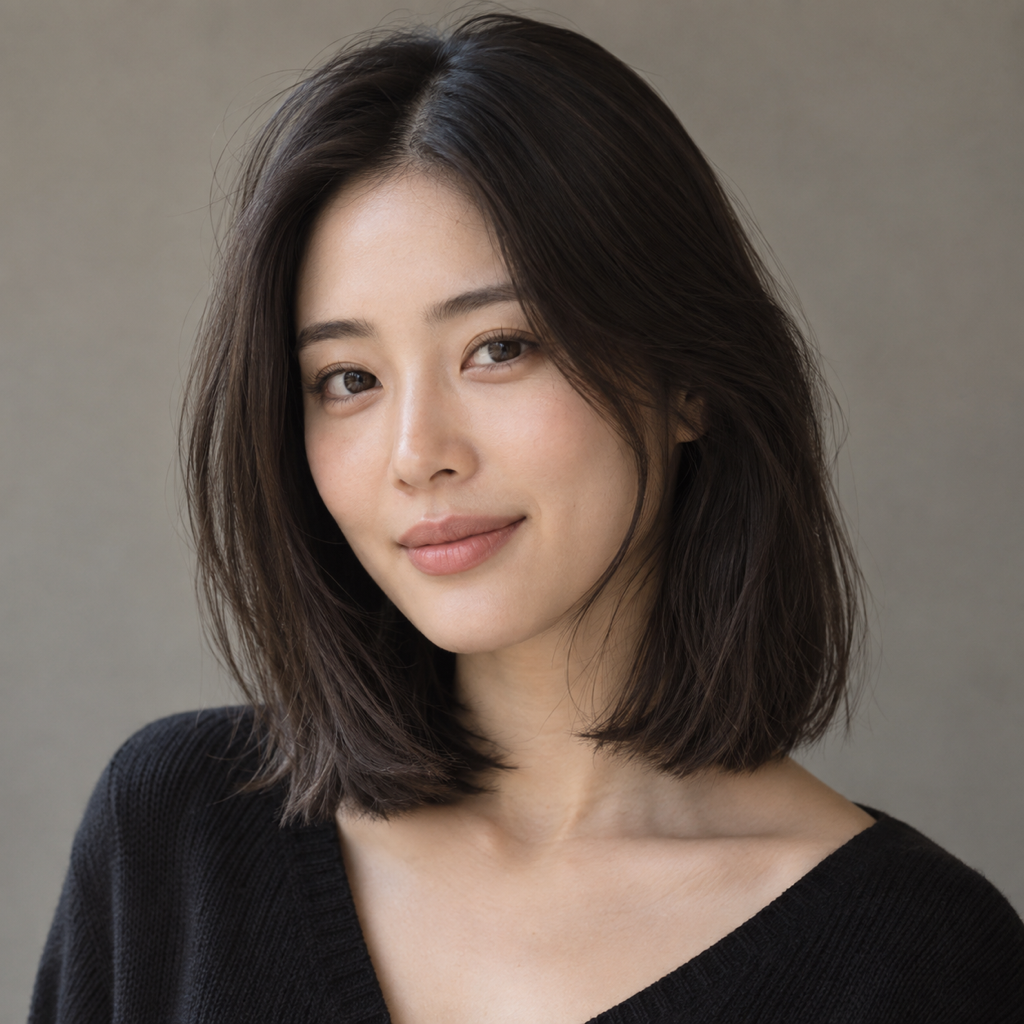
Hairstyles for Oval Faces: Choose Your Best Proportion
An oval face can support many hairstyles, so the useful question is not “What am I allowed to wear?” It is “Which proportion do I want to create?” Fringe, crown height, side volume, length, and texture can all change the surrounding silhouette. Your routine and the way your hair naturally behaves should make the final decision.
An oval face is generally longer than it is wide, with balanced proportions and a softly rounded jaw. That description is not a diagnosis. Faces can sit between oval and round, oval and heart, or oval and oblong, and a front-facing photo can change with expression, angle, and hair placement.
Oval or oblong? Use the distinction gently
An oval face usually has a balanced outline that narrows gradually from the cheekbones toward the jaw. An oblong face is noticeably longer relative to its width, often with more vertical length and relatively straight sides. The categories overlap, and you do not need an exact label to choose a haircut.
If your face looks clearly longer than it is wide and you want to create more width, consider fringe, waves, or volume at the sides. If your proportions already feel balanced, you may want to preserve that balance or intentionally add height, length, or a stronger frame. Our guide to hairstyles by face shape compares oval with the other common shape descriptions.
Choose the proportion you want
Keep the face balanced
A collarbone lob, blunt bob, shoulder-length cut with minimal layers, or long layers can preserve a balanced outline. The key is not the label but where the strongest lines land. A mostly one-length cut keeps the silhouette clear; light face framing can add movement without changing the overall proportion.
This is often a useful route when you want a dependable shape that works with your usual part and does not require a large styling routine. Fine hair may need a stronger perimeter, while dense hair may need internal shaping to keep the cut from becoming too wide.
Add height
If you like a lifted, elongated silhouette, use crown height, a lifted part, or a pixie with texture on top. Height can make the face appear longer, which may suit your style even if traditional advice says to “balance” an oval shape.
Keep the lift practical. A style that depends on teasing or a daily blowout is not low maintenance if you air-dry. Ask for a version that follows your growth pattern and still looks deliberate when the volume relaxes.
Add side volume
Waves, curls, rounded layers, and a softly textured bob can create width through the sides. This can make a long or oval-leaning face feel more grounded. On dense hair, side volume may need weight distributed carefully so the shape does not become triangular. On fine or low-density hair, too much layering can make the sides look disconnected from the ends.
Curly and coily hair need a plan for shrinkage and dry volume. Show your stylist how your hair looks on a normal day, not only stretched or freshly styled.
Create more length
Long, smooth layers, a long bob, or a center part can extend the vertical line around an oval face. Very flat, very long hair may make an oblong face appear longer, but that may be exactly the effect you like. If you prefer softness, add movement below the cheekbones or through the ends.
There is no requirement to keep an oval face visually “balanced.” Choose length because you like it, because it fits your routine, or because it supports the way you wear your hair.
Use fringe to adjust the frame
Curtain bangs
Curtain bangs open around the forehead and blend into longer face-framing pieces. They can add softness without creating one strong horizontal line. A longer version can be tucked away or blended into a lob as it grows.
Ask your stylist how the curtain will separate with your natural part. A cowlick or strong growth pattern may need a slightly different starting point than the reference photo.
Full fringe
A full fringe creates a direct horizontal frame and can visually shorten the forehead. It is useful if you want more attention around the eyes or want to reduce the amount of visible vertical length above the brows.
The fringe will need regular shaping and a realistic styling plan. Fine hair may not have enough front density for a heavy version without borrowing hair from the rest of the cut. Wavy, curly, and coily textures may need a texture-specific approach rather than a straight, dry-length reference.
Side-swept fringe
A side-swept fringe creates a diagonal line and can add movement without committing to a full horizontal edge. It often blends well with a bob, lob, or longer layers. Choose a side and length that work with your hairline and that you can refresh quickly.
No fringe, with face framing
You can create a frame without cutting a fringe. Long pieces beginning around the cheekbones, lips, or jaw change where the eye lands while preserving the ability to tie the hair back. Ask for the shortest piece to be long enough for your routine if you dislike loose sections around your face.
Match the length to your texture and density
Straight hair shows a precise baseline and part. A blunt bob or lob can look clean, while small changes in graduation are visible. If you want air-dry movement, ask for a shape that does not depend on a smooth finish.
Wavy hair can add natural side volume. The dry length may rise, and long layers may need to be placed differently from a straight reference so the shape does not become too wide or uneven.
Curly and coily hair can support rounded shapes, layered bobs, crops, and long silhouettes. Discuss shrinkage, curl pattern, and whether you want the crown, sides, or ends to carry the most volume.
Fine hair often benefits from a clear perimeter and selective layering. Fine strands can still be dense, so do not treat strand diameter and total density as the same thing.
Low-density or thinning hair may look stronger with fewer short layers and a deliberate perimeter. Our guide to haircuts for women with thinning hair explains how to preserve visual weight without pretending a cut can change the cause of hair loss.
Find the maintenance level that suits you
A short textured pixie can be easy to wash and quick to shape, but its outline may need frequent trims. A one-length lob may need less frequent shaping but can show a shoulder flip. Long layers can stretch the time between trims while requiring more hair to dry. Bangs add a separate maintenance task at almost any length.
Ask yourself:
- Do I air-dry, diffuse, blow-dry, or heat-style?
- Do I need to tie my hair back?
- How much time will I spend on the fringe or front pieces?
- Do I want a shape that grows softly or one that stays precise?
- Where do I want volume on a normal day?
The low-maintenance medium-length haircut guide can help if you want medium length with a routine-first plan. Your face shape is only one part of that choice.
What to ask your stylist
Bring a reference with a texture close to yours and describe the proportion you want:
- “I want more height at the crown” or “I want more width through the sides.”
- “I want to preserve a balanced outline.”
- “I want the face to look a little shorter or longer around the hair.”
- “Where will the face framing begin when my hair is dry?”
- “Can this fringe work with my cowlick and normal part?”
- “How will the cut look without a blowout?”
- “How much density will the layers remove?”
- “How often will the shape need a trim?”
If you are considering a style after 40, age does not change the available choices. The hairstyles for women over 40 guide focuses on current texture, density, and routine rather than age-based restrictions.
Preview the proportion, not just the trend
Use Naee to compare the same face with a bob, lob, long layers, pixie, fringe, or no-fringe direction. Try a version with more crown height and another with more side volume. Keep your reference photo clear and consistent, then save the options that show the proportion you actually like.
The preview is a visual reference, not a guarantee of how your hair will move, shrink, or settle after a cut. A stylist can adapt the idea to your current length, texture, density, hairline, and maintenance plan.
Download Naee for iPhone (free download, in-app purchases) →
FAQ
What hairstyle is best for an oval face?
Many shapes can work, including bobs, lobs, pixies, long layers, curls, coils, and shoulder-length cuts. Start with the proportion you want, then adapt the length, layers, fringe, texture, density, and routine to your real hair.
Do oval faces look good with bangs?
Yes. Curtain, side-swept, and full fringes each create a different frame. Choose based on the visual effect, your hairline and cowlicks, your texture, and how much fringe styling and trimming you want.
Is an oval face the same as an oblong face?
No, although the descriptions overlap. An oval face is generally longer than it is wide with balanced, softly rounded proportions. An oblong face is more noticeably long relative to its width and often has straighter sides. You can use ideas from both without forcing an exact label.
Should an oval face avoid height or long hair?
No. Height and long hair can make the face look longer, but that may be your preferred effect. If you want more width or softness instead, use side volume, waves, curls, or fringe.
Are layers good for oval faces?
Layers can add movement and adjust where volume sits. Long layers preserve more weight, while shorter layers create more visible shape. The right amount depends on your density, texture, and whether you want to air-dry or style the cut.
Choose the shape you want to live with
An oval face gives you room to choose, not a duty to follow a universal “most flattering” list. Decide whether you want balance, height, side volume, length, softness, or a stronger frame. Then choose a cut that creates that proportion on your actual hair and fits your normal day.