
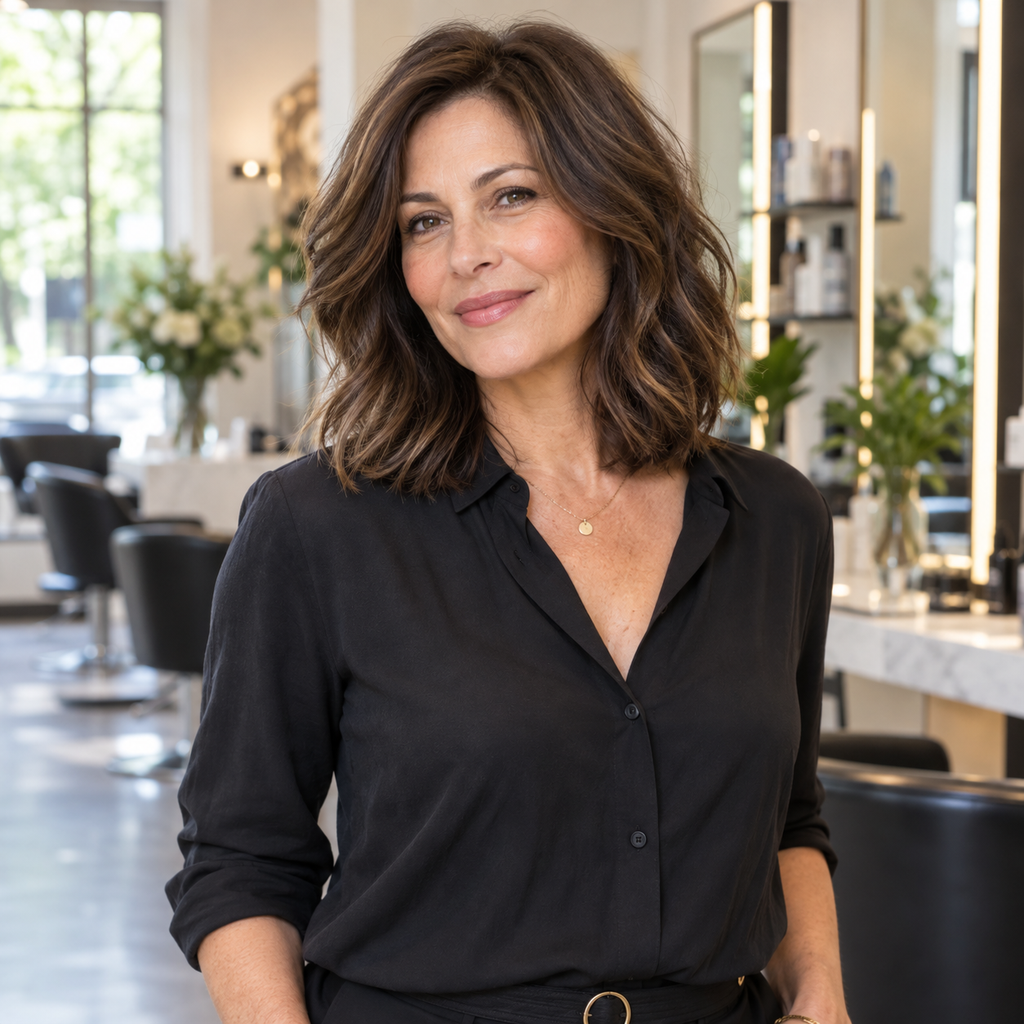
Hairstyles for Women Over 40: 12 Flattering, Modern Ideas
The best hairstyles for women over 40 are the ones that suit your hair now, reflect your style, and work on an ordinary morning. A polished bob, soft pixie, collarbone-length lob, long layers, curls, and coils can all look modern. Age does not set a required length or determine whether you should wear bangs, gray hair, or a bold cut.
The useful questions are more personal: Where do you want volume? How does your hair behave without salon styling? How much time do you want to spend on it? Use these 12 ideas to build a shortlist, then adapt the details to your face shape, texture, density, and routine.
If you want to compare several cuts before an appointment, an AI hairstyle try-on can help you see the overall shape on your own photo.
Table of Contents
- How to choose a hairstyle after 40
- 12 modern hairstyles for women over 40
- How to choose by hair texture and density
- Low-maintenance choices that still look intentional
- What to ask your stylist
- How to preview a hairstyle with Naee
- FAQ
How to choose a hairstyle after 40
Start with your hair rather than a rule about your age. A useful cut should support four things:
- Your current texture. Straight, wavy, curly, and coily hair need different shaping, weight distribution, and expectations about shrinkage.
- Your density. Fine strands can be dense, while coarse strands can have low density. Decide whether you want to preserve weight, remove bulk, or create lift.
- Your preferred routine. Be honest about whether you air-dry, heat-style, wear your hair up, or need a cut that settles quickly.
- The effect you want. Length, fringe, part placement, and volume can emphasize the eyes, soften the jaw, show the cheekbones, or create a longer or wider silhouette.
A haircut does not need to make you look younger. It should make your hair feel deliberate and make daily styling easier. If your hair has changed in texture or density, bring that up during the consultation instead of asking for a generic “age-appropriate” cut.
For more detail on proportion, read our guide to choosing hairstyles by face shape.
12 modern hairstyles for women over 40
1. Collarbone-length lob
A lob that falls near the collarbone gives you the clean shape of a bob without losing all the flexibility of longer hair. It can be worn straight, softly waved, tucked behind the ears, or tied back.
A mostly one-length baseline preserves visual weight. Add light face framing if you want movement near the cheekbones or jaw, but keep the layers controlled when the ends are fine or sparse.
2. Soft layered bob
A softly layered bob adds movement around the jaw and neck while keeping a recognizable outline. It works well when a blunt bob feels too rigid but heavily textured ends feel too thin.
Ask for layers that support your natural texture rather than layers added by default. The finished shape should still look connected when you air-dry or use minimal styling.
3. Chin-length blunt bob
A chin-length bob creates a strong, polished perimeter. It can make fine ends look more substantial and places attention around the jaw, lips, and cheekbones.
The exact length matters. A line that ends directly at the widest part of the jaw creates a different effect from one that sits just below it. Compare both before committing, especially if you wear glasses.
4. Shoulder-length cut with face framing
Shoulder-length hair offers enough length for versatility while removing worn or uneven ends. Long face-framing pieces can open the shape without turning the whole cut into short layers.
Start the framing where you want attention. Pieces near the cheekbones emphasize the middle of the face, while pieces beginning below the jaw create softer movement through the lower outline.
5. Textured pixie
A textured pixie can feel crisp, expressive, and easy to style when it follows your growth pattern. Slightly longer pieces on top give you room to create lift, sweep the fringe, or change the direction.
Ask how the cut will sit around cowlicks, the crown, and the hairline. A pixie is short, but it is not automatically maintenance-free. The shape may need more frequent trims than a lob or midi cut.
6. Bixie with a soft fringe
The bixie sits between a bob and a pixie. It keeps enough length around the top and sides for movement while creating a lighter shape through the nape.
A soft fringe can connect the front to the rest of the cut without requiring a heavy section of hair. This option suits someone who wants a noticeable change but is not ready for a close-cropped pixie.
7. Long layers with a strong perimeter
You do not need to cut long hair short after 40. Long layers can add movement while a clean baseline keeps the ends looking intentional.
Keep the shortest layers long enough to blend with the overall shape. If the bottom few inches look thin or damaged, removing some length may improve the silhouette more than adding extra layers.
8. Curtain bangs with medium-length hair
Curtain bangs create a soft frame around the eyes and cheekbones and blend naturally into medium or long layers. They can be parted in the center or slightly off-center depending on your hairline.
Discuss how the fringe behaves without a round-brush blowout. A longer version offers more flexibility and is easier to pin back or tuck away while it grows.
9. Side-swept bob
A bob with a soft side part creates a diagonal line across the face and can add lift near the front. It works with blunt, graduated, or lightly layered shapes.
Choose a part that cooperates with your natural growth pattern. A dramatic part that needs daily heat or heavy product is unlikely to feel low maintenance, even if it looks effortless in a reference photo.
10. Rounded curly cut
A rounded cut gives curls a balanced silhouette without forcing them into a straight-hair shape. Volume can sit at the sides, crown, or both depending on the proportions you want.
Discuss shrinkage, curl pattern, and how the cut changes between wash days. Bring photos of your hair in its usual state so the stylist can plan for the way you actually wear it.
11. Tapered cut for coils
A tapered cut keeps more length and fullness on top while gradually shortening the sides or nape. It creates a defined shape and can showcase coils without relying on tight styling for structure.
Decide how much contrast you want between the top and sides. Also explain how often you want to maintain the outline, because a sharp taper and a softly grown-in taper have different schedules.
12. Silver or gray midi cut
A midi cut falls between the shoulders and upper chest. It provides enough length to show natural silver, gray, or blended color while keeping the ends easy to shape.
Gray hair is not one texture. It may be fine, coarse, straight, wavy, curly, or a mix. Choose products and a cut for the way your strands behave rather than treating color as the deciding factor.
How to choose by hair texture and density
The same reference cut can behave very differently from one person to another.
Fine hair
Fine hair often benefits from a clear perimeter and selective layering. A blunt bob, lob, or shoulder-length cut can preserve visual weight, while a few longer layers prevent the shape from feeling static.
Fine hair and thinning hair are not the same. If you have noticed a change in density or a wider part, see our guide to haircuts for women with thinning hair.
Thick or dense hair
Dense hair may need internal weight removal so a bob or midi cut does not become wider than intended. Ask for a method suited to your texture, because aggressive thinning can create frizz or short pieces that are difficult to control.
Wavy hair
Waves naturally create movement, so the cut may need less layering than a straight reference photo suggests. Check where the finished length will sit after the wave pattern springs back.
Curly and coily hair
Curly and coily cuts need a plan for shrinkage, volume, and how the shape changes through the week. Look for a stylist who understands your texture and can explain where weight will be kept or removed.
Changing density
If preserving fullness is the goal, prioritize the perimeter before asking for volume through short layers. A slightly shorter cut with solid ends may look stronger than a longer cut with extensive texturizing.
Low-maintenance choices that still look intentional
Low maintenance means the cut works with your real routine, not that it never needs care.
- For air-drying: choose a shape designed around your natural texture and usual part.
- For quick styling: a lob, soft bob, or midi cut can offer a clear outline without many separate sections to manage.
- For tying hair back: keep enough length at the front and nape, and avoid face-framing pieces that constantly fall out if that bothers you.
- For fewer salon visits: longer layers and softer outlines usually grow out less visibly than a sharp pixie, precision fringe, or close taper.
- For minimal heat: ask the stylist to show how the cut sits without a blowout before leaving the appointment.
Maintenance also includes color. If you are blending gray, growing out permanent color, or keeping a high-contrast shade, ask how the cut can make the transition look deliberate between appointments.
What to ask your stylist
Bring a short brief instead of relying on a single reference photo:
- “I usually wear my hair ___ and spend about ___ minutes styling it.”
- “I want to keep or create fullness around ___.”
- “My hair feels finer, denser, straighter, or curlier than it used to.”
- “How will this cut look when air-dried?”
- “Where will the shortest layer begin?”
- “Can I still tie it back or tuck it behind my ears?”
- “How will the fringe work with my hairline and glasses?”
- “How often will I need a trim to keep the shape?”
Show what you like in each photo. You may want the length from one image, the fringe from another, and the low-maintenance finish from a third. A stylist can combine those preferences in a way that suits your hair.
How to preview a hairstyle with Naee
A hairstyle preview can help you compare noticeably different directions before your appointment.
- Use a clear, front-facing photo. Keep your face, hairline, and current length visible.
- Compare silhouette first. Try a pixie, bob, lob, and longer cut before focusing on small details.
- Change one feature at a time. Compare length, fringe, part, and color separately so you know what changes the overall effect.
- Include your natural features. Consider face shape, visible texture, density, hair color, and how you normally style your hair.
- Save two or three options. Bring the shortlist to a stylist and ask how each can be adapted to your real hair.
Naee analyzes visible face and hair features, recommends hairstyle directions, and lets you preview options on your own photo. The preview is a planning tool rather than a guarantee of the exact salon result.
For a step-by-step approach, read how to choose a hairstyle with AI.
FAQ
What is the most flattering hairstyle for women over 40?
There is no single most flattering style. A collarbone lob, soft bob, pixie, long layers, or rounded curly cut can all work. The best choice supports your texture and density, creates the effect you want around the face, and fits your normal routine.
Should women over 40 have short hair?
Only if they want it. Short hair can create a strong shape and reduce styling time for some people, but long hair can look equally polished when the ends are healthy and the cut has a clear structure.
Do bangs make you look younger?
Bangs change the visual frame around the eyes and forehead, but they are not an age rule. Curtain, side-swept, or full bangs should be chosen for your hairline, texture, face shape, and willingness to style and trim them.
Are layers good for women over 40?
Layers can add movement, shape curls, and remove bulk. Too many short layers can also reduce visual weight in fine or low-density hair. Ask where each layer will begin and how the cut will look without salon styling.
What hairstyle is best for fine hair over 40?
A blunt bob, collarbone lob, or shoulder-length cut with a strong perimeter is a useful starting point. Keep layering controlled so the ends remain substantial, then adjust the part and face framing to suit your features.
What is a low-maintenance hairstyle for women over 40?
A mostly one-length lob, soft bob, midi cut, or long shape with minimal layers can be low maintenance when it follows your natural texture. The right answer depends on whether you air-dry, heat-style, need to tie the hair back, and how often you want salon trims.
Can women over 40 wear long gray hair?
Yes. Long gray hair can be worn straight, wavy, curly, coily, layered, or mostly one length. Focus on the condition of the ends, the behavior of your texture, and a shape that works with your daily routine.
Choose the cut that works on a normal day
The right hairstyle is not the one that follows the most age-based rules. It is the one that gives your hair a useful shape, supports its current texture and density, and still feels like you. Compare a few silhouettes, decide how much styling you want, and take a clear shortlist to your stylist.
Download Naee for iPhone (free download, in-app purchases) →