
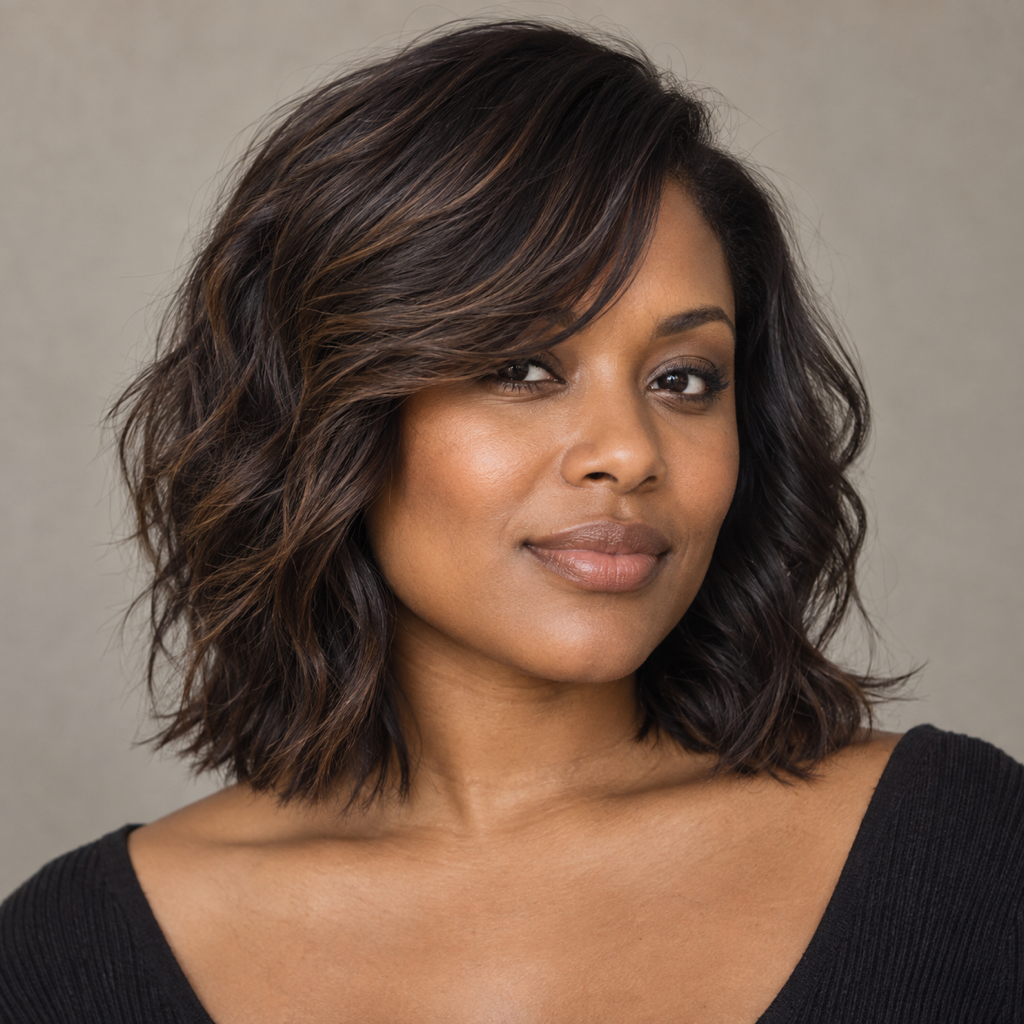
Hairstyles for Square Faces: Cuts That Soften or Showcase Your Jaw
A square face gives you a clear design choice: soften the jaw with movement, or frame it with a deliberate, graphic shape. Neither direction is more correct. The best hairstyle is the version that respects your texture, density, routine, and the features you want to see first.
Square faces often have a forehead, cheekbone area, and jaw that are similar in width, with a defined jawline. That description is a starting point, not a test you need to pass. Many faces sit between square and oval, square and round, or square and heart. Use the ideas that create the effect you want rather than trying to force yourself into one label.
Decide whether you want softness or structure
Before choosing a cut, complete this sentence: “I want my hair to…”
- Soften the appearance of a strong jaw
- Highlight my jaw and cheekbones
- Add movement around the face
- Keep a clean, polished outline
- Make my hair easier to air-dry
- Preserve fullness through the ends
Softness usually comes from curves, diagonal lines, waves, and layers that move past the widest points. Structure comes from a crisp perimeter, a blunt line, a sleek finish, or a shape that deliberately repeats the angles of the face. You can combine them. For example, a blunt collarbone cut with loose waves has a clear outline but a softer surface.
Our broader guide to hairstyles by face shape includes comparisons with round, oval, heart, diamond, and oblong proportions.
Lengths that change the outline
Jaw-length bob
A bob that ends at the jaw draws attention directly to the feature that defines a square face. Choose it when you like that emphasis. A blunt, straight finish can look confident and architectural, especially on straight hair or hair that you enjoy smoothing.
If your goal is softness, ask whether the baseline can sit just below the jaw or angle gently toward the front. A rounded edge, subtle graduation, or loose texture can keep the cut from creating one hard horizontal line at the widest point.
Fine hair may benefit from a stronger perimeter to keep the ends looking substantial. Dense hair may need internal weight shaped so the bob does not expand into a box. The same length can look sleek, rounded, or wide depending on density and texture.
Chin-to-collarbone lob
A lob gives you more room to place the visual weight. A chin-length version emphasizes the lower face, while a cut that falls near the collarbone moves the strongest line away from the jaw and leaves space for waves or long layers.
A shoulder-length or collarbone shape can be especially practical if you want to tie your hair back. See our low-maintenance medium-length haircut guide for questions about ponytails, the shoulder flip, and grow-out.
For a softer effect, ask for face-framing pieces that begin below the cheekbones or jaw. If you want a more graphic look, keep the line clean and discuss whether the ends should be blunt or lightly softened.
Long hair with controlled layers
Long hair can make the face look longer by adding vertical movement, while layers can keep the outline from feeling heavy. Long, rounded layers that begin below the jaw are a useful starting point when you want movement without placing a short shelf at the cheekbones.
Very short layers around the sides can add width, which may be useful if you want a fuller silhouette but less helpful if your aim is to make the face appear longer. Dense hair may need weight removed internally; fine or low-density hair may need fewer layers so the perimeter stays present.
Use volume with intention
Volume is not automatically flattering or unflattering for a square face. Its location changes the proportion.
- At the crown: creates height and can make the face appear longer. Keep it controlled if you prefer a wider, grounded shape.
- At the sides: adds width and can make a sharper jaw feel part of a fuller silhouette. It may also emphasize the width of a square face when paired with a jaw-length line.
- Around the jaw: soft waves or curved ends can blur a hard transition. A dense, blunt edge at exactly the jaw can do the opposite and spotlight it.
- Through the lower lengths: helps a lob or long cut feel balanced, especially when the top is not overly tall.
Straight hair shows every line, so small changes in graduation can be visible. Wavy hair naturally supplies softness, but the dry length may rise and the sides may expand. Curly and coily hair need a shape planned around shrinkage and curl pattern, not copied from a straight reference. Ask where the volume will sit after your hair is in its normal state.
Choose a fringe for its line and upkeep
Side-swept fringe
A side-swept fringe creates a diagonal line that can interrupt the width of the forehead and lead the eye across the face. It can be a useful middle ground if you want some framing without a strong horizontal edge.
Ask for a length that can blend into the side layers and still tuck away. A deep side part that fights your growth pattern may require more heat styling than you want.
Curtain bangs
Curtain bangs open at the center or slightly off-center and connect to longer face-framing pieces. They can add softness around the temples while leaving the jaw visible. The shortest point should suit your hairline, cowlicks, and preferred styling time.
A longer curtain fringe often offers a gentler grow-out than a short, full fringe, but it is not maintenance-free. Ask how it will separate when air-dried.
Full fringe
A full fringe creates a clear horizontal line across the forehead. It can look striking with a square face and is a good option if you enjoy a deliberate, graphic frame. It may also visually shorten the upper face, so compare it with no fringe or a diagonal option if proportion matters to you.
Hairline direction, density at the front, and daily styling matter more than a face-shape rule. Do not borrow a heavy fringe if your front hair does not have the density or behavior to support it comfortably.
Match the cut to your density
Fine hair: A blunt or softly blunt perimeter can keep the ends looking present. Use selective face framing instead of removing weight everywhere.
Dense hair: Internal shaping can prevent a bob or lob from becoming too wide. Discuss the method carefully, especially if your hair is wavy or prone to frizz.
Low-density or thinning hair: Preserve visual weight through the perimeter and avoid layers that remove more fullness than you want. Our guide to haircuts for women with thinning hair explains why fine strands and low density are not the same thing.
Curly and coily hair: Decide whether you want a rounded silhouette, side width, or more height. The dry shape and shrinkage should be part of the consultation.
What to tell your stylist
Bring a photo with a texture and density close to yours, then describe the effect rather than asking for an exact copy:
- “I want to soften my jaw” or “I want to show my jaw clearly.”
- “I usually air-dry and want the movement to work without heat.”
- “Please keep the ends looking full.”
- “Where will the shortest layer sit when my hair is dry?”
- “Will this length still fit into my usual ponytail?”
- “How will the fringe behave with my cowlick and glasses?”
- “How often will this outline need a trim?”
If you are over 40, the same principle applies: there is no required age-based length. Our hairstyles for women over 40 guide focuses on texture, density, and routine rather than rules about what you should wear.
Preview both directions
Naee lets you compare a sharp bob with a softer lob, or test fringe against no fringe on your own photo. Try one version that emphasizes your jaw and one that softens it. Keep the photo, lighting, and angle consistent so you can judge the silhouette rather than the image conditions.
A preview cannot show exactly how your hair will move, shrink, or respond to a cut. Use it to make a shortlist, then ask your stylist which details are realistic for your texture and density.
Download Naee for iPhone (free download, in-app purchases) →
FAQ
What is the best haircut for a square face?
There is no single best haircut. A collarbone lob with soft waves, long rounded layers, a side-swept fringe, or a blunt bob can all work. Choose whether you want to soften or emphasize the jaw, then adapt the cut to your texture, density, and routine.
Should square faces avoid short hair?
No. A short bob or pixie can highlight a defined jaw and look intentional. If you prefer softness, use curved ends, diagonal fringe, or texture rather than avoiding short hair altogether.
Are bangs good for square faces?
Side-swept and curtain bangs can introduce diagonal or curved lines, while a full fringe creates a stronger horizontal frame. Hairline, cowlicks, density, and styling time should guide the decision more than a fixed face-shape rule.
Do layers soften a square jaw?
They can, especially when the movement begins below the cheekbones or jaw and connects to the rest of the cut. Too many short layers can add width or remove fullness, so ask where each layer will fall in your dry texture.
Can a square face wear a blunt bob?
Yes. A blunt bob deliberately emphasizes a strong outline and can look polished on straight or controlled hair. If you want less emphasis at the jaw, move the line below it or add a softer surface through waves and curved ends.
Choose the effect you want to see
A square face is not a problem to correct. It is a clear shape to work with. Decide whether you want softness, structure, length, width, or emphasis, then choose the length, volume, fringe, and layering that create that effect on your real hair.