
Butterfly Haircut: Layers, Length and Styling Trade-Offs
A butterfly haircut connects shorter face-framing layers to longer lengths, creating movement while keeping a longer overall outline. The decision is not simply whether you want layers. It is where the shortest pieces will fall, how much of the lower perimeter you want to keep, and whether you like the cut without the blowout in the reference photo.
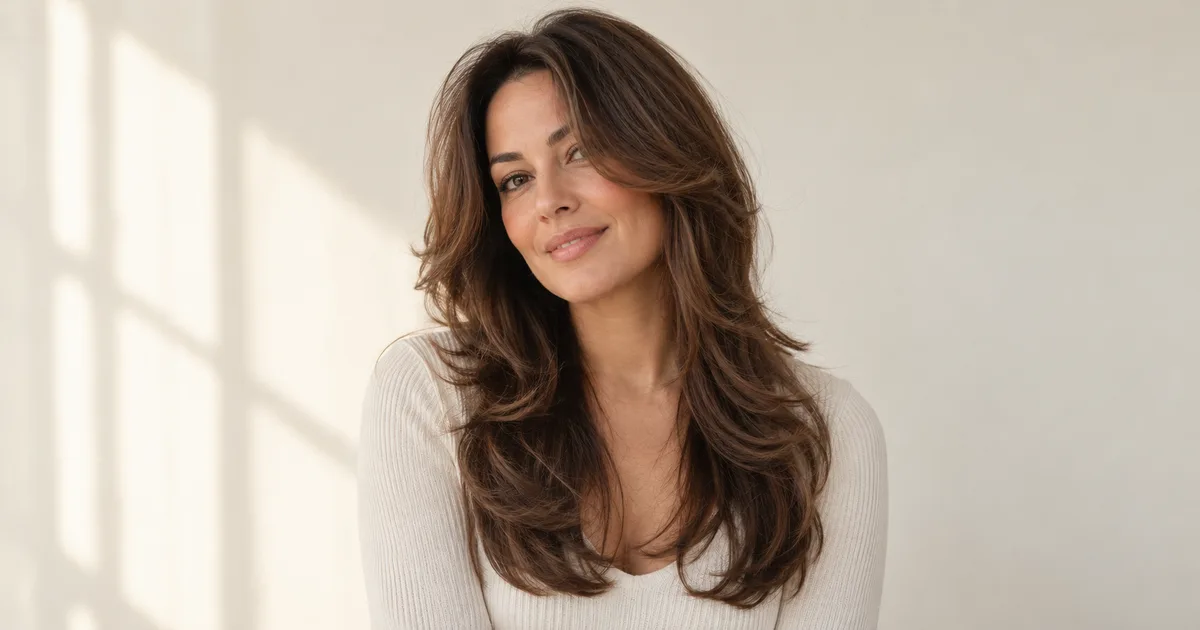
Generated editorial illustration, not Naee output or a real haircut result. The visible shorter front shape and longer ends are separate decisions within one connected cut.
A dramatic sweep around the face can be appealing without being an everyday styling goal. Use the examples below to choose a direction, then ask a stylist to adapt it to your actual hair and the length you use for clips, ponytails or buns.
Contents
- What defines a butterfly haircut
- Choose retained length and the shortest front piece
- Butterfly versus quieter long layers and a shag
- Adapt the layers to ends, density and natural waves
- Butterfly haircut styling: the cut is not the blowout
- Compare two silhouettes, then write a salon brief
- FAQ
What defines a butterfly haircut
The defining idea is a connected progression from shorter pieces around the face into longer layers and retained length. In Glamour's butterfly-cut explainer, stylist Jordan M. emphasizes that the layers connect rather than sitting as unrelated short and long sections. Stylist Jenna Spino describes shorter layers blended into longer lengths and recommends deciding where the shortest layer should fall before the appointment.
That article includes curtain bangs in one description, but references vary. Do not assume that saying “butterfly cut” automatically specifies a fringe, a chin endpoint or a particular amount of crown layering. Show the specific picture and name the pieces you want. A below-chin front layer is a different commitment from a shorter fringe that needs its own daily attention.
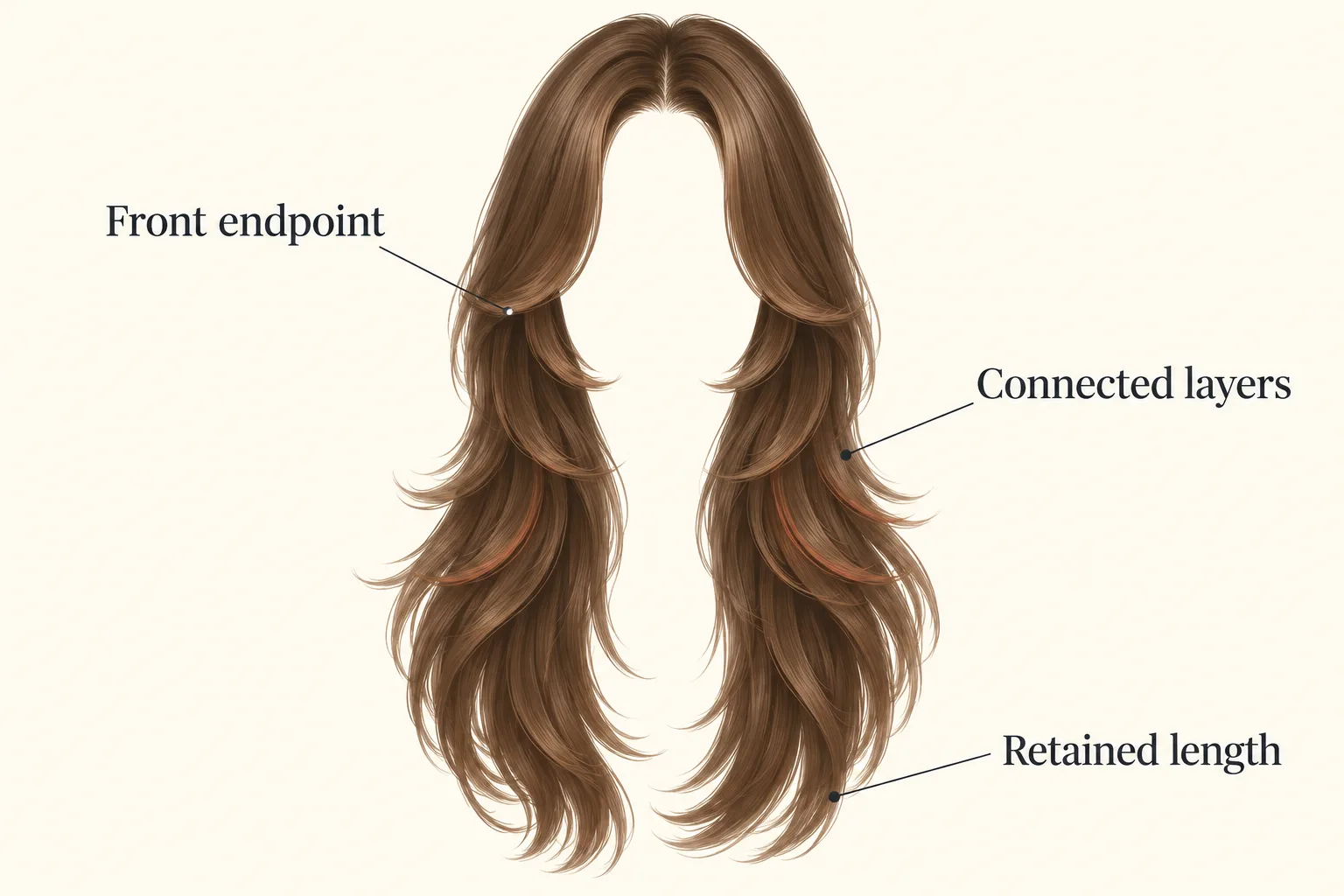
Generated editorial illustration, not Naee output or a cutting diagram. The labels identify the shortest front endpoint, the connecting layers and the retained bottom length.
Read a reference in three parts:
- Front endpoint: Where do the shortest pieces stop when worn dry? This determines how much framing sits near the face.
- Connection: How do those pieces transition into the sides and back? Look for a gradual layered flow rather than a shelf you did not intend.
- Retained length: Where do the longest ends finish, and how substantial does that lower outline look?
ARC Scissors' professional butterfly-cut explanation also distinguishes the cut from a generic collection of long layers. It stresses cascading layers and retaining length through the back. It is a supplier's professional tutorial, not evidence that a particular technique suits everyone. Here, the useful lesson is the relationship between the layers, not instructions for cutting your own hair.
Choose retained length and the shortest front piece
Start with the length you use, not just the length you see. If you rely on a low ponytail for work, tell the stylist which pieces must reach the tie. If tucking behind your ears is important, demonstrate that habit. A front-facing portrait cannot establish whether every section will stay in your preferred updo.
A longer butterfly silhouette
A longer base gives more visible distance between the front framing and the longest ends. That can make the cascading shape easier to see, but keeping the longest strands does not mean keeping the same amount of hair at the bottom. Ask how the perimeter will look when the hair lies quietly rather than being swept into a blowout.
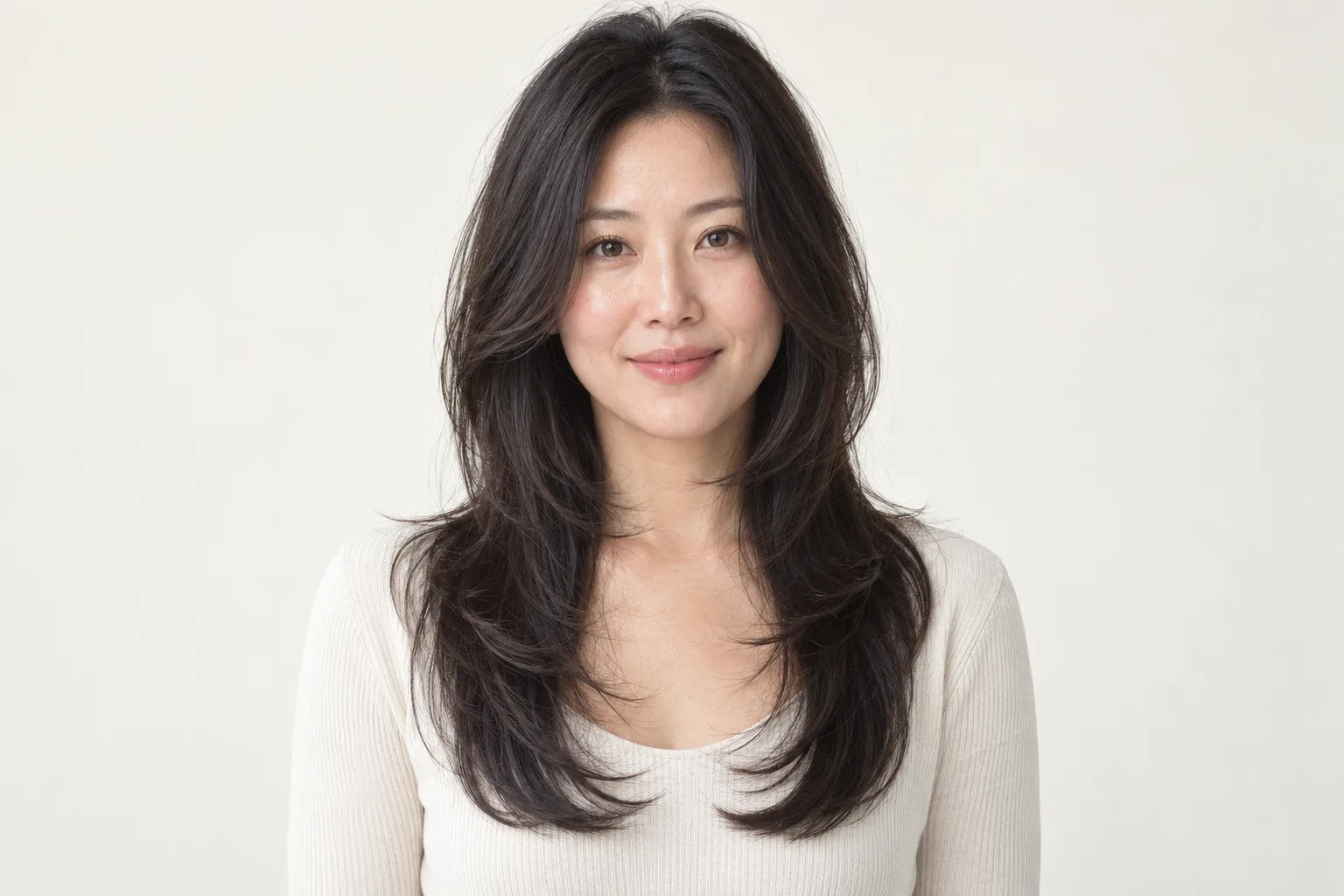
Generated editorial illustration, not a real client result. Below-chin framing flows into a longer mid-chest outline; this does not prove tie-back feasibility or natural volume.
A collarbone interpretation
At collarbone length, there is less distance available between the shortest pieces and the base. A restrained interpretation may be more useful than copying the layer pattern from a much longer reference. Ask for the movement you like while identifying how full you want the bottom line to remain.
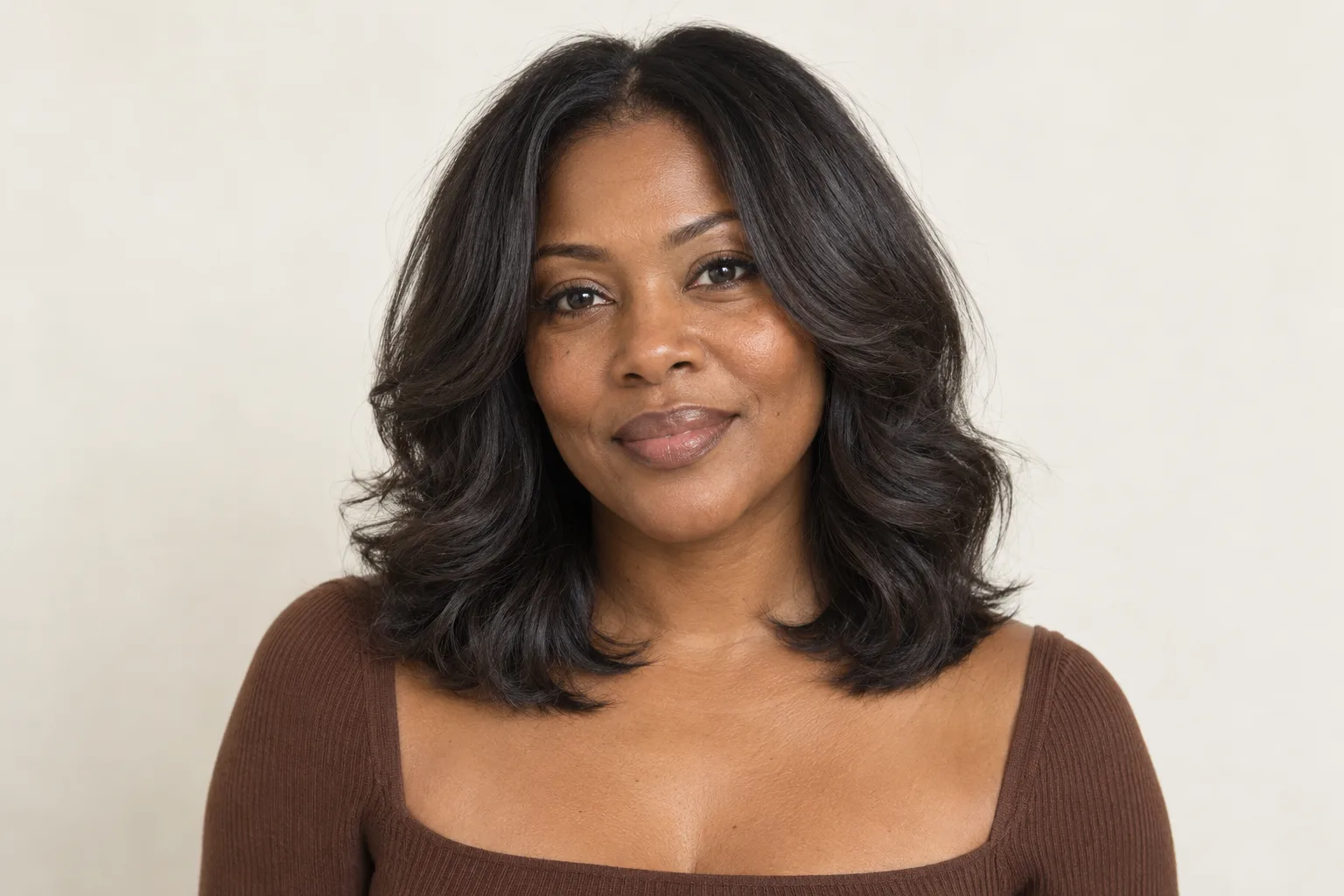
Generated editorial illustration, not Naee output or a real transformation. The shorter overall outline leaves less separation between front framing and the collarbone perimeter.
If your main priority is a manageable shoulder-level cut rather than a pronounced layered effect, compare this direction with our low-maintenance medium-length haircut guide. “Low maintenance” describes a match between a cut and your routine, not a promise attached to a haircut name.
Chin versus below-chin front pieces
A chin endpoint puts the shorter part of the shape closer to the face. A below-chin endpoint keeps that transition lower and may better match someone who wants less front-piece attention. Neither is automatically more flattering, and neither guarantees that the pieces will tuck or tie back.
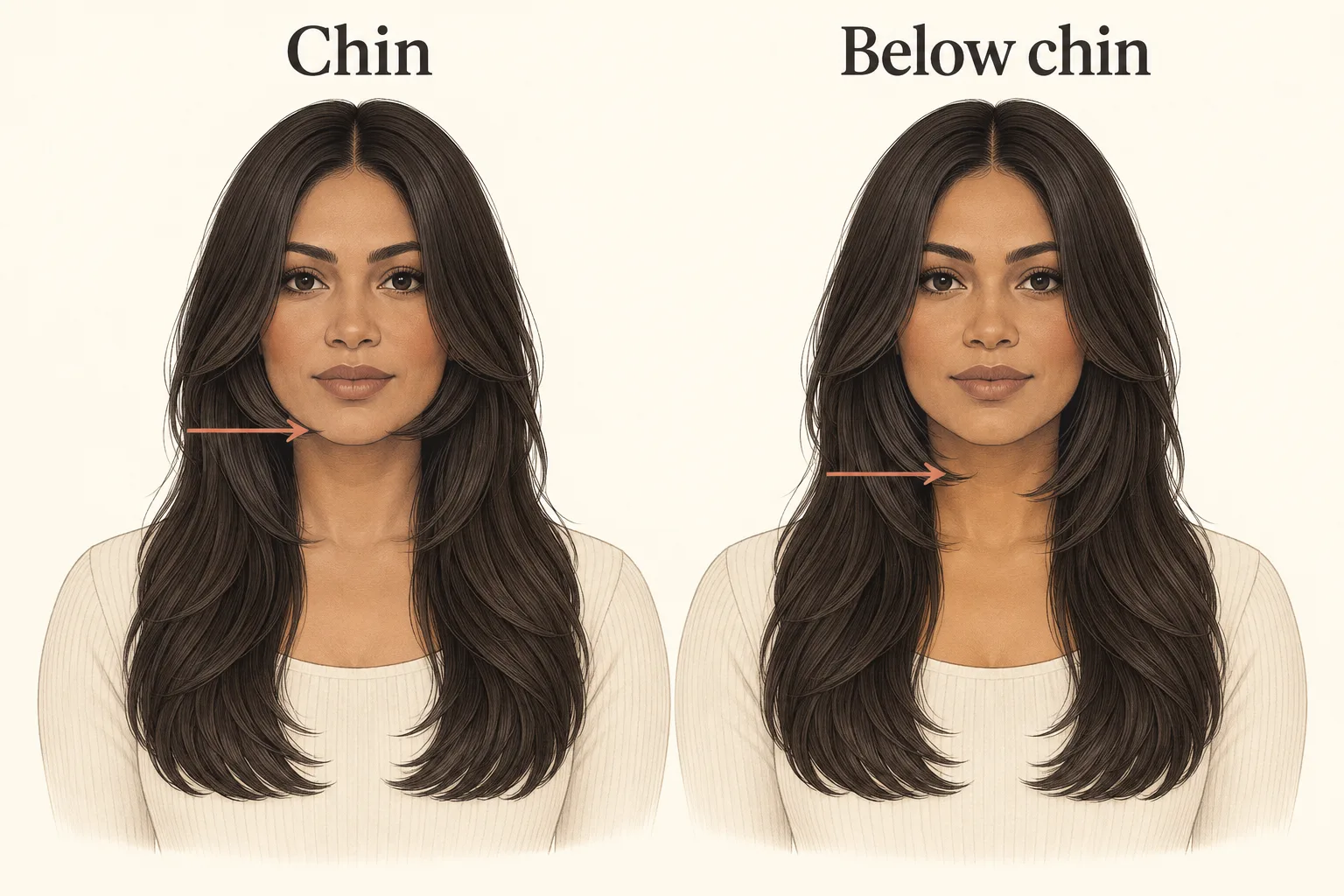
Generated editorial comparison, not before-and-after photographs. The long base is held similar so the front-endpoint decision is easier to see.
Point to the preferred endpoint on your normally worn dry hair. A bend can lift a front piece above the place it reaches when straight, while an outward sweep can make it appear shorter in a photograph. The stylist needs to discuss the worn shape, not just reproduce a coordinate from an image.
Butterfly versus quieter long layers and a shag
Haircut names overlap across salons. Use this comparison to describe the emphasis you want rather than treating the labels as technical standards.
| Direction | Main visual emphasis | Useful request | Trade-off to discuss |
|---|---|---|---|
| Butterfly haircut | Noticeable connected framing flowing into longer layers | “I want visible movement around my face while retaining this bottom length.” | How much material leaves the lower outline, and how the front behaves without styling |
| Quieter long layers | A longer outline with less pronounced short-to-long contrast | “Keep the framing subtle and the perimeter substantial.” | The result may show less of the wing-like sweep you liked |
| Shag direction | A more deliberately textured, often shorter-layered overall shape | “I prefer texture throughout, not only a smooth cascade into long ends.” | Crown, fringe and ends may need a different routine from the polished reference |
ARC's discussion specifically treats preserving the back length as important to its butterfly interpretation rather than turning it into a shag. That is useful source context, but a shag can also retain length. The practical distinction is the distribution of shorter layers and texture, not a rule that one name is long and the other is short.
A common mistake is requesting a butterfly cut while expecting the unchanged weight of a nearly one-length cut. Another is asking for a shag because you like movement, when the actual reference has smooth, connected front framing and relatively quiet long ends. Annotate the picture: circle the framing you like and underline the bottom line you want to preserve.
Adapt the layers to ends, density and natural waves
Fine strands, dense hair and a natural wave pattern describe different things. Fine refers to strand diameter; density concerns how many strands are present. Waves describe how the strands bend. A photograph can suggest a direction, but it cannot replace an assessment of your actual hair.
Fine-looking ends: start with less layering
If your current ends already look light or separated, ask whether a smaller amount of layering would keep the perimeter you want. Shortening some strands changes which strands reach the bottom, so more layers can mean a less substantial lower outline even when the longest length remains.
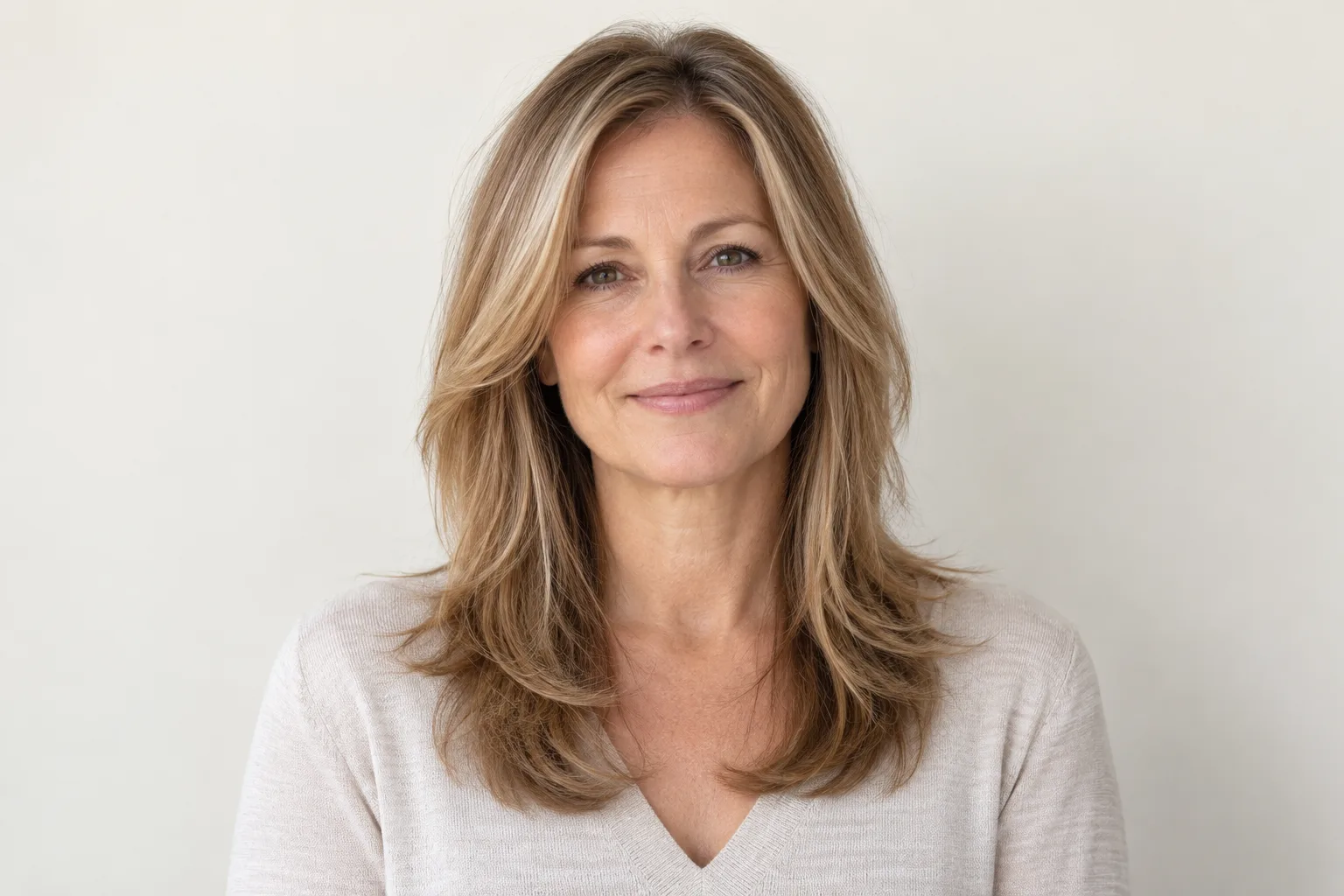
Generated editorial illustration, not a density measurement. This conservative direction shows modest framing and a quieter lower outline rather than promising extra hair.
Glamour includes a fine-haired writer's personal experience and stylist comments supporting adaptations across textures. That is not a guarantee that heavily layering every fine-haired person will add usable volume. Ask for the least layering that delivers the movement you need, and discuss the dry ends. Our guide to hairstyles for fine hair covers that wider perimeter-versus-movement decision.
Dense-looking hair: choose where movement belongs
A fuller head of hair gives a different starting point, but “remove lots of weight” is still too vague a salon request. Identify whether you want less heaviness around the face, more movement in the mid-lengths or a narrower overall silhouette. These are not interchangeable goals.
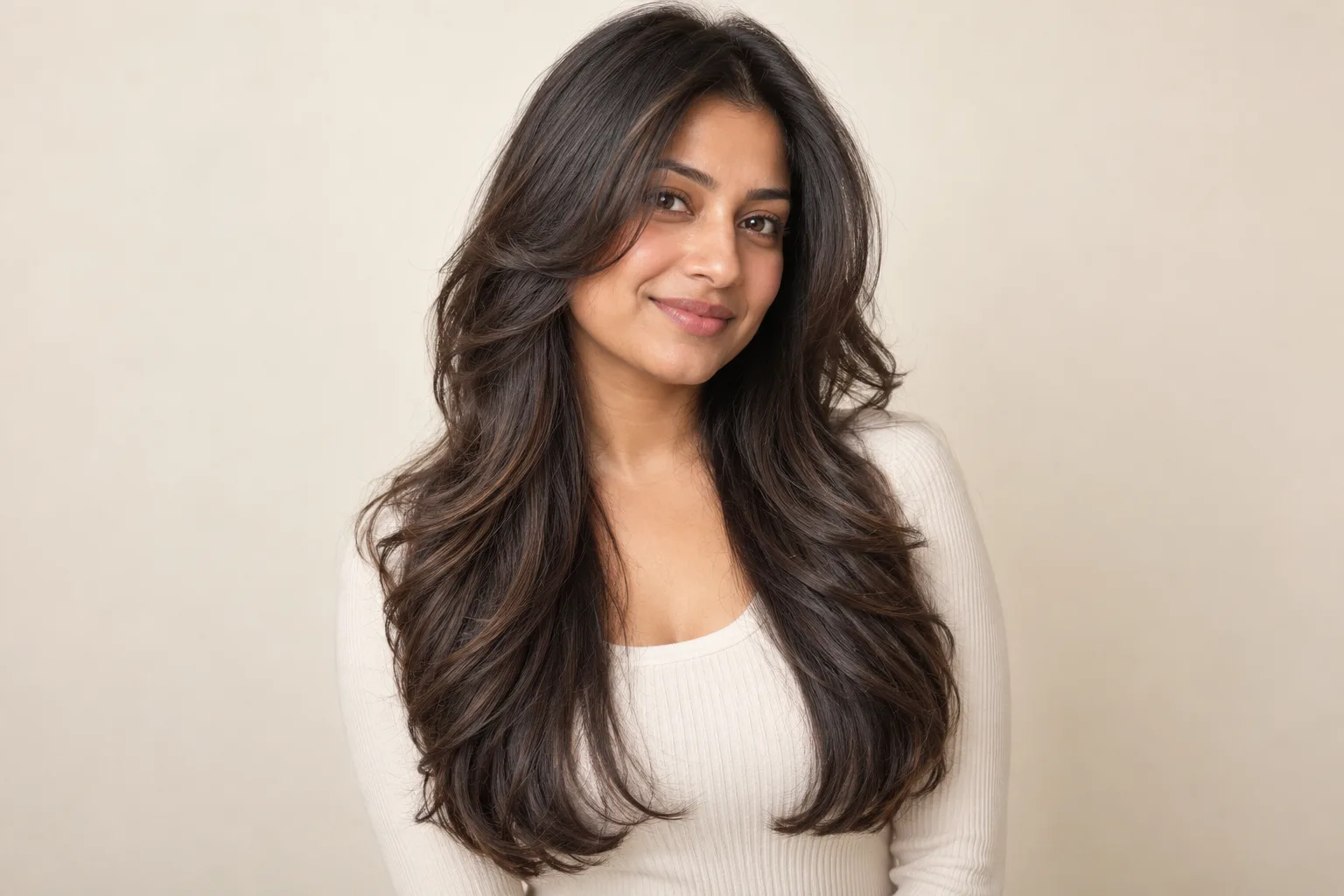
Generated editorial illustration, not a real haircut result. A substantial long perimeter remains visible beneath the connected layers; exact weight removal requires an in-person discussion.
Ask the stylist how the layers will behave in your usual finish. A styled reference may hide bulk in a smooth bend, while a natural finish can distribute it differently. More layering is not automatically the answer to every feeling of heaviness.
Natural waves: keep the bends in the brief
Bring an ordinary-day wave photo as well as the inspiration. Shorter sections can sit differently when their bends spring up, so choosing endpoints from a straightened reference alone can misrepresent the worn shape. Ask how the front and bottom will relate when your waves are left closer to their normal pattern.
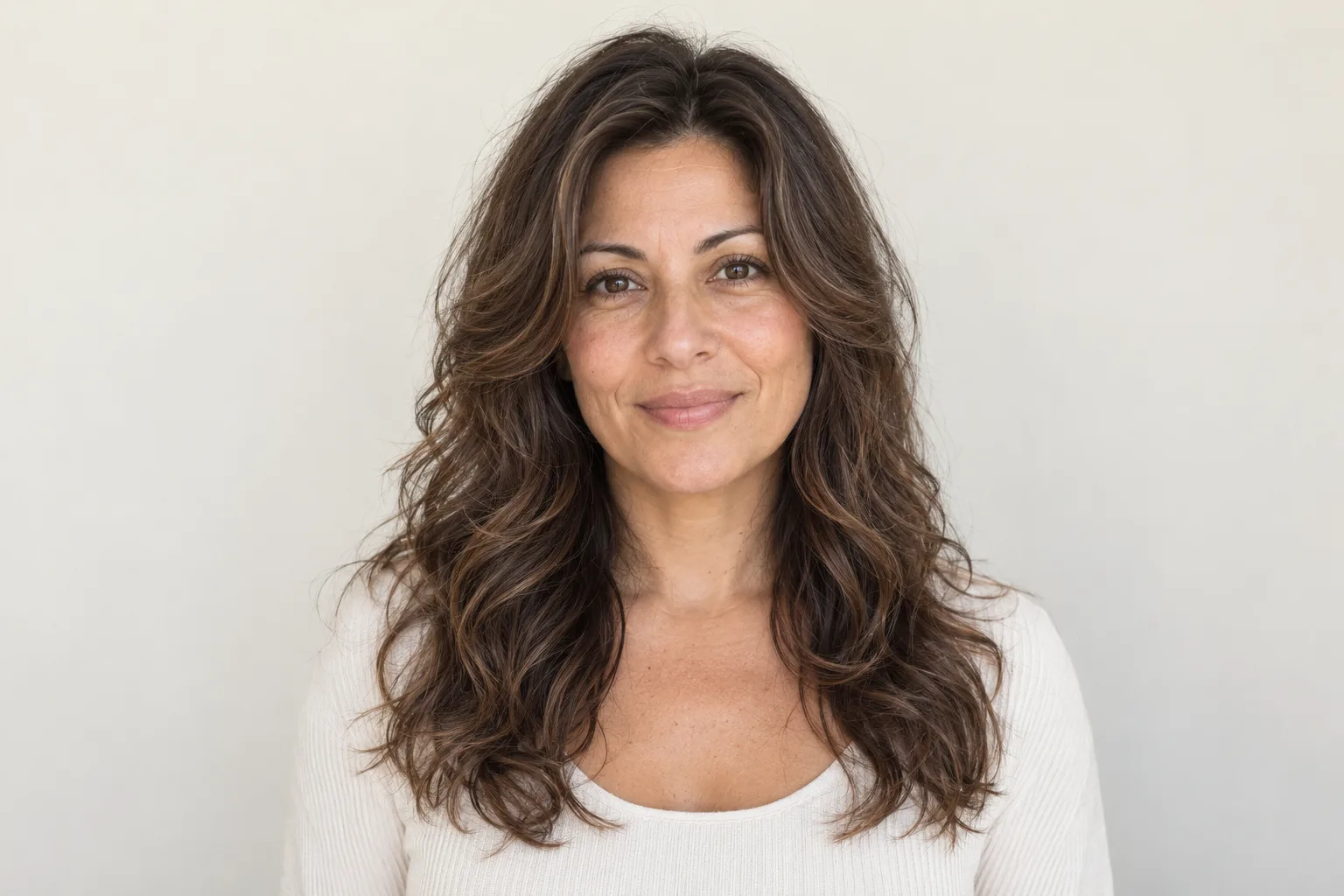
Generated editorial illustration, not an air-dry prediction. Irregular bends show a less polished interpretation of the layered outline.
Our haircuts for wavy hair guide explains how to discuss the dry shape and your usual routine. For the butterfly decision, the narrower question is whether you want those shorter front sections on an everyday wave day, not just after a salon finish.
Butterfly haircut styling: the cut is not the blowout
The haircut creates the lengths. Styling changes how those lengths lift, bend and separate. A reference with raised roots, smooth outward sweeps and rounded ends may communicate both decisions at once, even if its caption mentions only the cut.
Glamour's styling discussion names a large round brush, blow-drying tools and finishing products. It also reports the writer using a styling tool at home. Those details matter more than the article's broad “easy” or “low-maintenance” language: the pictured finish includes work. Its claim that the cut can also be air-dried does not establish that your own air-dried hair will reproduce the same sweep.
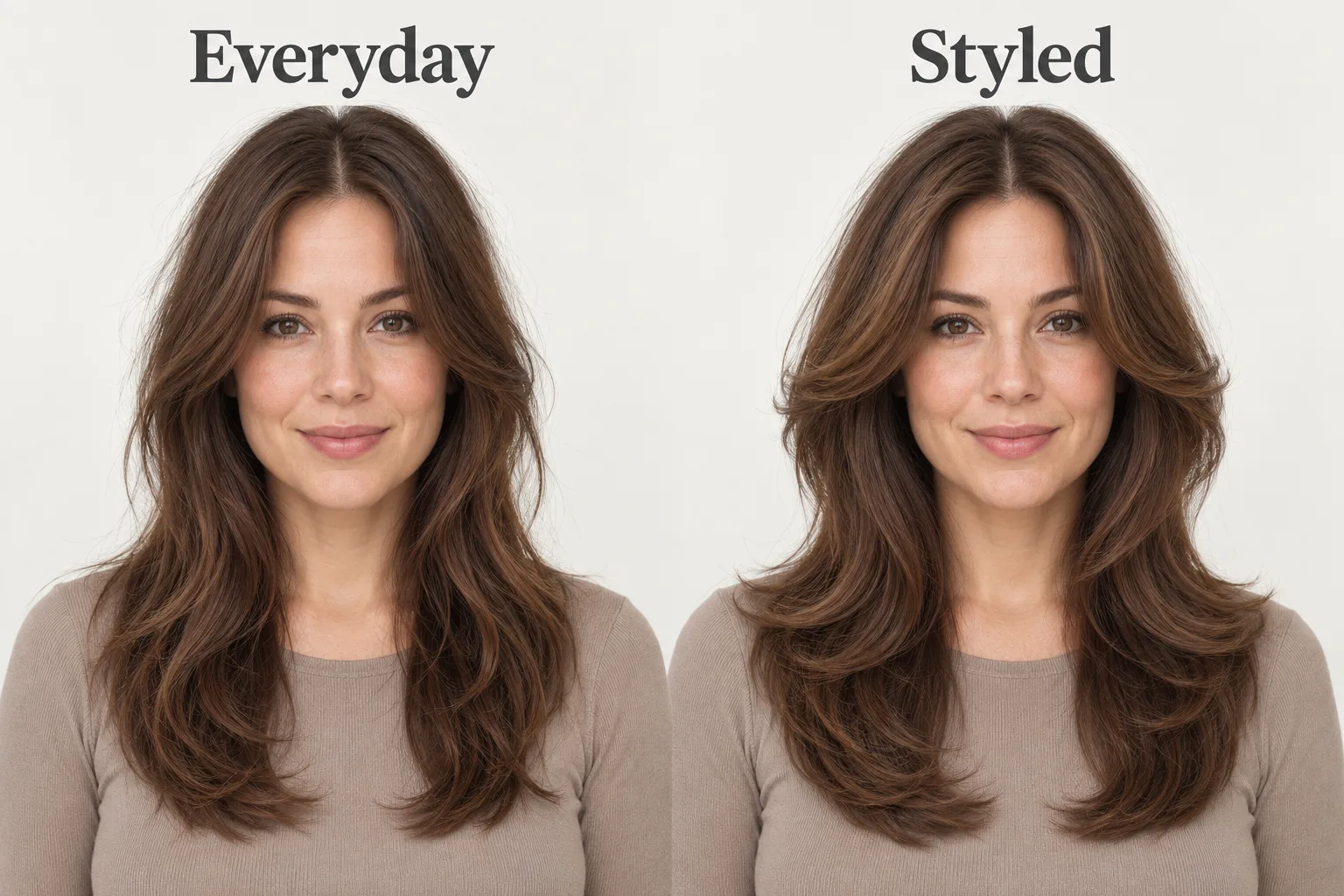
Generated editorial comparison, not an observed styling experiment or Naee result. The two finishes illustrate how presentation can change while the intended cut remains similar.
| What you like in the picture | What to ask | What the picture cannot tell you |
|---|---|---|
| Swept-away front layers | “How would these pieces sit with my normal drying routine?” | Whether the sweep appears without tools |
| A lifted crown | “How much of this height comes from styling?” | How long lift lasts on your hair |
| Smooth, rounded ends | “What routine produces this finish, and what is the simpler version?” | The time, skill or product your own hair needs |
| Visible layers with little polish | “Can we prioritize movement with a modest everyday finish?” | Whether your texture behaves like the illustrated example |
Name the tools you already use and the time you are willing to spend. If you normally wash, condition and leave your hair alone, say so before committing to a picture built around a daily blowout. If you enjoy styling, ask for a demonstration appropriate to your hair and follow the tools' safety instructions. This is a consultation guide, not a heat-tool routine or a self-cut tutorial.
Compare two silhouettes, then write a salon brief
Hypothetical example: Elena wears her hair below her shoulders, likes loose waves and needs a low ponytail during work. She likes a dramatic chin-level butterfly reference, but usually spends about ten minutes on her hair. These are fictional planning constraints, not a customer testimonial.
She shortlists two ideas: a more pronounced chin-level frame with long ends, and a quieter below-chin frame with less layering. She keeps the color and part similar so those changes do not distract from the cut. Her final question is not “Which picture looks fullest?” It is “Which shape still makes sense with my usual finish and ponytail?”
If you prefer trying the outline on your own photograph, Naee is an optional visual aid. Publisher disclosure: This is the Naee blog, and we have a commercial interest in the app. We have not tested these illustrations in Naee or verified a butterfly-cut accuracy benchmark.
The official Naee website describes hairstyle previews and copying style cues from a reference photo. Its FAQ says previews are not guaranteed exact matches to salon results. Use an unfiltered, evenly lit photo and inspect whether the candidate changes your face, hairline, density or texture as well as the requested layers. A prompt requesting preservation is not a guarantee.
Our reference-photo hairstyle guide helps separate the cut you like from the styling and texture of someone else's hair. If a preview adds fullness or changes facial proportions, consult the fine-hair preview checklist and face-preservation guide before keeping it. You can retain a useful endpoint idea while discarding an invented volume assumption.
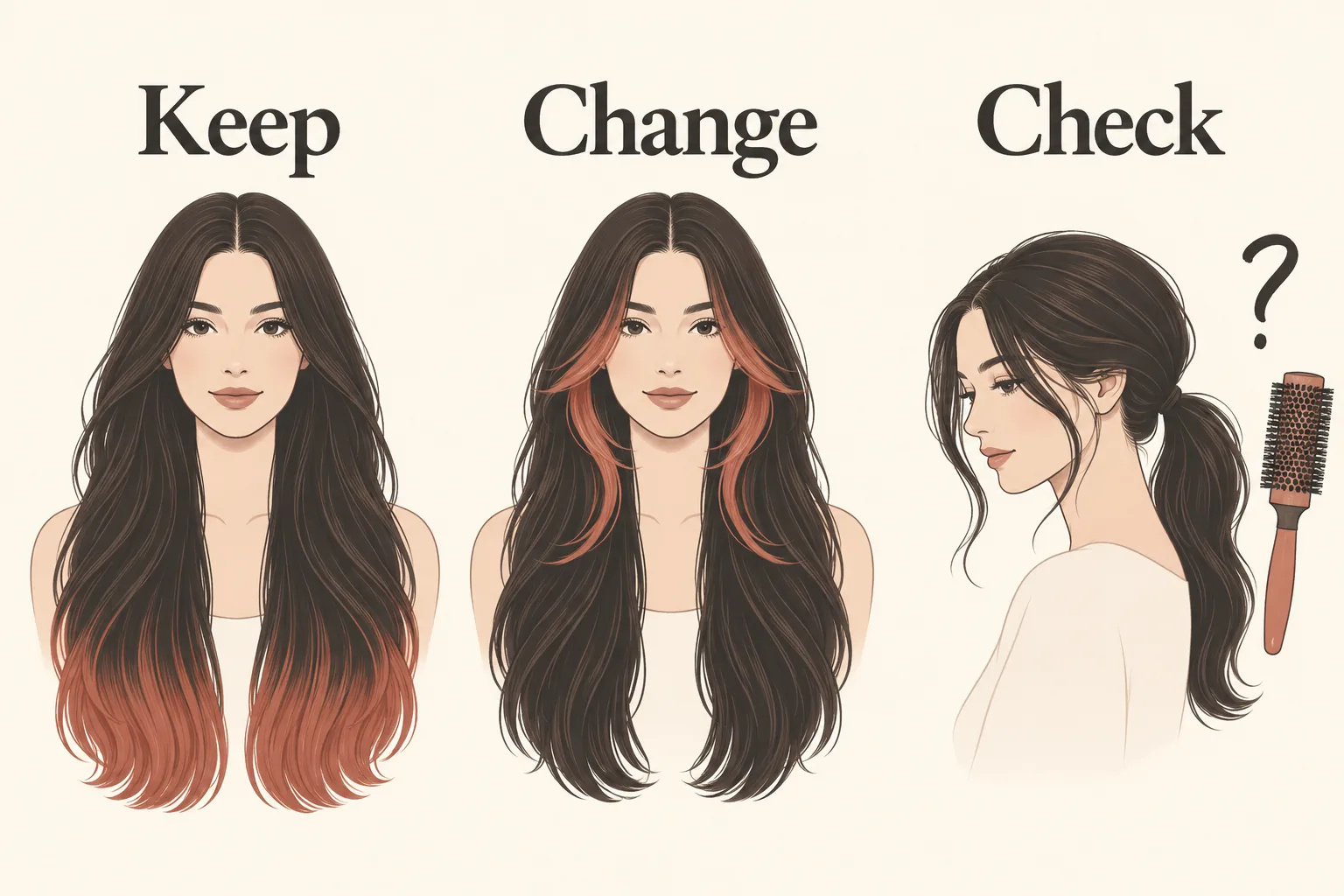
Generated editorial illustration, not an app screen or a promised outcome. Keep the usable length, name the framing change and check tie-back and styling feasibility.
Bring a simple keep-change-check brief:
- Keep: Your preferred longest dry endpoint, normal part and the length needed for your actual updo.
- Change: The shortest front endpoint and how pronounced you want the connected cascade to look.
- Check: The bottom perimeter without a blowout, the behavior of front pieces in your natural texture, and the work needed for the polished finish.
A copyable request: “I want connected butterfly-style framing, with the shortest pieces below my chin and the longest ends kept here. I need a low ponytail and prefer my normal waves most days. Please show me how much layering my ends can support and what this would look like without the reference's blowout.”
If that comparison would help you, download Naee for iPhone and keep just a few clearly annotated candidates. The US App Store listing, checked October 11, 2026, describes a free download and trial with limited credits; continued generation requires a subscription or credit purchase. Check the current in-app allowance and purchase terms rather than assuming unlimited free previews.
The takeaway: Keep the length you actually use, choose the shortest front piece deliberately, and separate the connected cut from the styled finish. The best reference is one you can explain without relying on its volume.
FAQ
Does a butterfly haircut keep your length?
It can retain a longer base, but the layers shorten some strands. Keeping the longest endpoint is not the same as keeping the same amount of hair at the bottom. Tell your stylist both where the base should finish and how substantial you want it to look.
Is a butterfly haircut suitable for fine hair?
A restrained interpretation may be worth discussing, but heavy layering is not a universal volume solution. If your ends already look sparse or separated, ask about fewer layers and a protected perimeter. Fine strand diameter alone does not establish your density or the right amount of layering.
Does a butterfly haircut need a blowout?
The cut does not require every person to wear a blowout, but a photographed outward sweep may depend on styling. Ask to discuss an everyday version on your actual texture. Do not assume that the salon finish is the air-dried result.
Can you get a butterfly haircut without curtain bangs?
References and salon interpretations vary. Some definitions include curtain bangs; others emphasize longer face framing. Show the picture and specify whether you want a fringe or front layers below the chin rather than relying on the name alone.
Can an AI preview tell me whether the layers will tie back?
No. A frontal preview can illustrate a shape, but it does not establish real section lengths, density, bend behavior or updo feasibility. Demonstrate your usual ponytail or clip placement to the stylist and check the front pieces on your actual hair.