
Hairstyles for Women Over 50: Cuts for Gray Hair, Glasses and Real Routines
The best hairstyles for women over 50 are the ones built around the hair you have now: its color, its density at the crown, its current texture and the time you want to spend on it. Age is not a style rule. A long silver cut, a soft bob and a short pixie can all work, depending on those four things. This guide skips the "look younger" framing and focuses on practical questions: what changes, what to ask for, and how to choose between a few strong options.

Generated editorial illustration, not Naee output or an actual haircut result. The people shown are hypothetical adults.
Many people find that their hair behaves differently in their 50s and 60s. Gray strands can feel coarser or wirier, the part may look wider than it used to, and waves can appear or relax. None of that means you need a particular length. It means the cut that worked ten years ago may need a few adjustments.
Publisher disclosure: This is the Naee blog, and we have a commercial interest in Naee. We have not tested these cuts in the app or run any suitability study. All images below are original generated editorial illustrations of hypothetical adults, not customer results.
Contents
- How to choose a haircut after 50
- Haircuts for gray and silver hair
- Cuts that help a thinner crown or part
- Hairstyles for women over 50 with glasses
- Short haircuts for women over 50
- Long hairstyles for women over 50
- When your texture changes
- Low-maintenance haircuts for women over 50
- Write a salon brief and preview a few options
- FAQ
How to choose a haircut after 50
Start with four checks, not a list of trendy names. Trends are fine as inspiration, but the cut has to suit your hair on an ordinary morning.
- Color. Are you fully gray, partly gray, coloring, or growing out color? Silver and white hair shows the shape of a cut very clearly, so clean lines and healthy ends matter more.
- Density at the crown and part. Look at the top of your head in good light, or ask your stylist. If the crown looks sparser than the lengths, that changes where layers should go.
- Current texture. Note whether your hair is straighter, wavier, frizzier or coarser than before. Cut for the texture you have today.
- Routine. Be honest about time. If you air-dry most days, choose a cut that looks finished air-dried.
If you are in your 40s, or want ideas with a broader range of trendy cuts, our guide to hairstyles for women over 40 covers 12 styles with face shape and texture notes. This article focuses on the questions that tend to come up more often a little later: going gray, thinning at the top, glasses, and cutting down on upkeep.
| What you notice | What to discuss with your stylist |
|---|---|
| Gray growing in, color grow-out line | A shorter cut to remove colored ends faster, or a blending gloss |
| Wiry or puffy gray strands | Weight placement, a slightly longer length to let hair fall |
| Wider part or sparse crown | Fewer long layers at the back, short layers on top, a moved part |
| Glasses every day | Where the front pieces end relative to the frames and temples |
| Less time for styling | A shape that air-dries well and grows out gracefully |
Haircuts for gray and silver hair
Gray hair is a color, not a problem to hide. Many women choose to keep it, and it can look striking in almost any length. The main thing silver hair changes is how visible the cut is. Light colors reflect light differently, and dry or split ends can look more noticeable on white and silver than on dark brown.
The soft layered silver bob
A jaw-to-chin bob with gentle internal layers suits many gray textures. The layers stop silver hair from looking like one solid block, while a fairly full perimeter keeps the ends looking healthy.
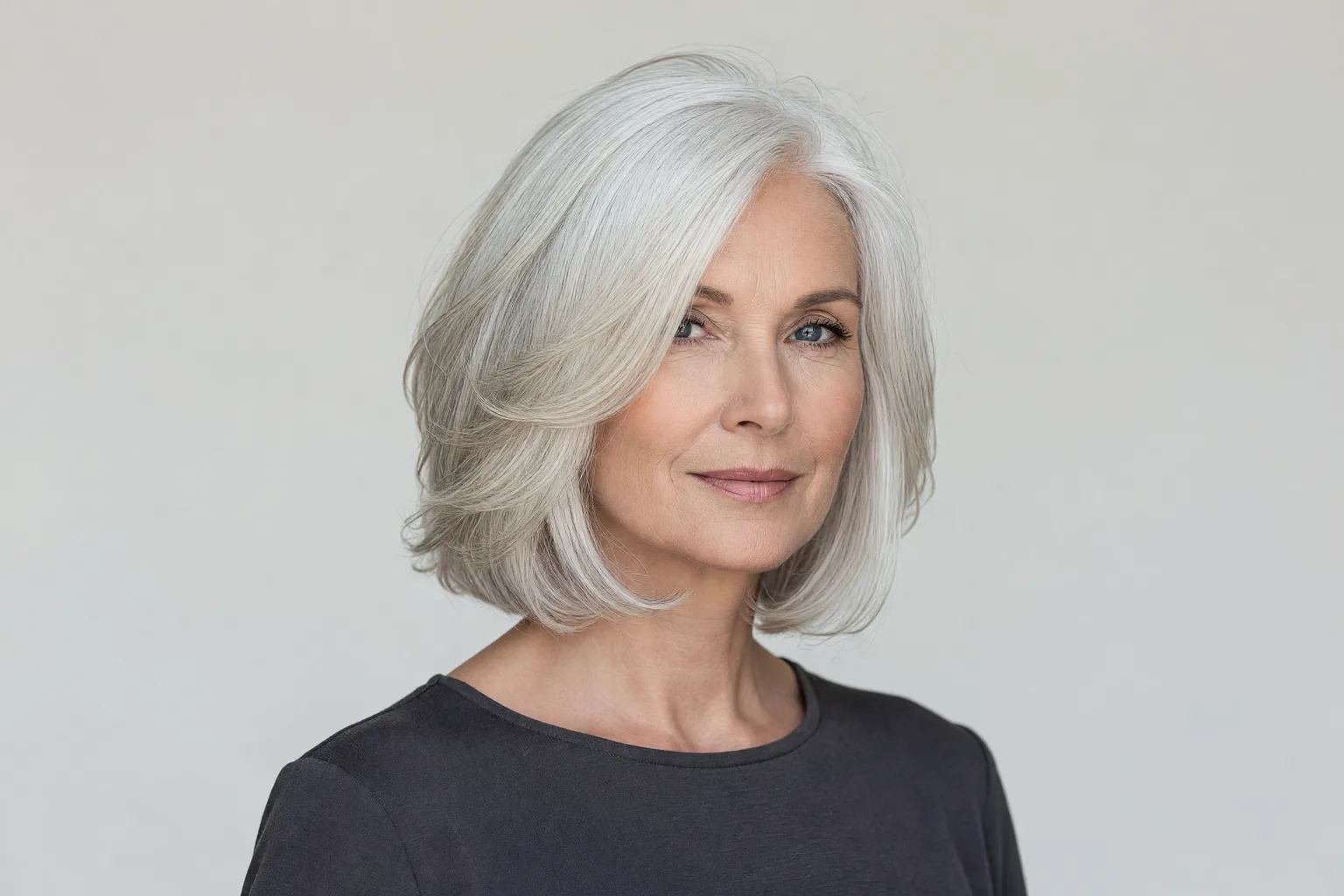
Ask for: "A soft bob at my jaw with light layers inside, not stacked at the back. I want the ends to stay full." If your gray is coarse, ask the stylist to remove a little bulk from the inside rather than thinning the ends.
Going gray: cuts that make the transition easier
If you are growing out dyed hair, the line between your natural color and the colored lengths is often the hardest part. Two common approaches:
- Go shorter. A pixie or short bob removes much of the old color in one or two cuts. It is the fastest route, but it is a big change.
- Keep length and blend. Keep your current length and talk to a colorist about highlights, lowlights or a gloss to soften the line while it grows. This takes longer but keeps the length you like.
Neither is better. Choose based on how much you like your current length and how much patience you have for an in-between stage. If you want to see a few shades side by side before committing, a hair color preview can help you narrow down what to discuss with your colorist.
Care that affects how the cut looks
Silver hair can pick up a yellow or dull cast from water, heat or products. Purple or blue toning shampoos are popular for this, but they are optional, and overuse can leave a violet tint on very light hair. Regular trims to keep the ends tidy often do more for a gray cut than any product.
Cuts that help a thinner crown or part
If your crown or part looks sparser, the usual fix is a cut with short layers on top and a fuller outline below, not more length. Very long, one-length hair can pull flat against the scalp and make a sparse crown more visible.
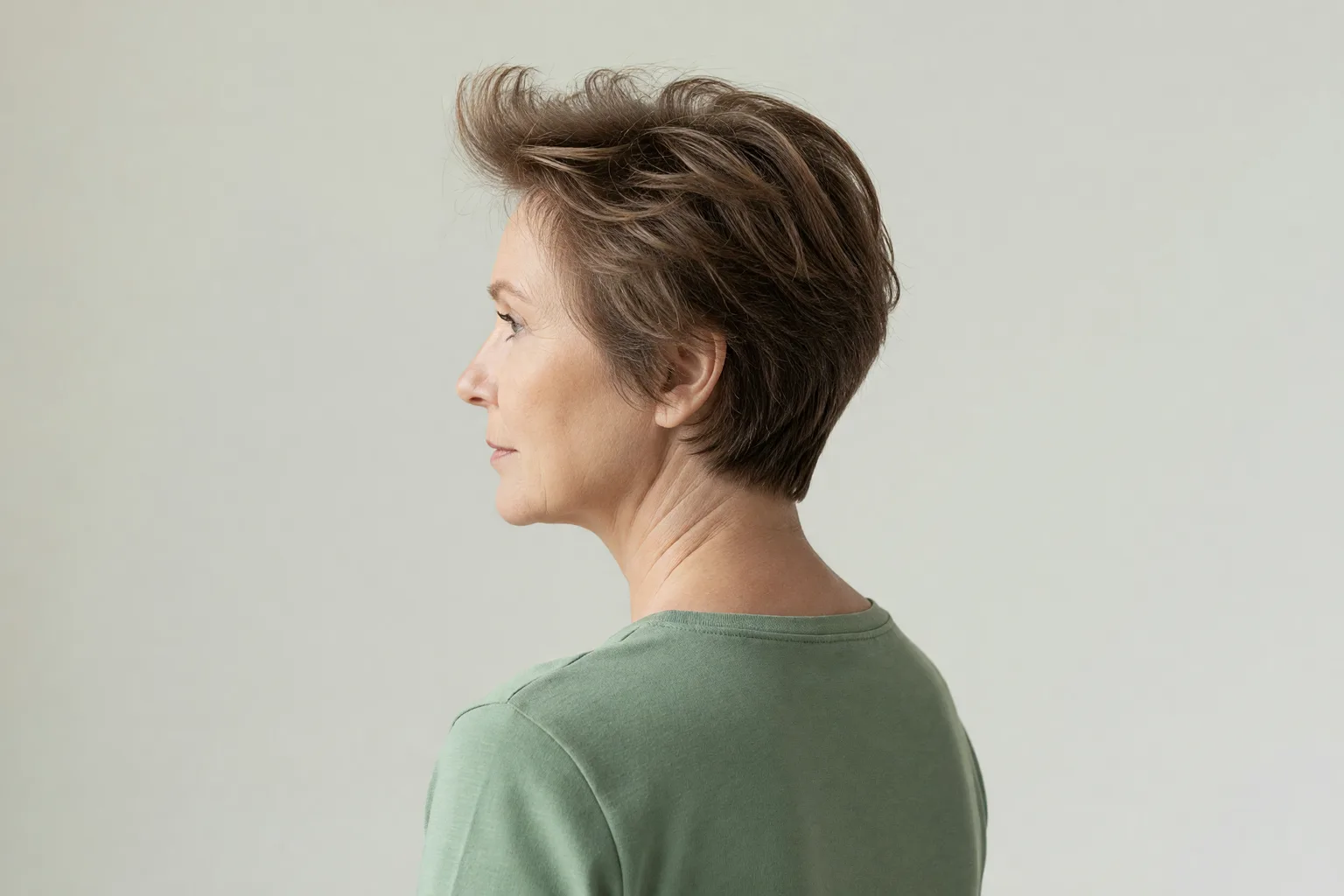
Options to discuss:
- A short layered crop. Shorter pieces at the crown stand up more easily and add movement where hair looks flattest.
- A bob with a softly lifted crown. Keep the bottom full and ask for only a few short layers at the top.
- A changed part. Moving your part an inch to the side, or trying a zigzag part, can make the top look fuller with no cutting at all.
- Soft bangs. A fringe can cover a hairline that has receded slightly at the temples, as long as there is enough hair at the front to make one.
What to avoid asking for is heavy texturizing or thinning shears on hair that is already fine. Removing more hair rarely makes fine hair look fuller.
If thinning is your main concern, read our dedicated guide to haircuts for thinning hair in women. Sudden or patchy hair loss is a reason to see a doctor or dermatologist, since a haircut cannot address the cause.
Hairstyles for women over 50 with glasses
If you wear glasses daily, choose your cut with them on. Frames sit at the temples and across the face, and they interact with front pieces, bangs and side volume.
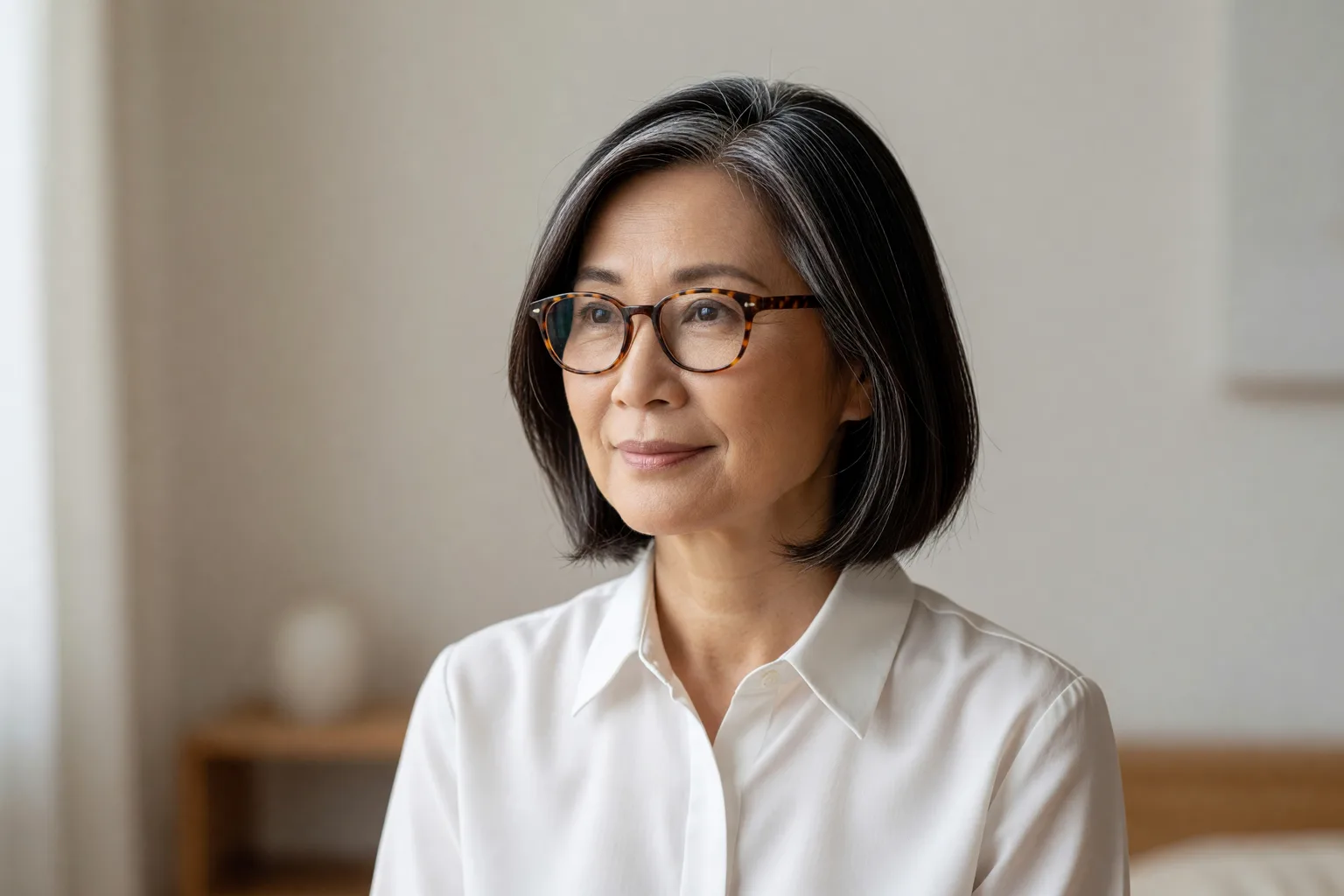
Practical points:
- Front pieces. Face-framing layers that end just below the frames tend to sit more comfortably than pieces that land right at lens level and get caught behind the arms.
- Bangs. A fringe that ends just above the top of the frames keeps hair out of the lenses. Wispy or curtain bangs are easier with glasses than a heavy, blunt fringe that sits on the frame. Our guide on whether to get bangs has more on this.
- Side volume. Bold or thick frames already add weight at eye level. A cut with a little volume at the crown or jaw can balance them.
- Tucking. Many glasses wearers tuck hair behind the ears. If you do, tell your stylist so the sides are cut to sit neatly when tucked.
Bring your glasses to the appointment and put them on before the stylist finalizes the front.
Short haircuts for women over 50
Short hair is a style choice, not an age requirement. Some women love it because it is quick to dry and shows off gray texture well. Others feel more like themselves with length. Here are short options worth knowing.
Textured pixie
A pixie with a little extra length on top and soft, piecey texture is flexible. You can wear it tousled, smooth or swept to the side. It suits salt-and-pepper hair especially well, because the mix of colors shows through the texture.
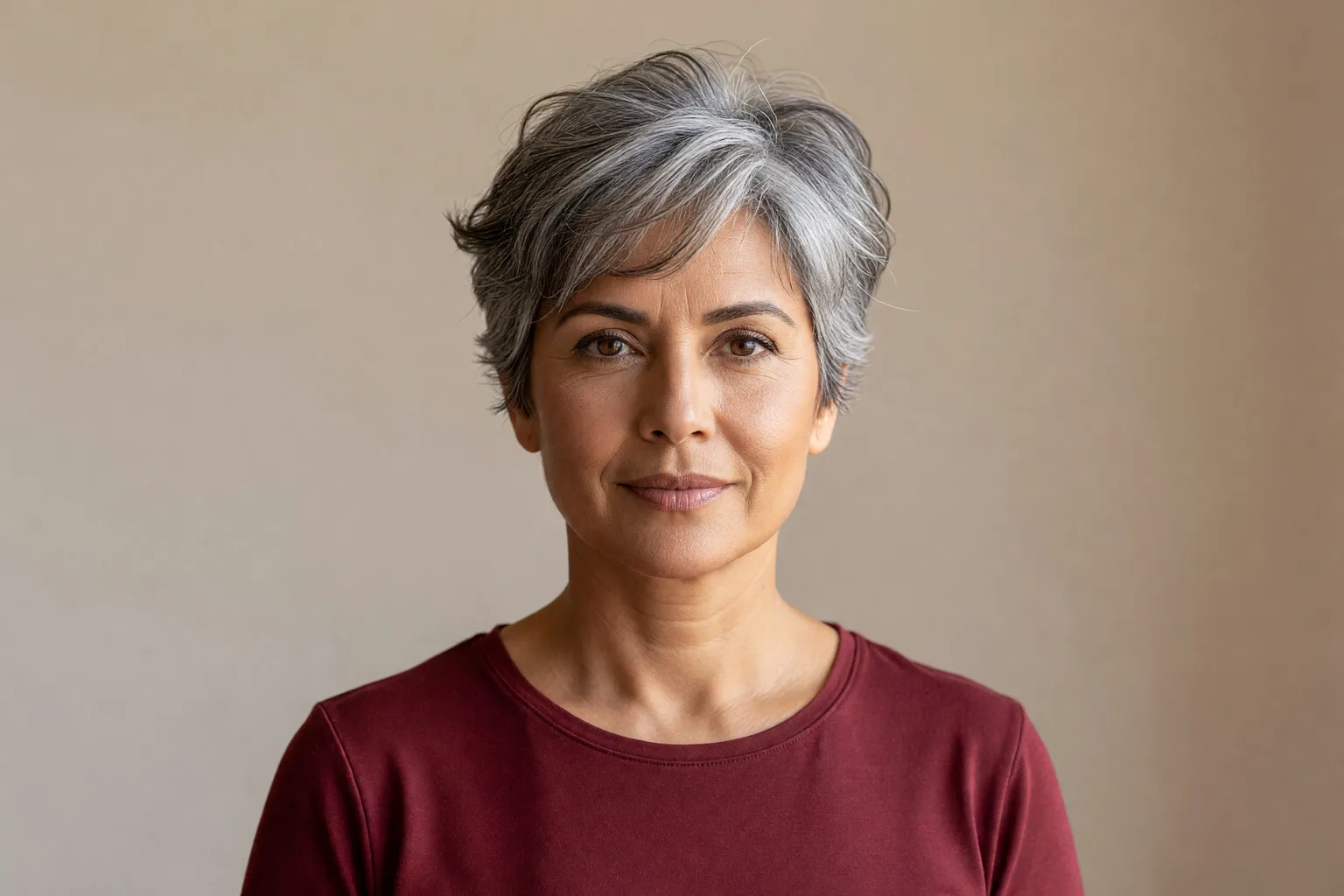
Upkeep note: pixies look tidiest with a trim every four to six weeks. Fewer products and less drying time, but more frequent salon visits.
Short stacked or graduated bob
A bob that is slightly shorter at the nape and longer toward the face adds shape at the back of the head. It can work well for straight and slightly wavy hair. Very coarse gray hair may stick out at the stacked section, so ask your stylist whether your texture will sit flat there.
Tapered natural cut
For curly and coily hair, a tapered cut that is shorter at the sides and back with more length on top can look polished with very little styling. Silver coils look especially bold in this shape, as in the hero image above.
Chin-length bob
A classic chin-length bob is one of the easiest short options to grow out. If you are curious about short hair but cautious, this is a gentle first step.
Long hairstyles for women over 50
There is no age limit on long hair. Long silver or gray hair can look beautiful. What matters is that the ends look cared for and the shape is intentional.
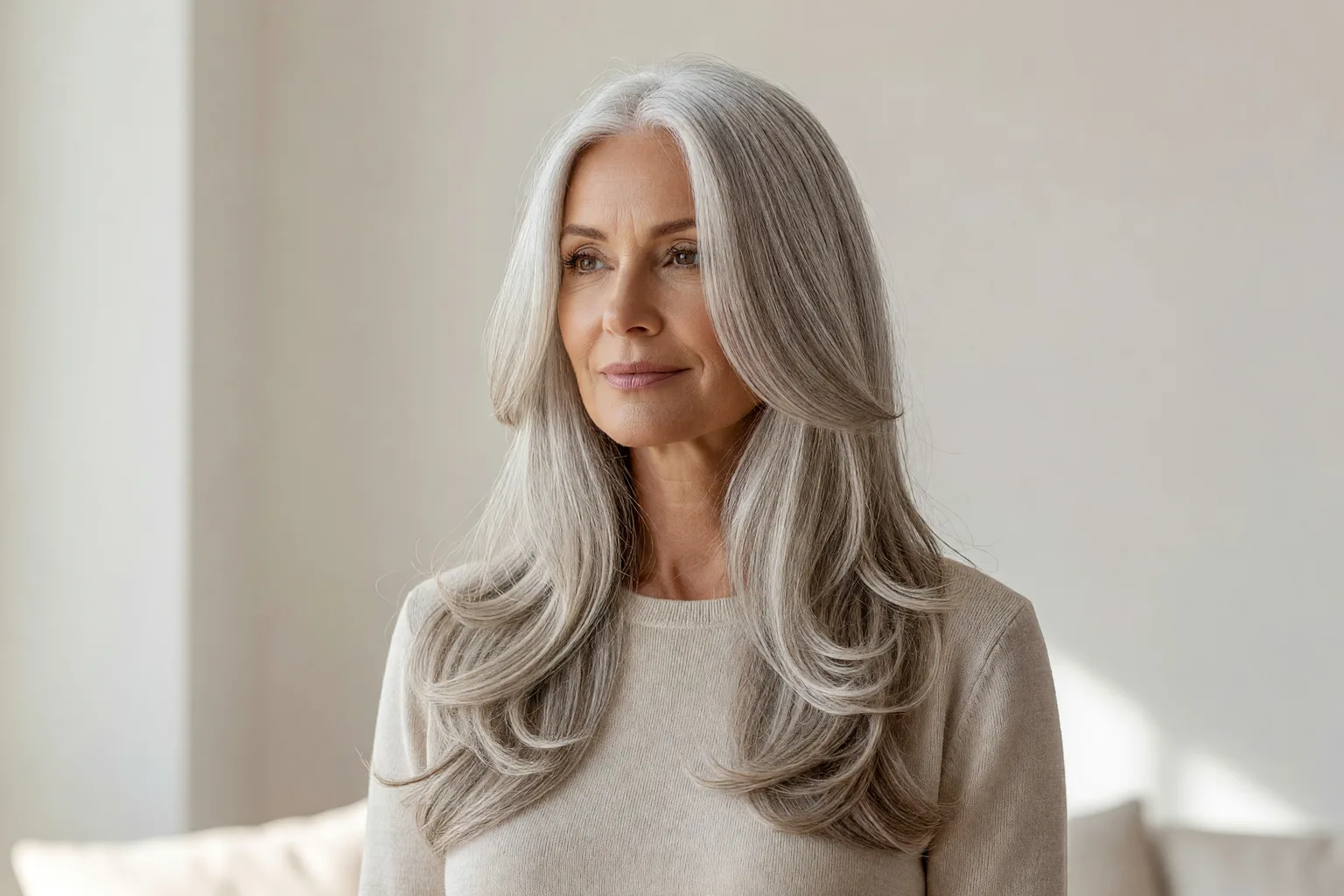
Tips for keeping long hair:
- Protect the perimeter. A fairly blunt or lightly layered bottom edge keeps the ends looking full. If the last few inches look sparse, a modest trim can help a lot.
- Add a few long layers. Long layers starting below the chin give movement without taking too much weight from the lengths.
- Face-framing pieces. Soft layers around the face add shape when the hair is worn down. See our guide to face-framing layers for placement ideas.
- Easy updos. If you wear long hair up often, a low bun, clip or braid can be just as polished as wearing it down.
If your crown has thinned, long one-length hair may make it more visible. In that case, ask about shoulder-length or collarbone-length as a middle ground.
When your texture changes
Cut for the hair you have today, not the hair in an old photo. Hormonal changes, gray growth and medications are among the reasons hair can change texture over time. The specifics vary from person to person.
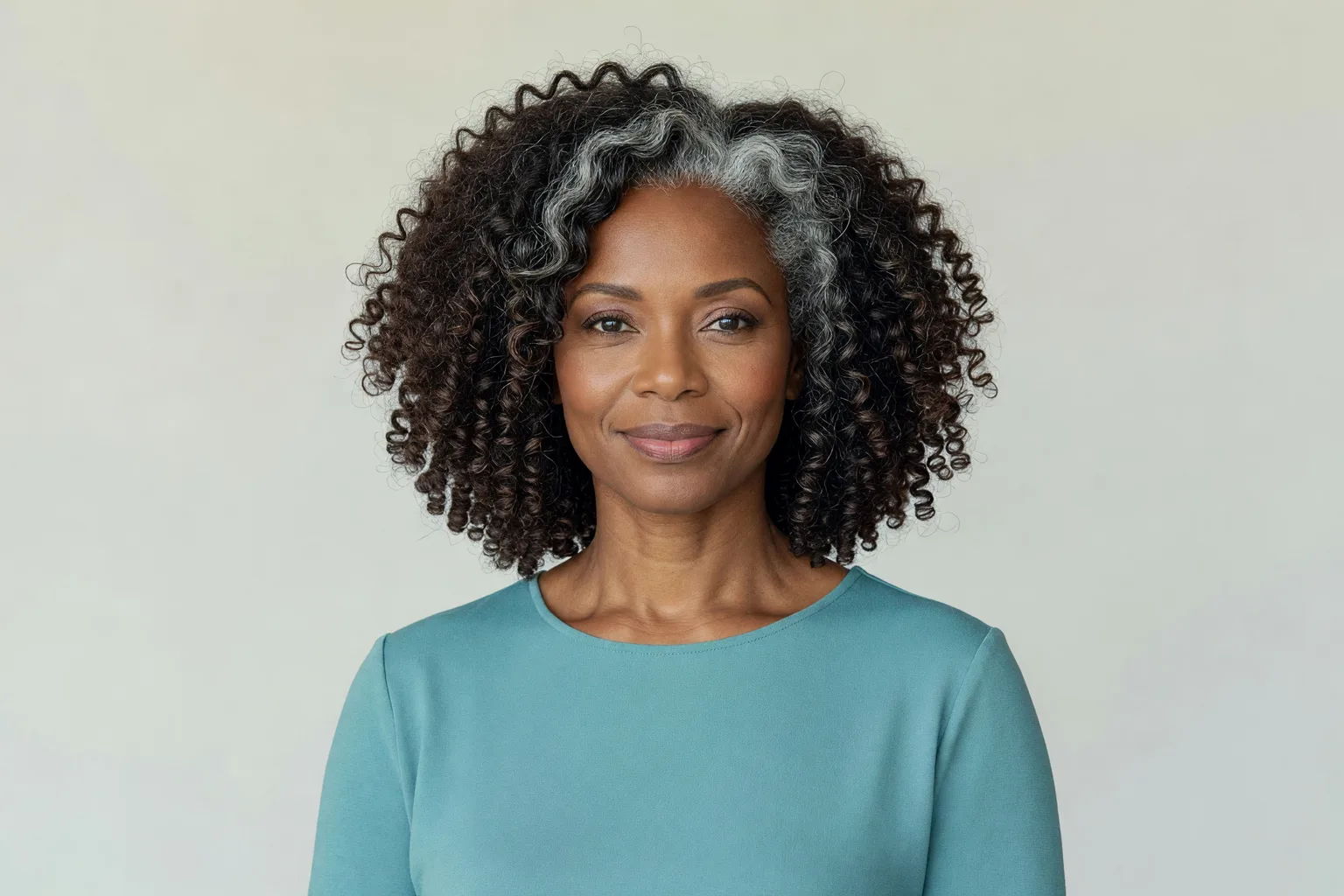
Common changes and what to ask for:
- Hair got wavier or frizzier. A cut with long layers can let new waves form instead of fighting them. Our haircuts for wavy hair guide covers shapes that work with the bend.
- Curls loosened or tightened. Ask for a cut done on dry or air-dried curls so the stylist sees the real shape.
- Gray strands stick up. Coarse gray hairs often stand up at the part. A slightly longer length on top can help them lie down, and a light smoothing cream or oil can calm them.
- Hair feels drier. Gentler shampoos, less heat and a conditioner on the lengths may help. Your stylist can suggest products for your hair type.
Low-maintenance haircuts for women over 50
A low-maintenance cut is one that looks finished with your normal routine and grows out without an awkward stage. That differs for every person, but some general patterns hold.
| Cut | Daily styling | Trim frequency | Good for |
|---|---|---|---|
| Textured pixie | Very little, a bit of cream | Often, every 4 to 6 weeks | Fast mornings, gray texture |
| Soft layered bob | Air-dry or quick blow-dry | About every 6 to 8 weeks | Most textures, glasses wearers |
| Shoulder-length with long layers | Air-dry, occasional waves | About every 8 to 12 weeks | Wavy hair, ponytail fans |
| Long hair with blunt perimeter | Air-dry, updo when needed | About every 10 to 12 weeks | Keeping length, low salon visits |
| Rounded curly cut | Wash-and-go with a curl product | About every 8 to 12 weeks | Curly and coily hair |
Trim frequencies are typical ranges to discuss with your stylist, not fixed rules.
Questions to ask yourself:
- Do I blow-dry, or do I air-dry most days?
- How often am I willing to go to the salon?
- Do I need to tie my hair back for exercise, work or gardening?
- Will I wear my glasses most of the day?
The answers usually narrow the list to two or three good choices.
Write a salon brief and preview a few options
Hypothetical example: Margaret is 61, wears glasses all day and is growing out her brown color. Her crown looks a little flatter than it used to, and she air-dries her hair. She is choosing between a soft layered bob and a short textured pixie. This is a fictional planning example, not a customer testimonial.
A brief for her stylist could look like this:
- Keep: Enough length to tuck behind the ears.
- Change: Remove most of the old color over the next two cuts. Add short layers at the crown.
- Check: How the front sits with my glasses, and how my gray texture behaves at the part.
A copyable request: "I want a soft bob around my jaw with a few short layers at the crown and a full bottom edge. I wear glasses every day and air-dry my hair. Please help me grow out the color and show me where the front pieces will fall with my frames on."
Before the appointment, it can help to see a couple of candidates on your own face. Naee lets you upload a selfie, get hairstyle recommendations based on facial analysis, and preview cuts and colors, including gray and silver shades. You can also copy a hairstyle from a reference photo and ask the AI chat questions about a look. Generations aim to follow your hair type, density and color, so you can compare options like "silver bob" versus "short pixie" side by side. A preview is a starting point for a conversation, not a guarantee of what a real cut will look like.
If that comparison would help you, download Naee for iPhone and save two or three favorites to show your stylist. The US App Store listing describes a free download and trial with limited credits; continued generation requires a subscription or credit purchase. Check the current in-app allowance and purchase terms rather than assuming unlimited free previews.
The takeaway: Choose your cut for your current color, crown density, texture and routine. Gray, short, long, curly or straight: there is a good option at any length, and the best one is the one you enjoy on a normal day.
FAQ
What is the most flattering haircut for women over 50?
There is no single answer. A soft layered bob is a common starting point because it works with many textures, glasses and gray hair, but a pixie or long layers can be just as flattering. Choose based on your hair's density, texture and how much styling you want to do.
Should women over 50 cut their hair short?
Only if you want to. Short hair is quick to style and shows gray texture well, but long hair can look just as polished when the ends are healthy. Length is a personal choice, not an age rule.
What haircut is best for thinning hair on top?
Short layers at the crown with a fuller outline below often help, as do a moved part or soft bangs. Avoid heavy thinning on hair that is already fine. See our guide to haircuts for thinning hair in women for more options, and talk to a doctor about sudden or patchy loss.
What hairstyles work for women over 50 with glasses?
Cuts with front pieces that end just below the frames, wispy bangs that sit above them, and a little volume at the crown or jaw tend to work well. Wear your glasses at the appointment so the stylist can check the front.
Can women over 50 have long gray hair?
Yes. Long gray or silver hair can look beautiful. Keep the ends trimmed, consider a few long layers for movement, and use a toning shampoo only if you notice an unwanted yellow cast.
Can an AI preview tell me which cut will suit me?
It can show how a shape or color might look on your face, which helps you narrow options. It cannot measure your actual density, texture or how a cut will grow out. Use a preview to start a conversation with your stylist, then let them check your real hair.