
Should I Get Bangs? Check the Upkeep Before You Cut
Get bangs if you like a specific fringe shape and are willing to maintain it on an ordinary morning. Wait if you need every front piece tied back, dislike hair touching your forehead, or do not want to reset a fringe. The useful question is not only “Should I get bangs?” It is “Would I enjoy wearing these bangs after sleeping, exercising and putting on my glasses?”

Generated editorial illustration, not Naee output or an actual haircut result. The scene represents routine, not measured suitability.
A flattering salon photograph does not tell you how the roots behave at home. Start with your preferences and daily constraints, then ask a stylist to check the real front section before choosing the cut.
Publisher disclosure: This is the Naee blog, and we have a commercial interest in Naee. We have not tested these fringe options in the app or conducted a suitability benchmark. All images below are original generated editorial illustrations of hypothetical adults, not customer results.
Contents
- Should I get bangs or wait?
- Compare six fringe directions
- Check the roots, texture and glasses
- Budget for styling, washing, trims and grow-out
- Why a forehead ruler cannot give a verdict
- Save a salon brief, not a verdict
- FAQ
Should I get bangs or wait?
Say yes to a named style, not to bangs in the abstract. A full fringe, a few wispy strands and a longer split fringe place different amounts of hair across the forehead. They also behave differently when the front gets damp, separates or grows longer.
Use this worksheet as a conversation starter. It is not a score, and one answer does not automatically disqualify you.
| Everyday question | A reason to consider bangs | A reason to wait or change the plan |
|---|---|---|
| Do I enjoy hair near my forehead? | You like the visible frame and do not mind contact | You repeatedly push front strands away |
| What can I do before leaving home? | You accept a small reset and learning a technique | You want absolutely no front-section styling |
| Must all hair fit in a ponytail? | Loose front pieces or a clip are acceptable | Your work or exercise routine requires a completely clear front |
| Can I revisit the salon? | You can arrange trims around your preferred outline | Frequent appointments would be frustrating or impractical |
| Do I like the ordinary version? | You like the shape without a polished blowout | You only like the heavily styled reference |
| Am I comfortable with grow-out? | You can wear a part, clips or a changing shape | You need the current shape back immediately if you dislike it |
The strongest “yes” is: “I want this front shape, understand its upkeep and have checked that it can work with my own hair.” A useful “not yet” is: “I like the idea, but I need a version that clears my eyes without heat.” That second answer still gives a stylist something concrete to solve.
If you mainly want a change around the face rather than forehead coverage, see face-framing layers and their shortest pieces. That guide owns the detailed front-layer endpoints; here the decision is whether to add a fringe at all.
Compare six fringe directions
The following illustrations hold the overall length broadly around the collarbone so that front shape stays the main idea. They depict different hypothetical adults, not a controlled same-person comparison. Differences in texture, density and face are not evidence that one fringe is better.
No fringe: keep the front open
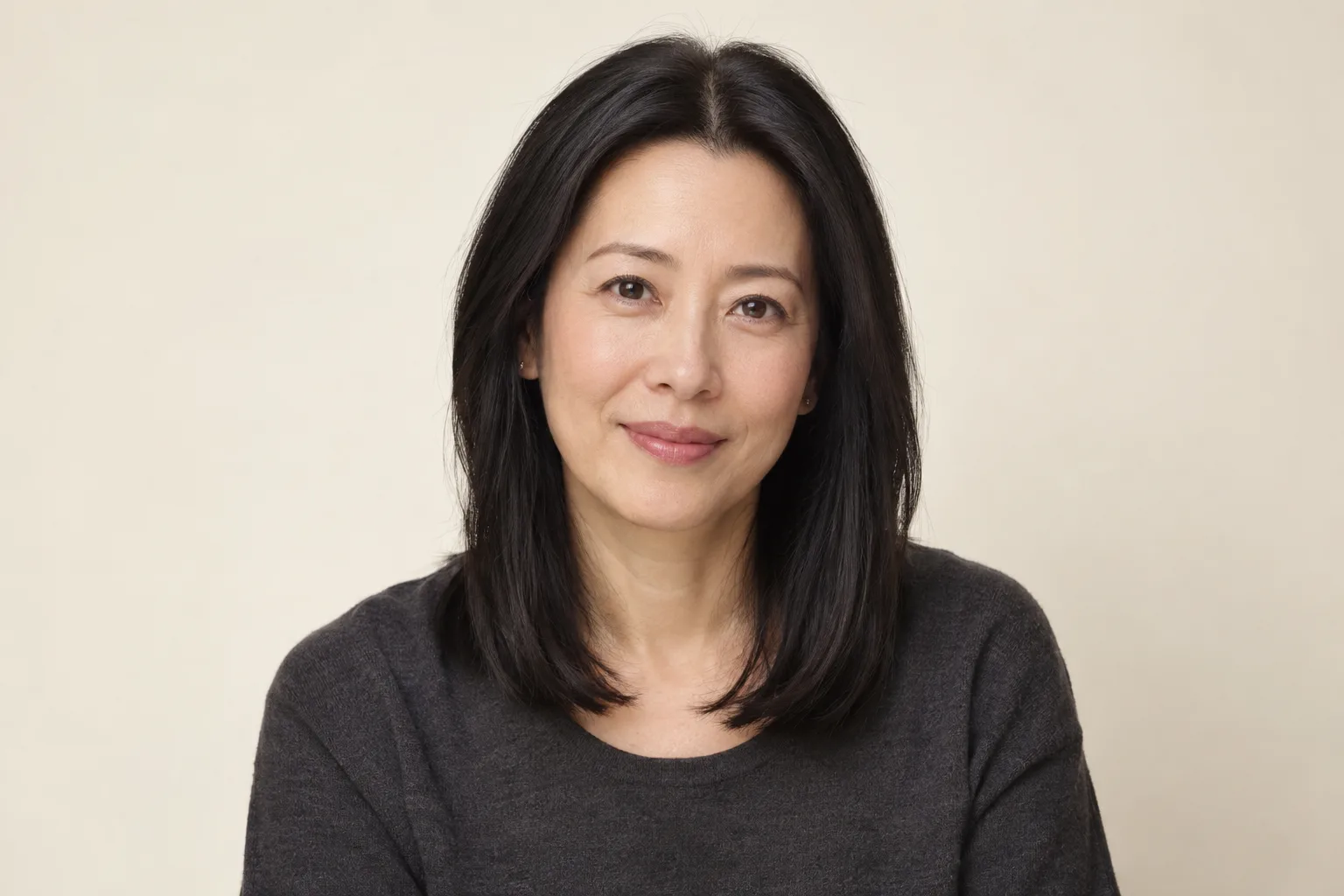
Generated editorial illustration, not Naee output or a real transformation. An open front is an intentional option, not a failed bangs choice.
Keeping the front open preserves the ability to sweep the hair away. It is a sensible baseline if forehead contact or loose strands bother you. Save a photo of your current front as a reference, because changing the part can already change the frame without committing to short pieces. An open front can still need styling; “no bangs” does not mean “no upkeep.”
Longer curtain fringe: a split front

Generated editorial illustration, not Naee output or an actual haircut result. This shows a longer split-fringe direction, not a promised finish.
Longer curtain bangs leave an opening in the center and move the emphasis toward the sides. Their extra length may allow more styling alternatives during grow-out. Ask whether the shortest pieces will stay where you want them without a brush or heat. Longer does not guarantee that they tuck behind the ears or stay off the eyes.
Soft full fringe: coverage across the forehead
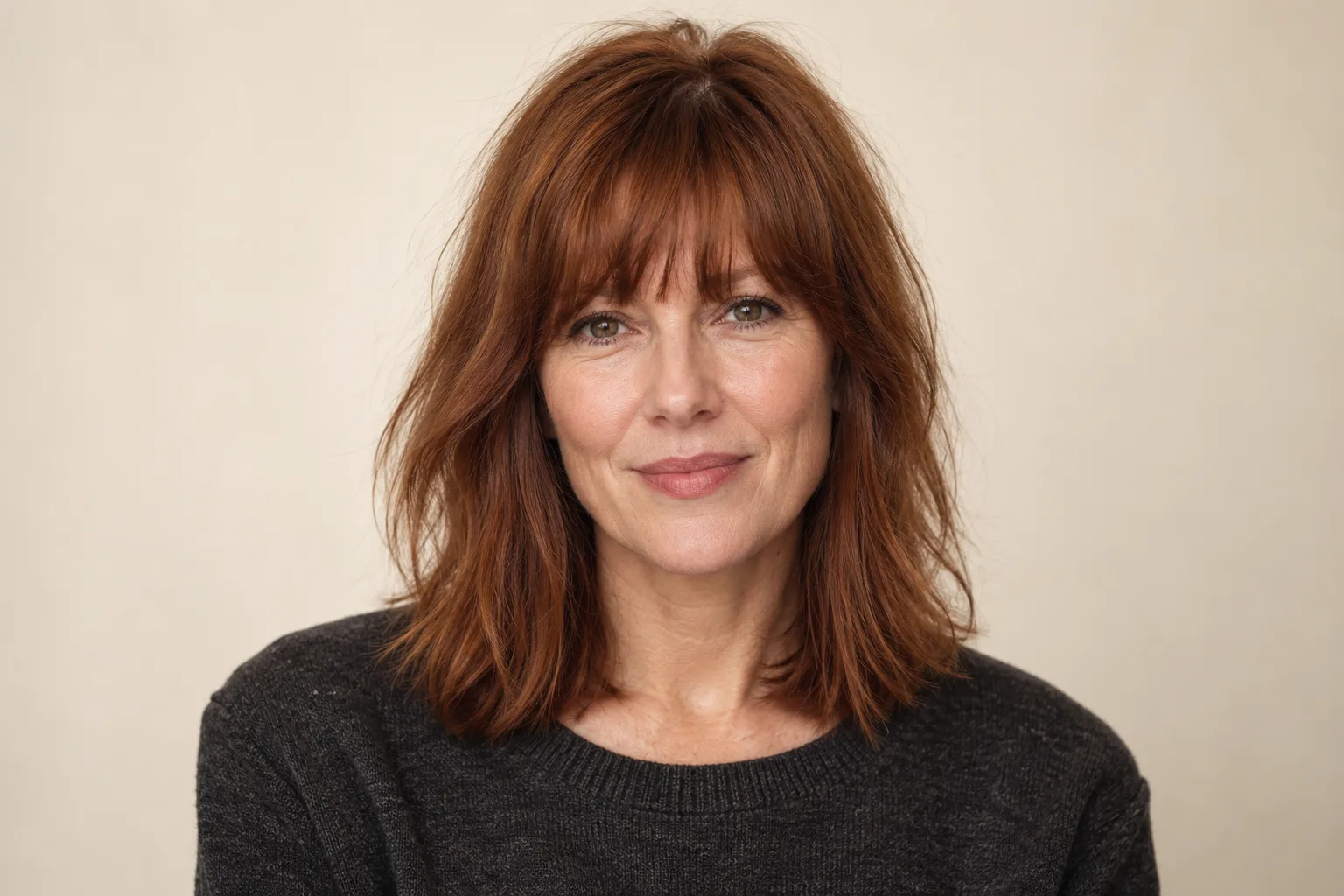
Generated editorial illustration, not Naee output or an actual haircut result. Full coverage is a visual preference, not a universal face-shape recommendation.
A soft full fringe gives a continuous frame across the front. If you love that coverage, discuss the amount of hair assigned to it and the intended dry edge. A small amount of growth can move a brow-adjacent fringe toward the eyes, making the outline feel different even while the rest of the haircut looks unchanged. Softer edges do not remove that practical issue.
Airy wispy fringe: visible space between strands

Generated editorial illustration, not Naee output or a measured density assessment. The separated strands are a style concept.
Wispy bangs show some forehead through separated pieces. They can offer less visual coverage than a full fringe, but separation also makes unwanted gaps or an oily finish noticeable. Ask a stylist whether your actual front section can produce the reference without taking too much hair from the surrounding shape. “Wispy” is not a promise of effortless styling.
Naturally curly fringe: choose the dry shape
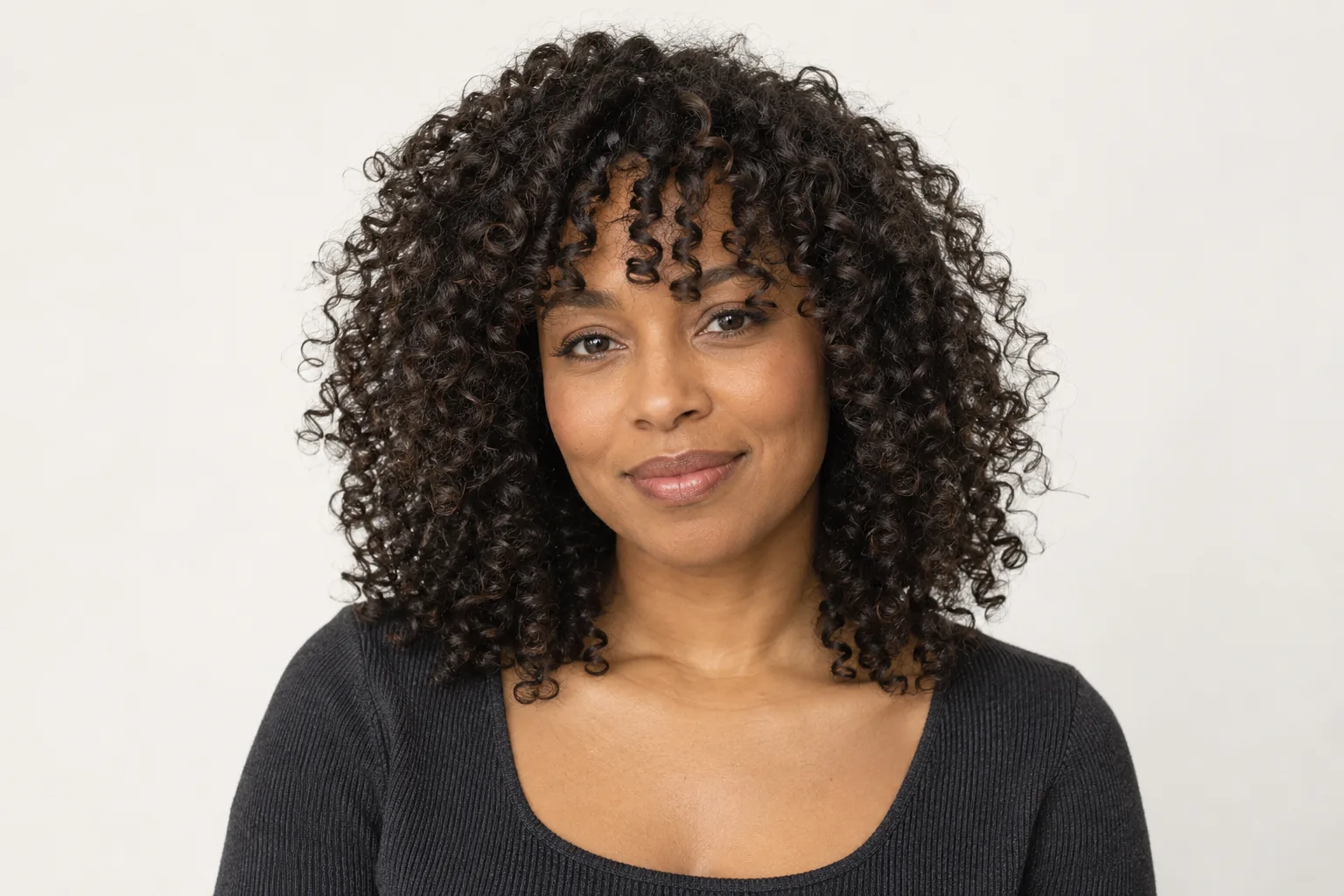
Generated editorial illustration, not Naee output or an actual curl result. Dry curl placement and shrinkage vary on real hair.
You do not have to straighten curls to wear bangs. If you want a naturally curly fringe, make that explicit rather than bringing a straight-fringe reference and hoping it translates. In SELF's interviews with hairstylists Joseph Maine and Charlie Taylor, dry assessment is important because wet curls and waves can sit differently once dry. Ask your stylist to evaluate your usual dry texture and expected variation, not only the stretched length.
For readers considering a shorter overall cut as well, curly bob dry length and shape covers that separate decision. Avoid changing the entire perimeter just because the fringe reference happens to show a bob.
Side-swept fringe: follow a diagonal
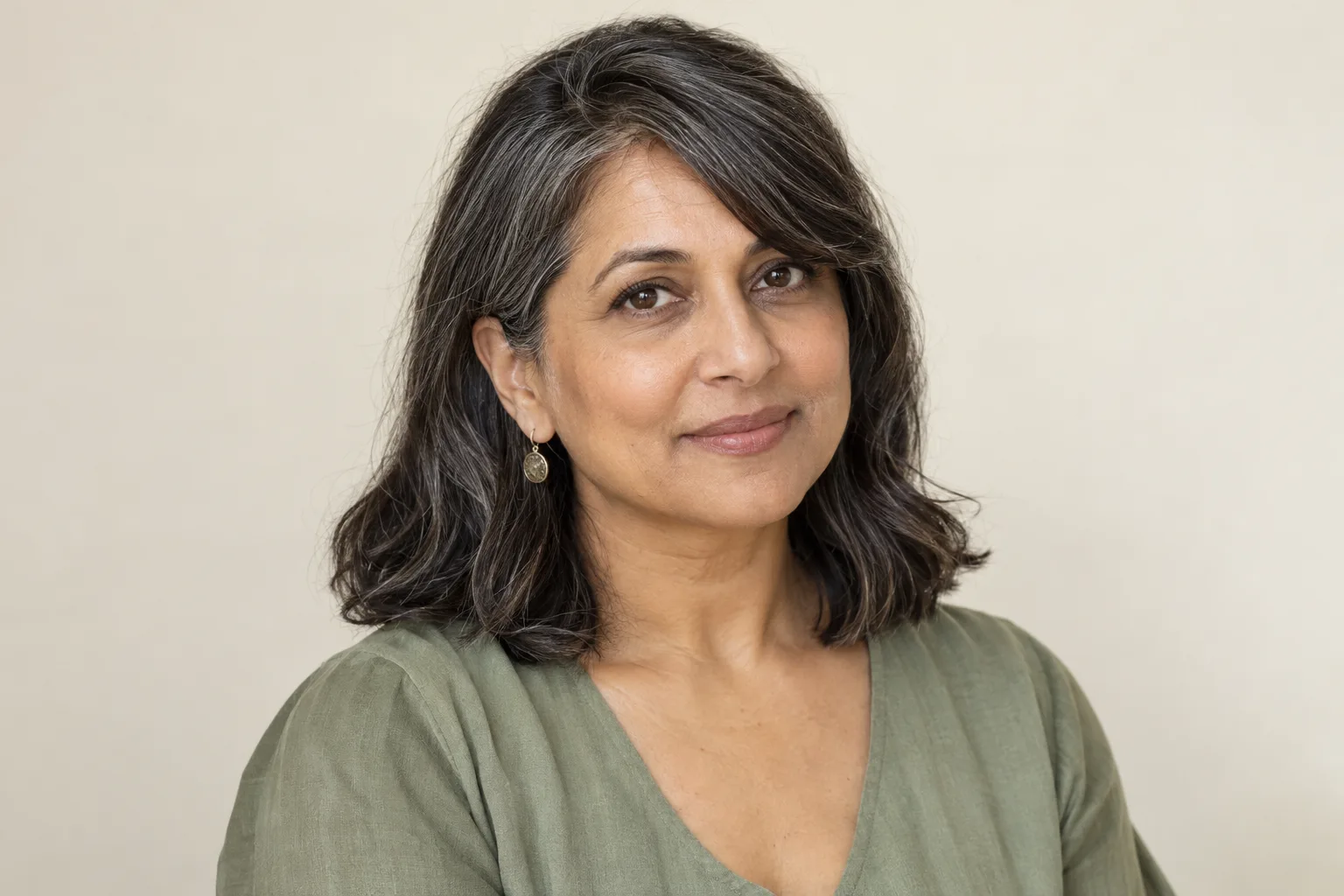
Generated editorial illustration, not Naee output or an actual haircut result. This is a diagonal-front option, not proof of compatibility with a particular growth pattern.
A side-swept fringe creates a diagonal rather than a horizontal band. It may appeal if you enjoy an existing side part. Ask which direction the roots naturally take and whether the swept pieces will remain out of your preferred eye line. A photograph can show the direction you like, but cannot reveal whether it took repeated styling to hold it.
Check the roots, texture and glasses
Before cutting, show the stylist how your hair behaves without being freshly forced into place. Bring your usual part, explain whether you air-dry, and describe what changes after sleep or humidity. Do not assume a sleek reference represents the model's natural hair.
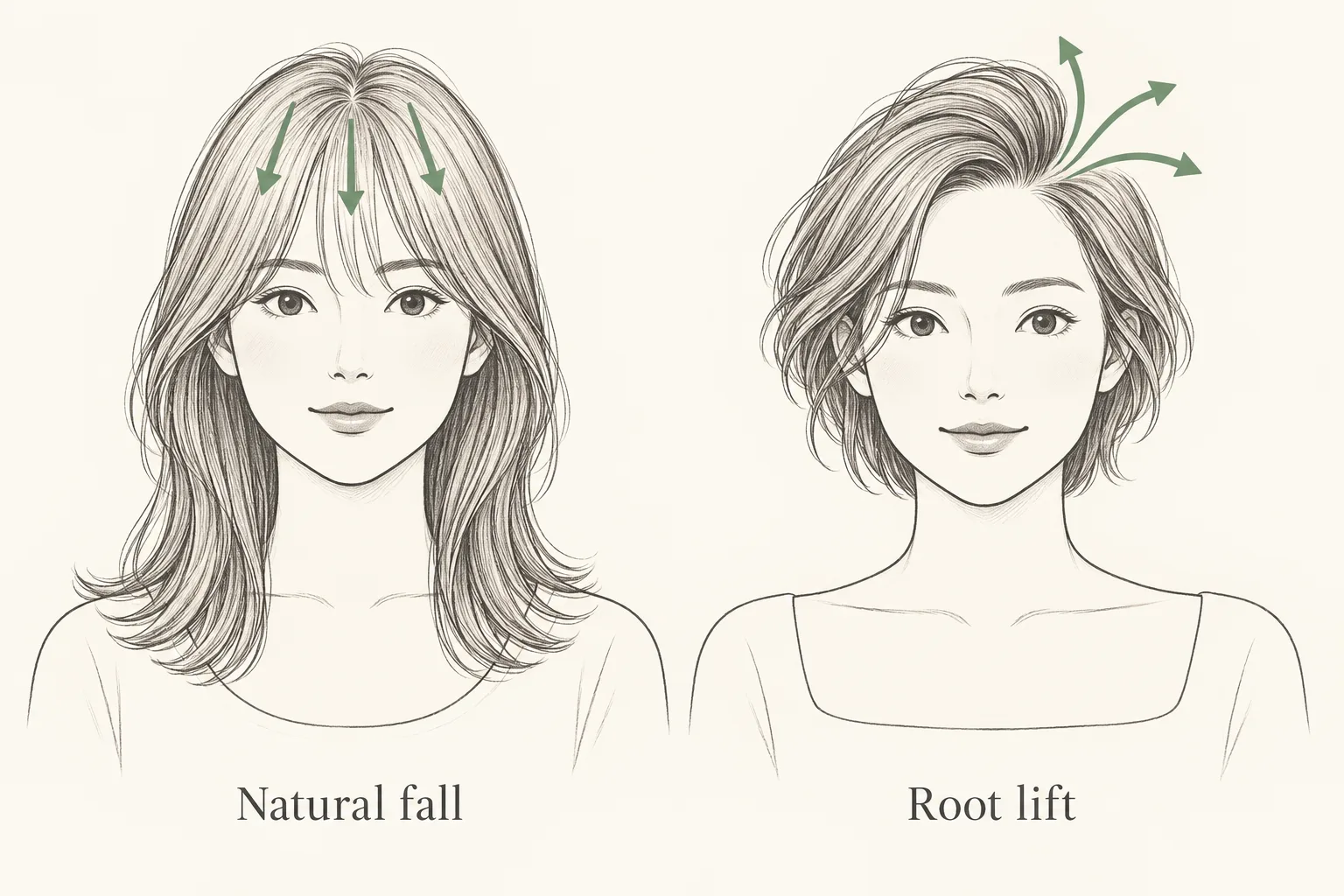
Generated editorial illustration, not Naee output, a scalp diagnosis or a measured match. Arrows explain possible growth directions only.
A cowlick is a planning factor, not an automatic no. A front root pattern may lift, separate or redirect the fringe. In ELLE's stylist interviews on first-time bangs, Tom Smith notes that strong growth patterns can require more skill and time to style. Ask the stylist to demonstrate the specific reset and explain whether a different part, length or coverage would cooperate better. Decide whether that effort is acceptable to you.
Front-section density also matters. Individual fine strands and a sparse front section are different issues; neither can be reliably measured by a flattering generated portrait. A fringe uses some of the available front hair. Ask how its section would affect the hair left beside the face, rather than requesting a thick fringe from an illustration that may have invented extra fullness. Our fine-hair preview checklist explains what to inspect.

Generated editorial illustration, not Naee output or a real glasses fitting. Check the interaction with your own frames and natural head position.
Bring the glasses you actually wear. Look forward, down and to either side, then remove and replace them. Discuss where the dry fringe sits relative to the frames and whether strands would get caught or need frequent pushing aside. A straight-on photo alone may hide the interaction at the temples. Do the same practical check with a work headset or regularly worn hat if those affect your front hair.
Budget for styling, washing, trims and grow-out
Bangs put a small section of hair in a conspicuous place. Even a minor bend from sleeping can change the frame. Ask for a morning method you can repeat, including a no-heat option if that is your preference. A brief reset might mean lightly re-wetting and positioning the front; another cut may need drying or more deliberate curl definition. Neither an illustration nor a style name can establish your daily time requirement.
Treat quoted times as examples, not commitments. ELLE's interviews discuss routines ranging from quick repositioning to longer restyling. If you only have five minutes available, tell the stylist that this is your maximum, not an invitation to prescribe a longer routine that looks easy in a video.
The front can become oily or sweaty before the rest of the hair needs washing. SELF's stylists discuss refreshing or washing bangs separately, but that is not a requirement to shampoo them every morning. The American Academy of Dermatology's hair-care guidance recommends washing according to dirt and oil and adapting care to hair type. Ask how to refresh your fringe without unnecessarily drying a curly or already dry section.
If styling involves heat, the same AAD guidance recommends limiting hot-tool use, using low or medium settings and a heat-protective product. Do not solve every bend with repeated high-heat passes. Ask for a technique matched to your texture; a smooth straight finish and an intact curl pattern are different goals.
There is no universal trim interval. SELF's 2016 article gives two to three weeks as a common example. That older advice is not a timetable for every fringe, and its mention of complimentary trims does not establish your salon's policy. A precise short edge may need attention sooner than a longer shape you are happy to wear as it evolves. Agree on a first check-in based on your desired outline, ask the cost, and adjust according to actual growth and comfort.
Grow-out also has no universal deadline. Your starting length, growth and goal determine when the front can blend, tuck or tie back. Before cutting, agree on an interim option such as a changing part, a clip or a softer reshaping appointment. Do not assume all full fringes turn into effortless curtain bangs on their own. Avoid impulsive home cuts, especially widening the section to “fix” a gap; ask the stylist what to do when the shape stops behaving.
Why a forehead ruler cannot give a verdict
Vogue's September 2024 bangs article describes a finger-based forehead and facial-proportion equation that assigns fringe recommendations. The article does not supply a validation study showing that those numbers predict whether a person will enjoy bangs or maintain them successfully. Do not treat the equation as a tested suitability verdict.
Finger width, pose and the visible hairline can change a measurement. More importantly, a measurement cannot know whether you dislike forehead contact, have a front cowlick, wear glasses or want a heat-free routine. A low-maintenance claim also needs to be checked against those realities, rather than accepted because a style is called French or curtain.
Use proportions to describe a preference, not to police a face. “I like an open center” and “I want more forehead coverage” are actionable. “My number says I cannot have bangs” is not a sound reason to reject a style you like. Our face-shape hairstyle overview and heart-shaped-face framing guide offer visual directions rather than universal permissions or bans.
Save a salon brief, not a verdict
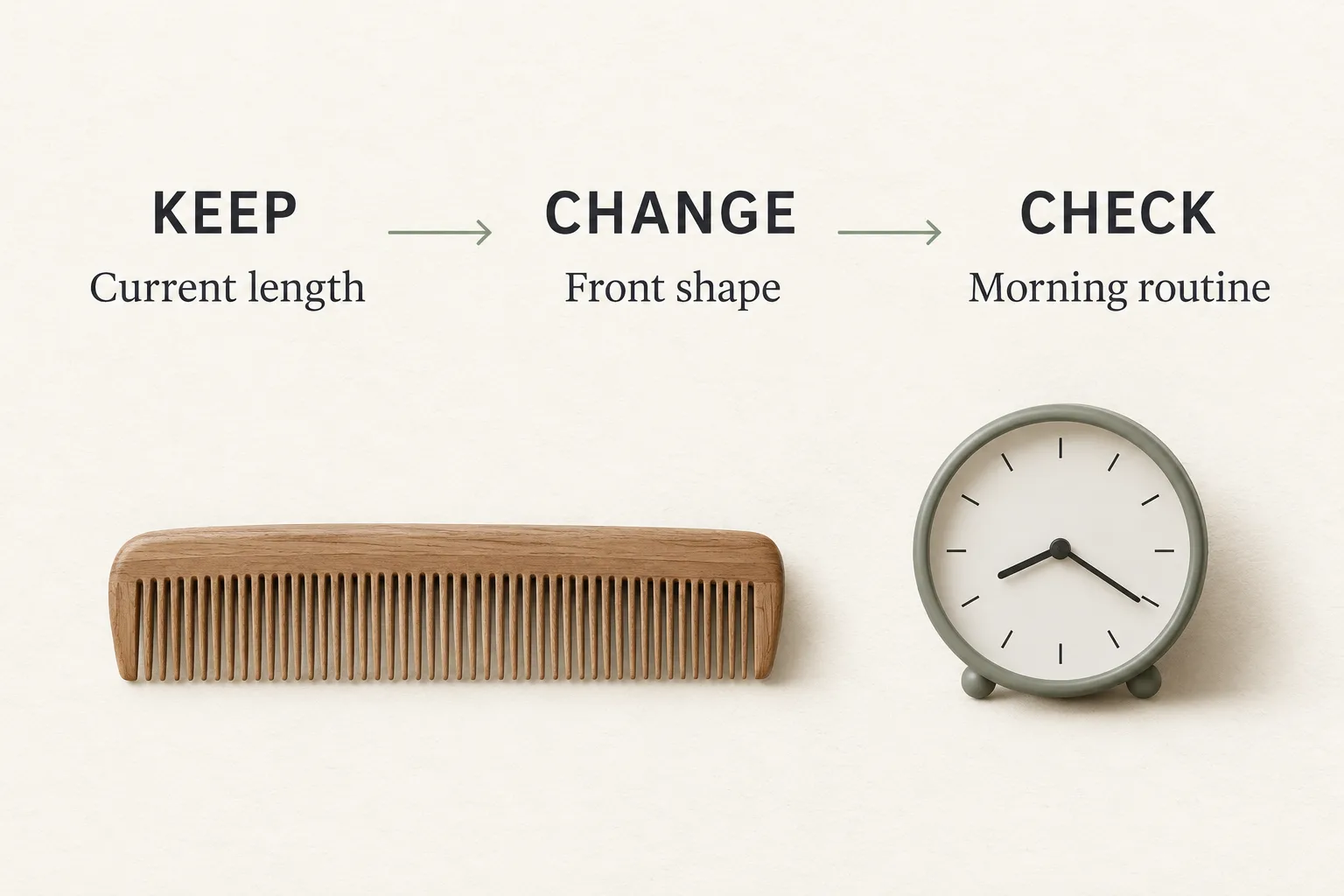
Generated editorial illustration, not Naee output or an algorithmic readiness score. The worksheet organizes a conversation, not a verdict.
Write three short lists before booking:
- Keep: overall length, natural texture, current color and anything you need for tying back.
- Change: the front shape you prefer, how much forehead you want visible and whether you want a center or side opening.
- Check: roots, available front hair, glasses, dry length, your maximum styling time, trim cost and grow-out alternatives.
For a hypothetical example, Maya likes a soft full fringe but needs all front hair away for two exercise sessions each week and allows five minutes for morning styling. Instead of declaring bangs impossible, she brings both the full-fringe idea and a longer split-front alternative. She asks whether either can meet her tie-back needs and requests a demonstration before choosing. If neither meets those constraints, keeping the open front is a positive decision, not a failure to be adventurous.
A preview can help clarify the visual part. Use one clear, unfiltered photo and compare the current front with one requested fringe while keeping overall length, color and texture unchanged. For example: “Show a soft full fringe, keeping the current length and color. Keep my facial features and hairline unchanged.” Those are instructions, not guarantees that the generator will follow them.
Check the output against the original. If the nose, forehead, eyes or facial outline changed, do not attribute the improvement to bangs. See how to check face preservation and how to choose a hairstyle with AI. Generated roots do not prove a cowlick can be controlled, and invented fullness does not prove your front section can support the cut.
The official Naee website describes previews and saving references for a stylist. If you want to explore a visual direction, Naee for iPhone is a free download with in-app purchases. Its listing describes a trial with limited credits and continued generation through a subscription or credit purchase. This is not unlimited free generation. Check the current terms before purchasing, and treat any saved result as a conversation aid rather than feasibility proof.
Your next step: save one preferred fringe direction, one acceptable fallback and the keep-change-check notes. Ask the stylist to reconcile the image with your real roots, texture and routine before the first cut.
FAQ
Should I get bangs if I have a cowlick?
Possibly, if the selected shape works with the growth direction or you accept the demonstrated styling effort. Ask a stylist to inspect the roots in their usual state. A generated straight fringe cannot establish how your cowlick will behave.
Are curtain bangs always low maintenance?
No. Their longer split shape can offer flexibility, but roots, texture and the desired finish still matter. Ask what they look like air-dried and after sleep, and whether the shortest pieces will stay away from your eyes without extra work.
How often do bangs need a trim?
There is no interval that fits everyone. Two to three weeks appears in older stylist advice, but your outline, growth and tolerance for a longer fringe determine the useful schedule. Confirm the salon's cost and agree on a personalized first check-in.
Can I try bangs before cutting?
A clip-in fringe or an AI illustration can help you judge coverage and front shape. Neither reproduces your exact roots, density or styling routine. With AI, compare the face to the source photo and bring the result to a stylist as an idea, not a prediction.
Does a small forehead mean I should not get bangs?
No measurement gives a universal permission or ban. Decide how much forehead you want visible, compare front shapes, and check the practical fit. A finger-width formula does not replace those choices or a real-hair consultation.