
Long Layers: Types, Hair Density and a Clear Salon Brief
Long layers remove some weight and add movement while keeping most of your length, but the right version depends on how much hair you have, its natural texture and how much of the bottom edge you want to keep. Before the appointment, decide three things: where the shortest layer should start, how strongly the layers should show, and what the hemline should look like from behind.
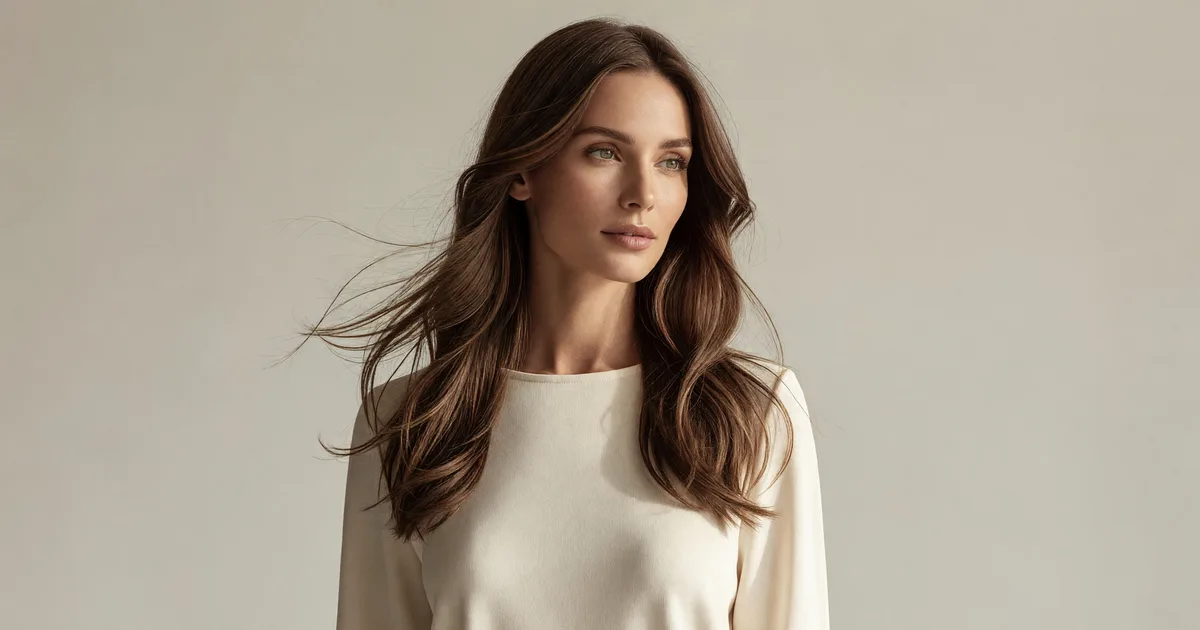
Generated editorial illustration, not Naee output or a real haircut result. Soft, blended layers with retained length are one of several long-layer directions.
"Long layers" sounds like a single haircut, yet stylists use it for very different shapes. One person means a quiet trim with a few longer layers through the ends. Another means a dramatic V-shaped back with piecey, textured layers. This guide helps you work out which version you actually want, and how to say it clearly.
Publisher disclosure: This is the Naee blog, and we have a commercial interest in Naee. We have not tested these layering options in the app or run a suitability benchmark. All images below are original generated editorial illustrations of hypothetical adults, not customer results.
Contents
- What long layers actually change
- Types of long layers
- Long layers by hair density
- Long layers by hair texture
- Maintenance and growing out
- Write a salon brief for long layers
- Preview the shape before you cut
- FAQ
What long layers actually change
Uncut long hair tends to collect weight at the bottom. That weight pulls the top flat and can make the ends look heavy or blunt. Layering cuts some strands shorter than others, so the hair no longer all ends at one line. The result is less bulk in the lower section and more visible movement through the lengths.
Three decisions shape every long layered haircut:
- Where layering starts. Layers that begin around the collarbone keep the top smooth and only move the ends. Layers that begin near the cheekbones or chin create much more shape.
- How much the layers show. Blended layers read as softness. Textured or disconnected layers read as a deliberate style.
- The hemline. The back can stay nearly straight, curve into a U, or point into a V. A strong curve or point usually means less hair at the very bottom on the outer sides.
Layers also concentrate on different zones. This article is about the overall layering through long hair. If your main interest is the pieces around your face, read our face-framing layers guide, which focuses on where the front pieces fall and how they interact with your part. Many people combine both, but they are separate requests and worth naming separately.
One point that is easy to miss: layering does not create more hair. It redistributes what is there. On thick hair, that can feel like relief. On fine or lower-density hair, too many layers can make the ends look sparse. That trade-off is why density matters as much as the reference photo.
Types of long layers
Soft long layers
Soft long layers are the most conservative option. The stylist removes weight gently and keeps the layers blended so there are no visible steps. From the front, the hair looks like a healthier, lighter version of your current length.
This is a good starting point if you have never had layers, if you want to keep a full-looking hemline, or if you wear your hair in a ponytail often. Ask for "long, blended layers starting below the collarbone" if you want a light touch.
Choppy or textured long layers
Choppy layers use techniques such as point cutting or slide cutting to create piecey, separated ends. They look relaxed and lived-in, especially with waves or a textured spray. They also show more of the cut's structure, so they are less forgiving if you want a polished, sleek finish.
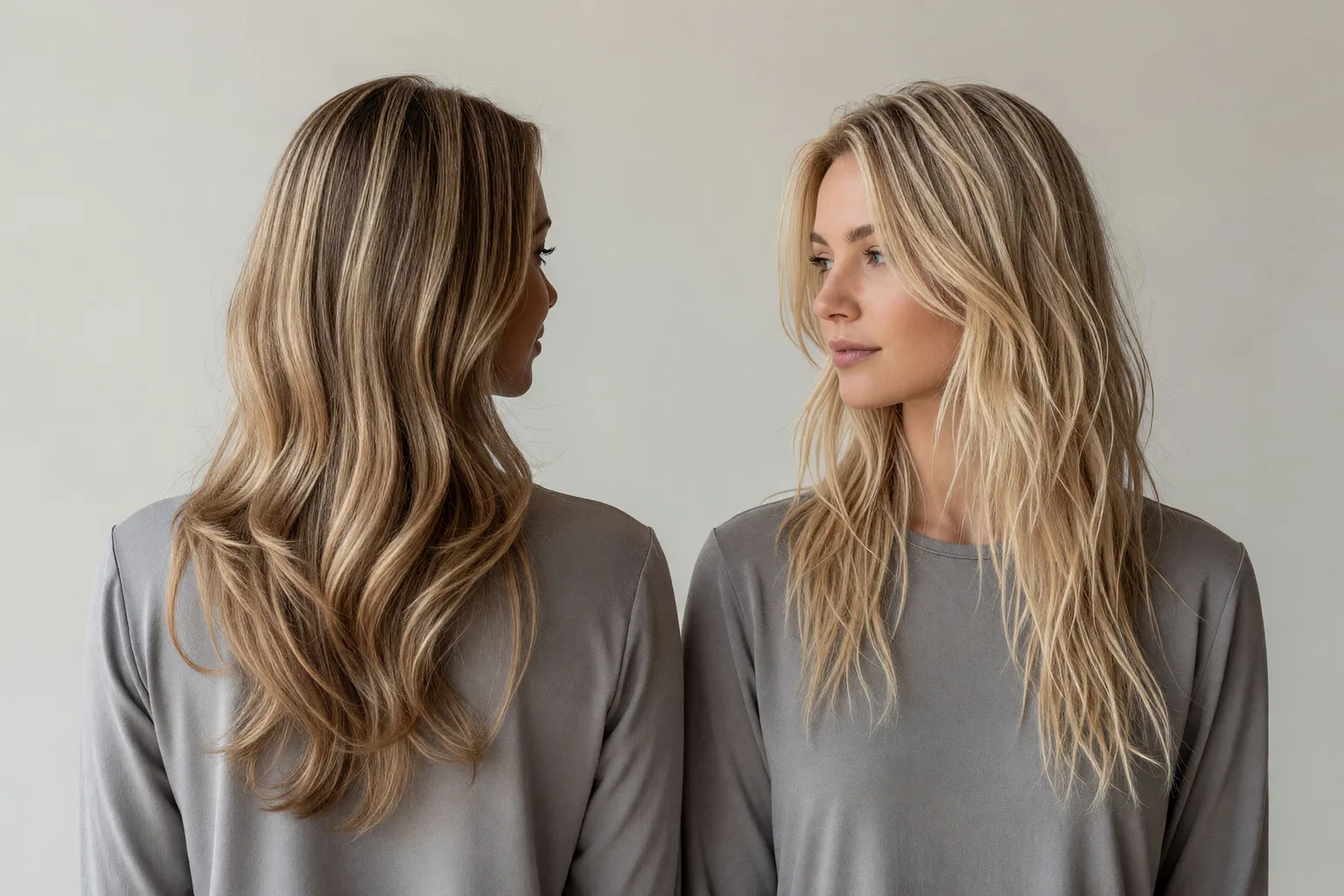
Generated editorial illustration, not Naee output or a real client result. Soft blended layers on the left; piecey textured layers on the right.
The practical difference is daily styling. Soft layers tend to look neat with a quick brush. Choppy layers often look best with some product and a bit of tousling. If you rarely style your hair, think twice before choosing a reference that depends on texture spray and a curling wand.
U-shaped long layers
A U-shape gives the back hemline a rounded curve: shorter at the sides, longer in the middle. It keeps a soft, full look from behind while adding movement at the edges. It suits people who want shape without a sharp point, and it grows out gracefully because the curve is gentle.
V-shaped long layers
A V-shape angles the back into a point. It makes the length look dramatic, especially on straight hair, because the eye follows the line down. The trade-off is that the outer back sections are noticeably shorter than the center, so the bottom looks thinner at the edges. On fine hair, a deep V can make the ends look wispy.
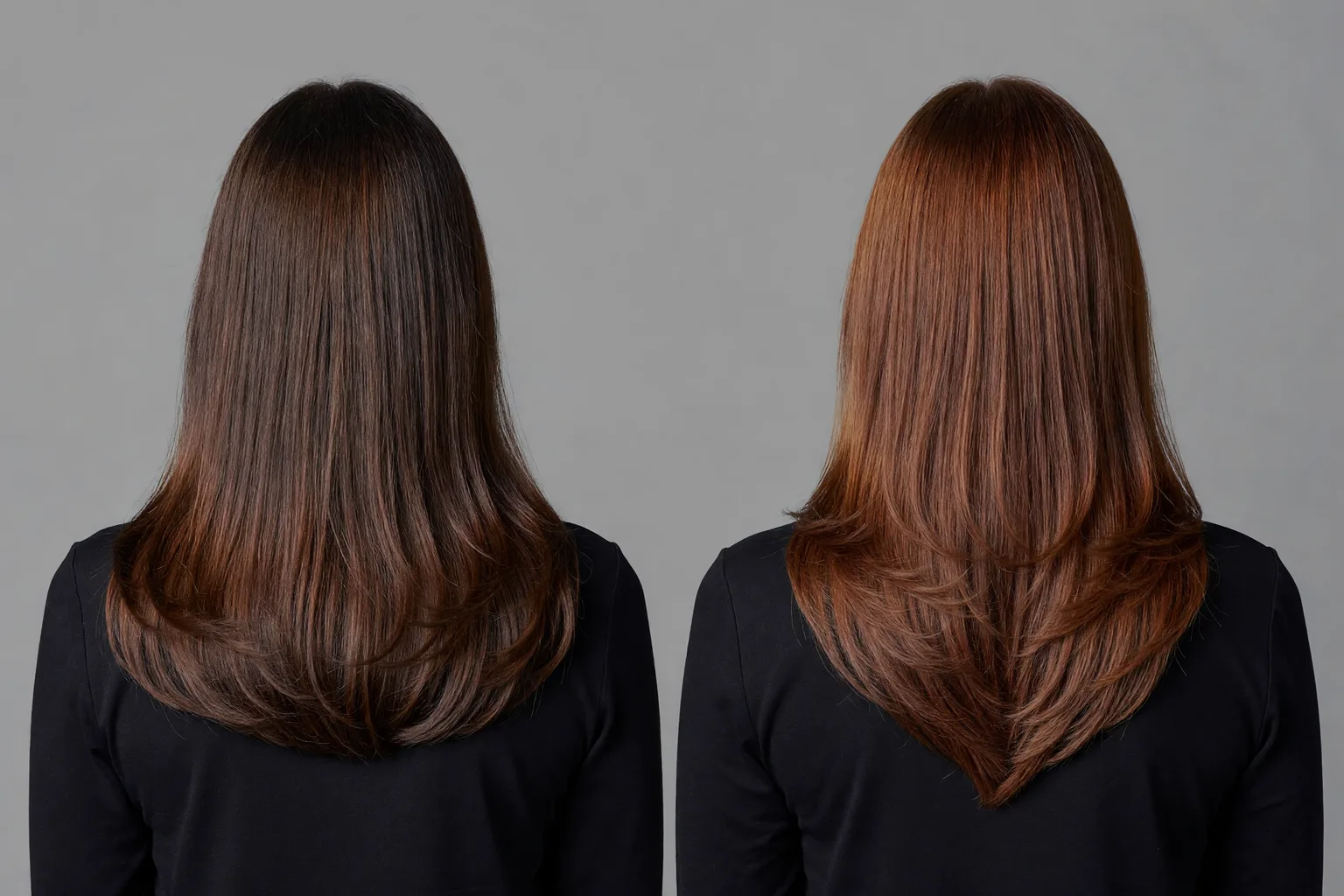
Generated editorial illustration, not a cutting diagram. A rounded U hemline on the left keeps more bulk at the bottom; a pointed V on the right looks more dramatic but thinner at the outer edges.
If you like the idea of a V but worry about sparse ends, ask for a "soft V" or a shallow point. You can always take it further at the next appointment. Length you cut away takes months to return.
Long layers with curtain bangs
Curtain bangs are a parted fringe that sweeps toward the cheekbones and blends into the layers. Paired with long layers, they add shape around the face while the length stays intact. They are also one of the gentler ways to try a fringe, because they can be tucked behind the ears as they grow.
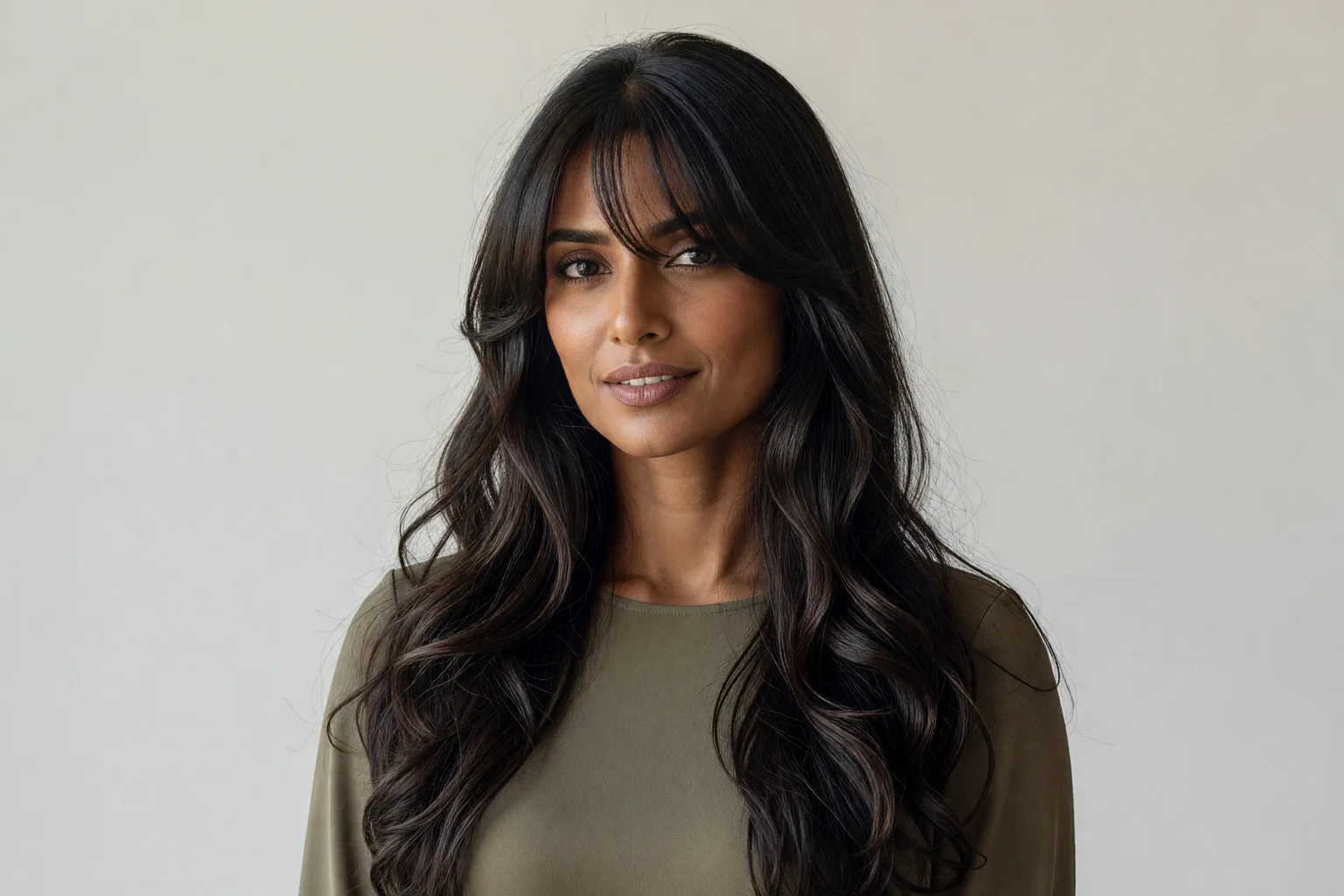
Generated editorial illustration, not Naee output or an actual haircut result. Curtain bangs blend into longer layers; the parted fringe still needs some daily attention.
Curtain bangs still need styling most days, and cowlicks at the hairline can change how they sit. If you are unsure about any fringe, our guide on whether you should get bangs walks through upkeep and the questions to ask first. If you want a more dramatic connected shape around the face, compare this with the butterfly haircut, which uses shorter, more prominent framing.
Long layers by hair density
Density is how many strands you have on your head. It is different from strand thickness: you can have fine strands and a lot of them, or coarse strands with lower density. A quick check is to pull your hair into a ponytail and look at the circumference, or part it and see how much scalp shows. Your stylist can confirm this in person.
High-density hair
Thick, high-density hair often benefits most from layering. Long, heavy hair can feel bulky and take a long time to dry. Your stylist may add internal layers, removing weight from underneath rather than only at the surface, so the hair moves without looking choppy on top.
Ask about:
- Internal or invisible layers to reduce bulk without obvious steps.
- How much weight will come out, so the hair does not puff outward at mid-length.
- Whether the shape will hold its line when you air-dry.
Medium-density hair
Medium density gives the most freedom. Soft layers, U-shapes, curtain bangs and moderate choppy layers can all work. The main question is styling preference: do you want a smooth finish or visible movement?
Fine or lower-density hair
With fine or lower-density hair, the risk is losing too much at the ends. A common approach is fewer, longer layers that keep a fuller hemline, with most of the movement in the top or front sections rather than throughout. Ask your stylist to protect the perimeter.
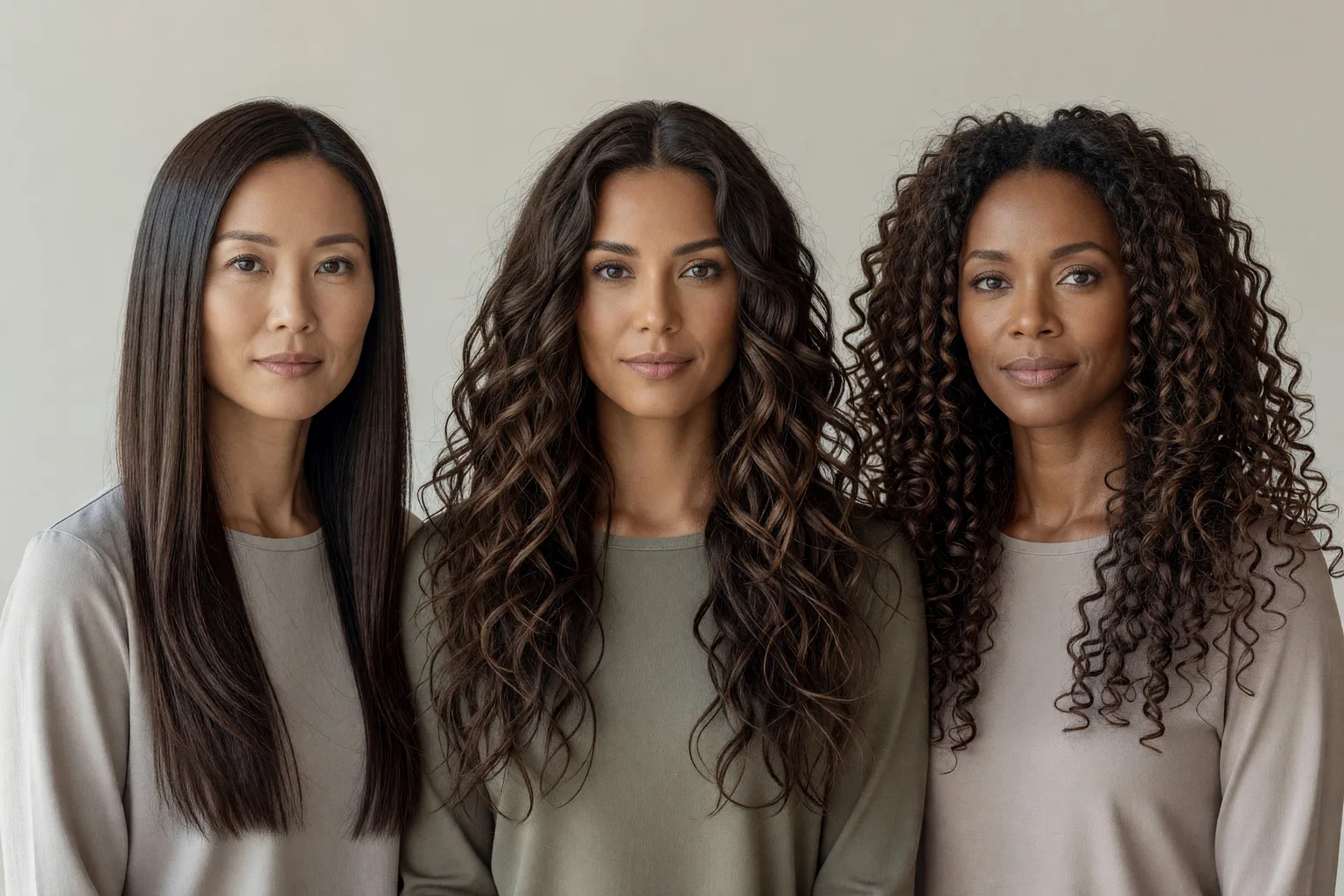
Generated editorial illustration, not a real client result. Fine straight hair often needs minimal layering; thick waves can take internal layers; curls are usually shaped curl by curl.
If your ends already look see-through, layering is not automatically the fix. Our guide to the best hairstyles for fine hair covers shapes that keep the bottom looking fuller, and some people end up preferring a slightly shorter blunt length with only light layers near the face.
Long layers by hair texture
Straight hair
Straight hair shows every line. Layers will be visible, so blending matters. Soft layers and U-shapes look polished; a V-shape looks striking. Choppy layers on straight hair can look piecey, which is great if that is the goal and messy if it is not. Expect the cut to look close to the salon finish when you blow-dry, and flatter when it dries naturally.
Wavy hair
Waves usually respond well to long layers, because removing weight lets the bend show. Without layers, wavy hair can look flat at the root and triangular at the bottom. Ask whether the stylist will check the cut dry or after styling, since waves shrink and shift as they dry. Our haircuts for wavy hair guide goes deeper on shapes that work with natural movement.
Curly and coily hair
Curly and coily hair need a stylist who cuts with curl pattern in mind. Many cut curls dry, one curl at a time, or use methods designed to shape rounded layers. Shrinkage means a layer that looks long when stretched can sit much higher once it dries. Bring photos of your hair in its natural state, and ask how the stylist plans to account for shrinkage before they start.
Rounded long layers on curls can reduce the triangle shape and give more definition around the crown. Very short top layers can stand up or spread outward, so discuss the shortest length carefully.
Maintenance and growing out
Long layers are often described as low maintenance, and compared with short cuts, they usually are. They still need some care to keep their shape.
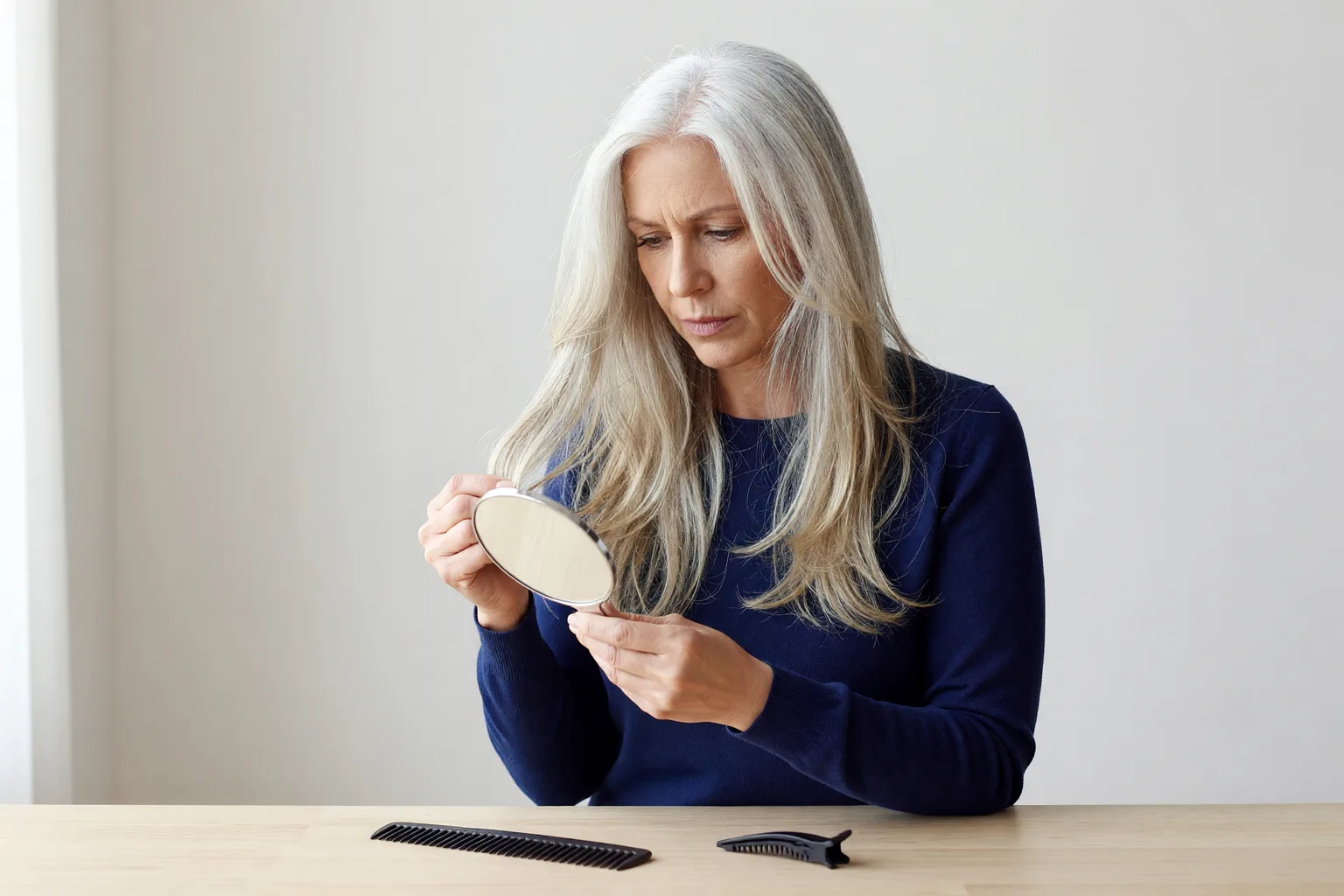
Generated editorial illustration, not Naee output. Checking your ends and how the layers fall helps you judge when a trim is due.
Trims. Stylists commonly suggest a trim every couple of months to keep layers defined, but the right interval depends on how quickly your hair grows, how damaged the ends are, and how much you mind a softer shape. Soft layers can stretch longer between trims than a crisp V or choppy layers, which lose their outline faster.
Styling. Soft layers often look fine air-dried. Layers that are meant to flip or curl outward usually need a round brush, a large curling iron or rollers. Ask your stylist to show you the simplest way to style the cut at home, using tools you already own.
Ends. Layering exposes more ends, so dryness and split ends show more readily. Gentle detangling, heat protection when you use hot tools, and avoiding tight elastics on wet hair all help.
Growing out. Long layers are among the easier cuts to grow out. As the shorter pieces lengthen, they blend back into the rest. Curtain bangs become face-framing pieces and then simply part of the length. A deep V takes longer to even out, because the sides need to catch up with the center.
Updos. Shorter layers can fall out of ponytails and buns. If you tie your hair back for work or exercise, tell the stylist where the shortest pieces must reach.
Write a salon brief for long layers
A clear brief prevents most layering disappointments. Stylists are skilled at interpreting photos, but a photo alone does not tell them which part of it you like.
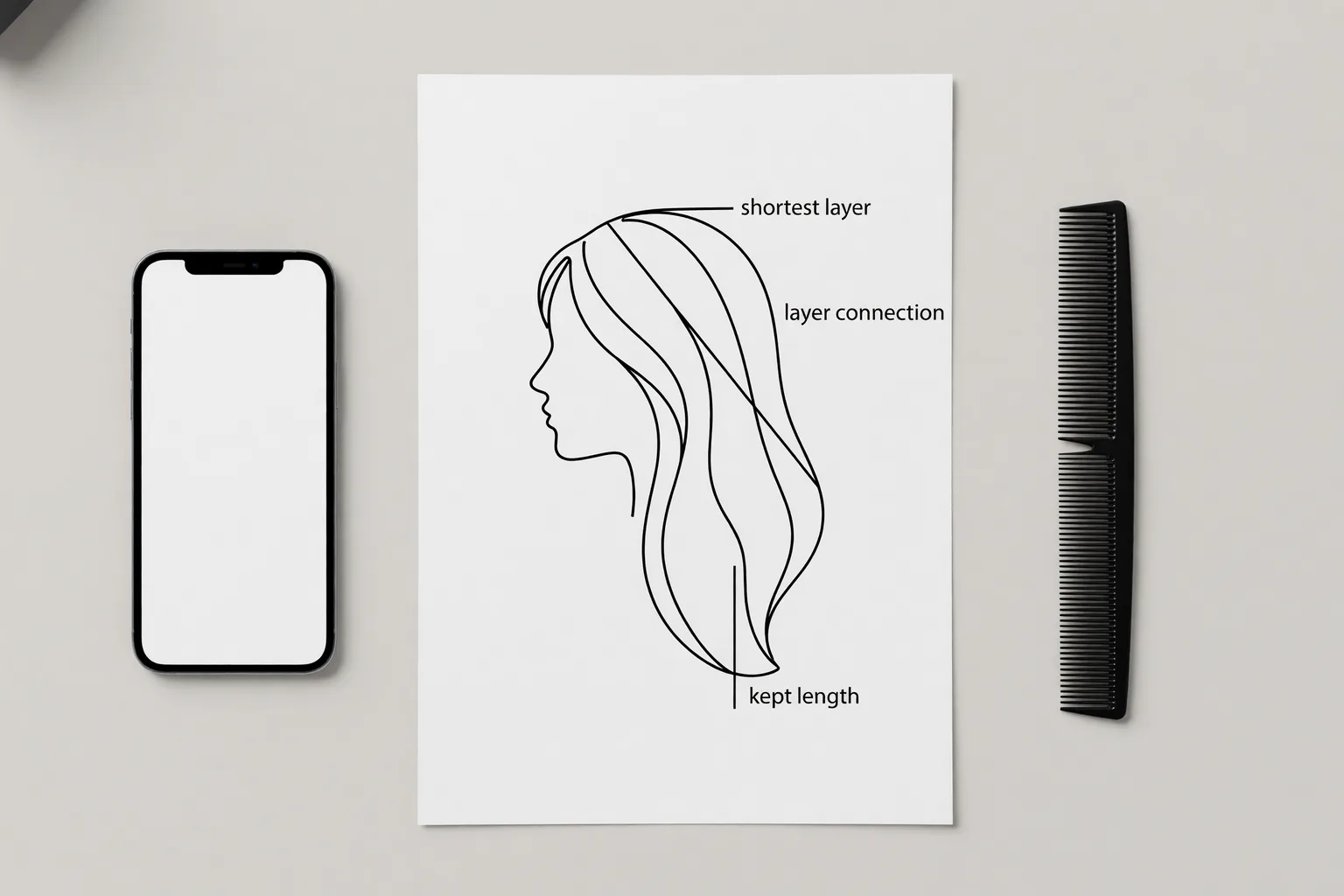
Generated editorial illustration, not an app screen or a cutting diagram. Mark the shortest layer, how the layers connect and the length you want to keep.
Bring answers to these:
- Kept length: Where should the longest ends finish? Show it with your hand, dry.
- Shortest layer: Where should layering begin? Collarbone, chin and cheekbone are very different requests.
- Visibility: Do you want soft, blended layers or a textured, piecey finish?
- Hemline: Straight, soft U, or V? How dramatic?
- Front: No change, face-framing pieces, or curtain bangs?
- Daily routine: How long do you usually spend on your hair, and do you blow-dry or air-dry?
- Must-haves: Ponytail length, tucking behind ears, a part you always wear.
Bring two or three reference photos, ideally of people with a similar texture and density to yours. A photo of thick, blow-dried waves will not translate directly to fine straight hair, however good the cut. Our guide to copying a hairstyle from a photo explains how to separate the cut from the styling and hair type in a picture.
A copyable request: "I want long, soft layers starting just below my collarbone, with a gentle U-shape at the back. Please keep the ends looking full, since my hair is on the finer side. No bangs this time, but I'd like the front to blend in. I usually air-dry, so I'd like it to look good without a blowout."
Then ask the stylist one question back: "What would you change about this for my hair?" Their answer often tells you more than the reference does.
Preview the shape before you cut
Choosing between soft layers, a V-shape or curtain bangs is easier when you can see them on your own face instead of a model's. That is where a preview can help with planning, as long as you treat it as a visual aid rather than a promise.
Naee is an iPhone app for AI hairstyle try-on. You upload a selfie and can explore recommended styles based on a facial analysis, try a different hair color, copy a hairstyle from a reference photo, or ask questions in an AI chat. Naee aims to keep generations consistent with your hair type, density and color, which matters for layering, because a preview that quietly doubles your hair's thickness is not a useful reference.
A sensible way to use it:
- Preview two or three long-layer directions, for example soft layers, a soft V and layers with curtain bangs.
- Keep the one you would actually wear on an ordinary day, not the most glamorous one.
- Save it alongside your written brief and show both to your stylist.
A preview cannot show how your hair will behave after a week of air-drying, or exactly how short each layer will sit. Your stylist still needs to assess your real density, texture and ends in person.
If that comparison would help, download Naee for iPhone. The app is a free download with a trial that includes limited credits; continued generation requires a subscription or credit purchase. Check the current in-app allowance and terms rather than assuming unlimited free previews.
The takeaway: Pick where your layers start, how visible they should be and what the hemline looks like, then match all three to your density and texture. A clear brief and a realistic reference matter more than the name of the cut.
FAQ
Do long layers make hair look thinner?
They can if too much is removed from the ends, especially on fine or lower-density hair. Fewer, longer layers and a protected hemline usually keep the bottom looking fuller. Ask your stylist how much weight they plan to take out.
Are long layers good for thick hair?
Often, yes. Thick hair tends to feel heavy and bulky at length, and internal layers can reduce that without making the surface look choppy. Ask that the layers be checked dry so the hair does not puff out at mid-length.
What is the difference between long layers and face-framing layers?
Long layers describe layering through the overall length and shape of the hair. Face-framing layers are the shorter pieces around the front. You can have one without the other or combine them. See our face-framing layers guide for the front-focused version.
Should I choose a U-shape or a V-shape?
A U-shape keeps more fullness at the bottom and grows out gently. A V-shape looks more dramatic but makes the outer back sections thinner. If you are unsure, start with a soft U or a shallow V.
How often should I trim long layers?
It varies with growth, ends and how crisp you want the shape. Many stylists suggest every couple of months, and soft layers can usually go longer than a sharp V or choppy cut. Ask your stylist what interval suits your hair.
Can I get long layers on curly hair?
Yes, ideally with a stylist experienced in cutting curls. Rounded layers can reduce a triangular shape and improve definition. Discuss shrinkage first, so the shortest layers do not end up higher than you expected.