
Hairstyles for Heart-Shaped Faces: Choose Your Framing
Choose hairstyles for heart-shaped faces by deciding how much forehead you want to show and where you want movement beside your chin. A soft-ended bob, collarbone waves, longer face frame, fringe or pixie can each serve a different preference. None is compulsory: your texture, front-piece length and everyday routine should decide which version makes your shortlist.

Generated editorial illustration, not Naee output, a real client transformation or a promised haircut result.
The useful question is not “How do I hide a heart-shaped face?” It is “Which frame do I want around the features I already have?” You may enjoy an open forehead, prefer a softer edge across it, or want a more rounded outline near the jaw. Those are styling choices, not corrections.
Publisher disclosure: This is the Naee blog. We have a commercial interest in Naee. This guide combines attributed salon guidance with editorial planning examples, not an independent app test or an assessment of your individual haircut suitability.
Contents
- Choose what you want to frame
- Five hairstyles for heart-shaped faces to compare
- Forehead framing and chin-level movement do different jobs
- Which front pieces must tuck or tie back
- Adapt to natural texture and density
- Shortlist two directions and write your salon brief
- FAQ
Choose what you want to frame
“Heart-shaped” usually describes a forehead or upper face that is wider than the lower jaw, with a taper toward a narrower chin. It is an approximate visual label, not a measurement you need to pass. A widow's peak is not required, and a selfie's angle, hairline coverage and lighting can change the apparent outline.
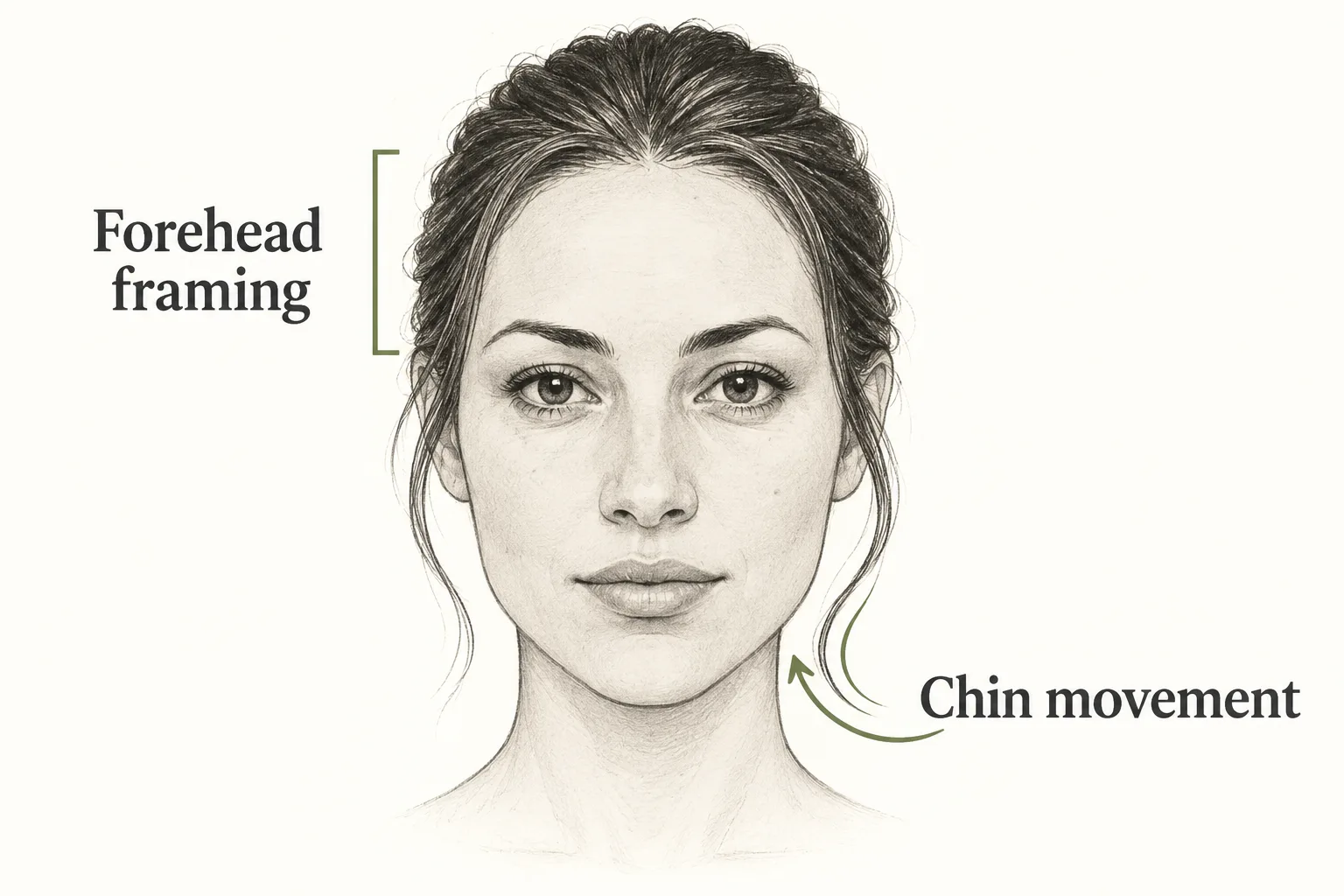
Generated editorial diagram. The marked areas are styling zones, not facial measurements or an app analysis.
Keep this decision distinct from the diamond-face label, where the cheekbones are typically described as the widest area and the forehead as narrower. Advice about adding upper-face width does not automatically transfer to someone whose forehead is already the broadest area. Nor does either label tell you that width should be reduced. Our hairstyles-by-face-shape guide explains the wider vocabulary; the diamond-face hairstyle guide addresses a different upper-face frame. Here, focus on the forehead-to-chin relationship.
Start with three questions:
- Forehead: Do I enjoy showing the hairline, want a diagonal sweep, or prefer some coverage?
- Lower frame: Do I want hair to curve beside my chin, continue below it, or leave the jaw exposed?
- Routine: Which front pieces need to stay out of my face without daily heat styling?
If you sit between heart and oval descriptions, borrow ideas from both rather than seeking a definitive classification. The oval-face haircut guide offers a useful comparison, but your practical constraints remain the same whichever label you choose.
Five hairstyles for heart-shaped faces to compare
The Chapel's salon guide proposes layers, longer fringe, textured pixies, middle partings and loose waves. Treat those as starting directions, not a list of cuts everyone with this label should wear. Its broad claims about flattering styles and minimal effort are not guarantees for your hair.
The options below separate the cut's outline from the finish used to display it. A photograph may show a useful endpoint while also showing styling you do not want to repeat.
A soft-ended chin bob

Generated editorial illustration of a bob direction, not a real salon result or Naee preview.
A bob ending beside the chin puts a visible hair edge near the narrowest part of the lower face. A slight bend can create a rounded lower frame without changing how much forehead is exposed. Ask your stylist to point out where the dry ends will land, especially if your hair bends outward.
“Soft-ended” need not mean heavily thinned. If your ends already separate, preserving a substantial perimeter may matter more than adding layers. Compare a softly finished edge with a more blunt one in our bob haircuts for fine hair guide. The limitation is practical: a chin bob usually gives up much of your tie-back length, and its outline may need trims before a longer cut would.
Collarbone waves
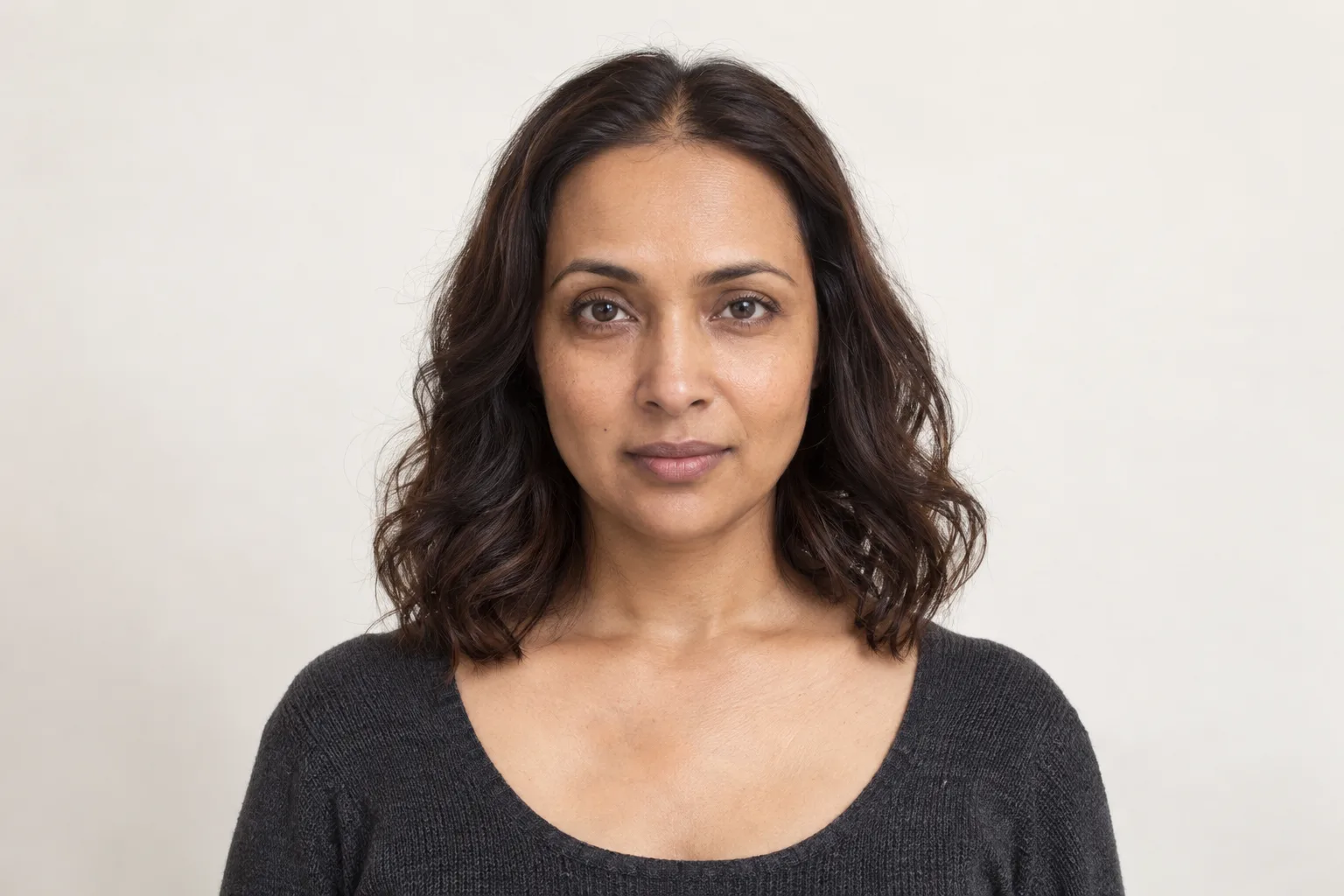
Generated editorial illustration of wave placement, not a prediction of anyone's natural drying pattern.
A collarbone cut leaves room for bends below the cheekbones and can create movement alongside the chin. If that is your goal, ask for the fullest wave to sit low rather than requesting “more volume” everywhere. Extra crown lift is a different choice and will not reproduce the same outline.
Check where your natural waves actually begin. If they develop only farther down the length, a shorter cut may remove the section that creates the illustrated bend. Shoulder contact can also turn the ends outward. Our haircuts for wavy hair guide helps separate these effects from a styled reference. Waves made with a tong are not automatically an easy wash-and-go result.
A longer face frame
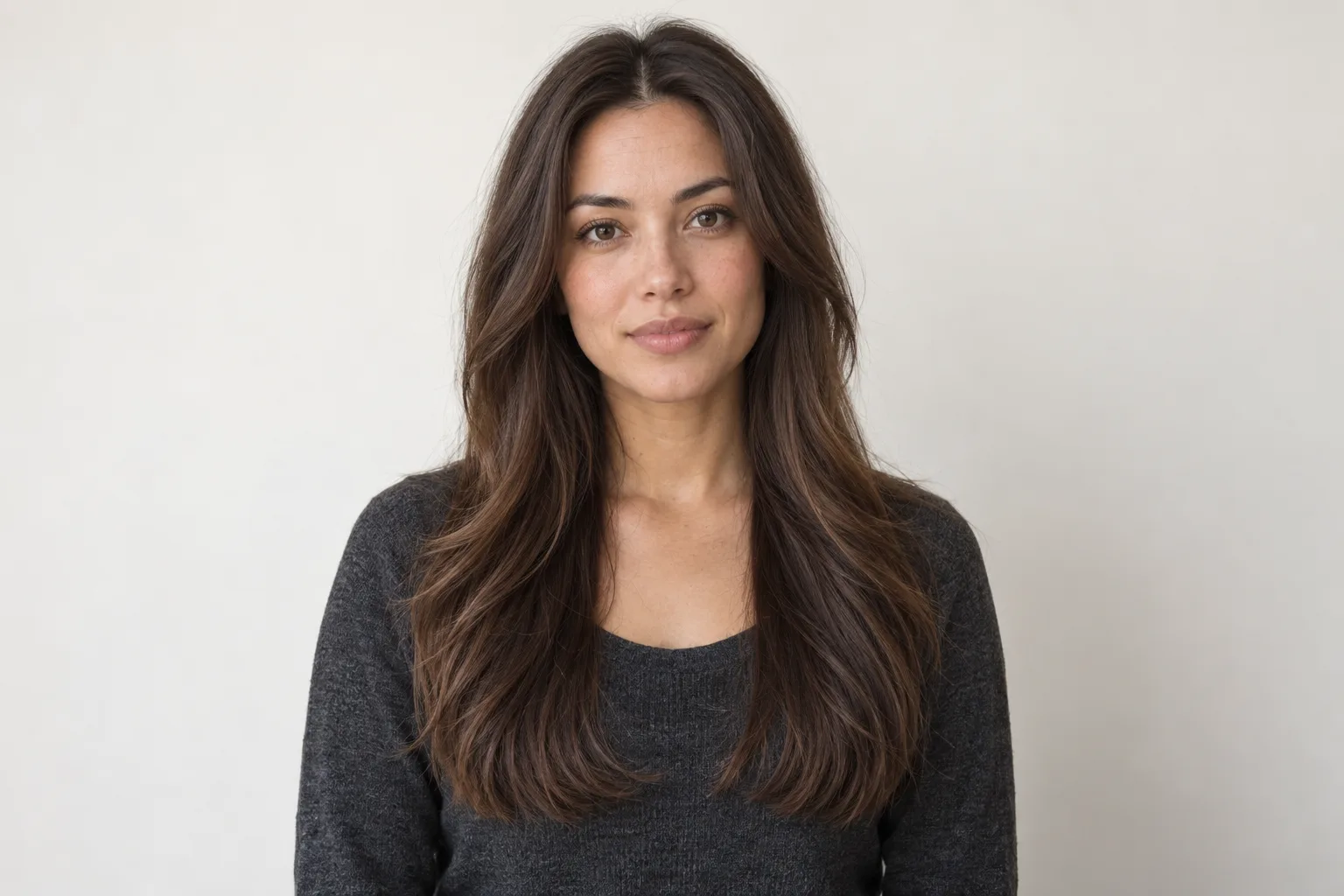
Generated editorial illustration showing longer front-piece placement, not a client before-and-after.
Longer front pieces can guide the hair down from an open forehead and introduce a bend below the chin. They are useful to compare when you want to keep your length rather than build a short rounded frame around the jaw. Ask the stylist to show the shortest piece and how it blends into the perimeter.
Keep the starting point specific: “below my chin when dry” communicates more than “layers that suit a heart-shaped face.” Whether that piece reaches an ear tuck, clip or ponytail depends on your head and growth pattern. Too much layering can also weaken a perimeter that you want to retain. Choose the front frame before agreeing to shorter layers throughout the rest of the hair; our face-framing layers guide explains how to specify those front lengths separately.
A soft longer fringe

Generated editorial illustration of optional forehead coverage, not Naee output or a guaranteed fringe shape.
A fringe changes the visible forehead border. A longer parted or sweeping version lets you compare partial coverage with the open hairline of the other options. The Chapel suggests starting longer if you are new to bangs; that can be a useful consultation direction, but longer does not mean maintenance-free.
Ask what happens at your usual part and any cowlick. Does the fringe separate, lift or fall into your eyes? A light fringe can be appealing, but borrowing hair from farther back to make it fuller may change the fullness of the remaining sides. Decide whether you want to reset the front on ordinary mornings and discuss how it will grow out.
A textured pixie

Generated editorial illustration showing an intentionally open forehead, not a rule that this cut suits every person.
A pixie can deliberately leave the forehead and chin visible. That makes it an option for someone who likes the existing outline rather than wanting longer hair to surround it. Texture on top changes the hair silhouette; it does not have to conceal the hairline.
Discuss the direction of the top, the ear area and how short the sides should be. Short hair may mean less detangling, but keeping a precise outline can mean more frequent salon visits. Marie Claire's editorial selection also includes pixies and open-face styles alongside longer looks. Its examples support variety, not celebrity face typing or proof of suitability. Our originals are not celebrity recreations.
Forehead framing and chin-level movement do different jobs
These are two independent levers. Fringe changes which part of the forehead is visible; a bend beside the chin changes the surrounding hair outline. You can choose either, combine them, or choose neither. There is no requirement to make your face appear oval.
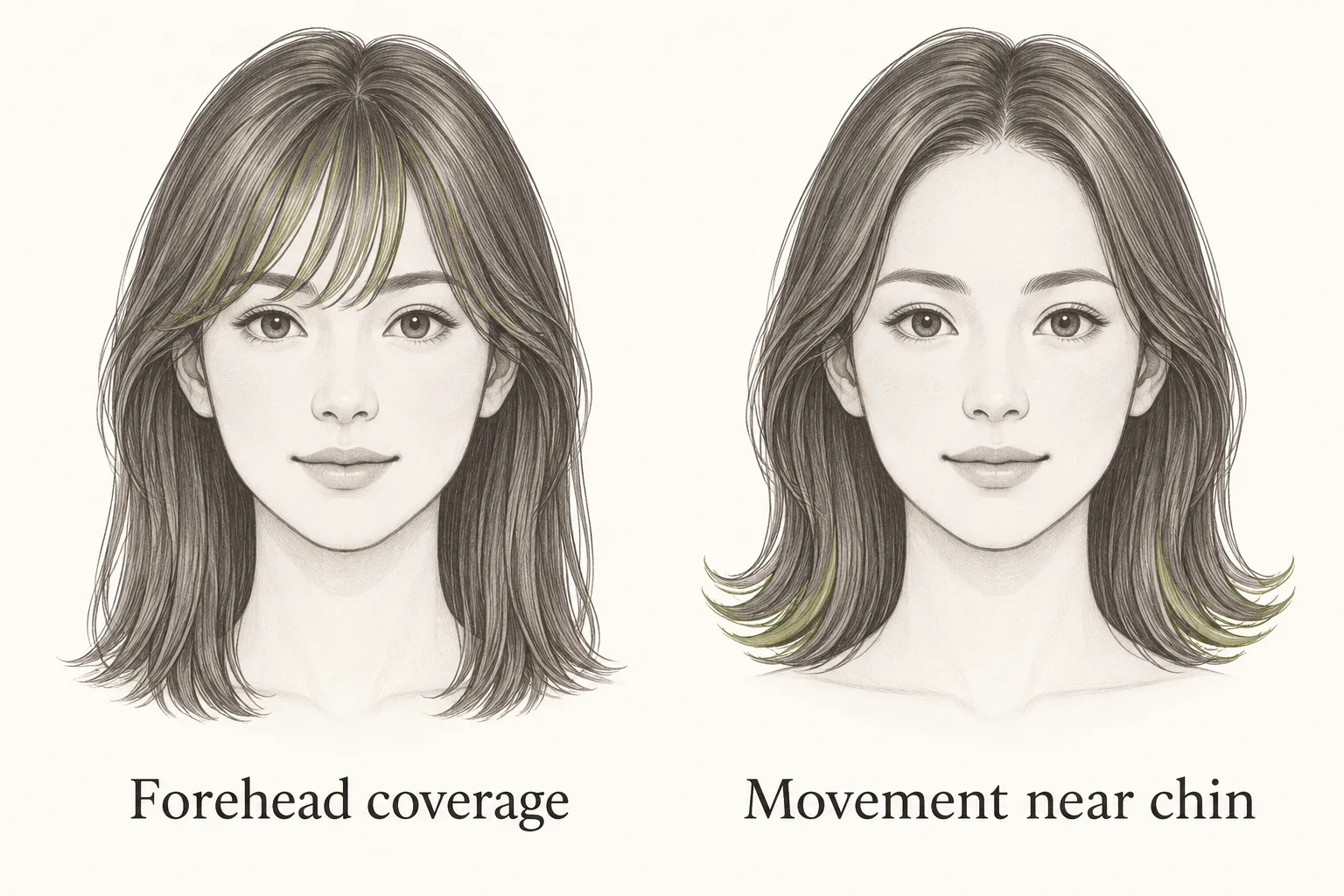
Generated editorial conceptual diagram, not a transformation, facial analysis or verified same-person preview.
| Your preference | Direction to compare | Explain this to the stylist | Important limitation |
|---|---|---|---|
| Show my forehead but frame the chin | Chin bob or lower collarbone waves | Place the bend beside the chin, not only at the crown | The bend may need styling if your texture does not form there |
| Soften the forehead border without cutting overall length | Longer parted or sweeping fringe | Keep the coverage light and describe the desired opening | Cowlicks and available front density affect the result |
| Keep an open face and a short outline | Textured pixie | Leave the hairline visible; discuss top direction and ear shape | Shorter sides may need regular maintenance |
| Keep long hair and practical front length | Below-chin face frame | Preserve the shortest dry length needed for my usual clip or tie | A long perimeter does not guarantee the front will reach a ponytail |
Avoid choosing a cut only because a reference has more hair at the chin. That fullness may come from a blowout, extensions or generated density. Save the placement idea, then ask what your own hair can create. It is also reasonable to prefer sleek straight sides and a visible narrow chin.
Which front pieces must tuck or tie back
Parting changes the distribution of hair at the front without necessarily changing the cut. A middle part creates two visible front curtains. A side part moves more hair to one side; tucking one side reveals more cheek and ear. Neither is intrinsically better for a heart-shaped face.
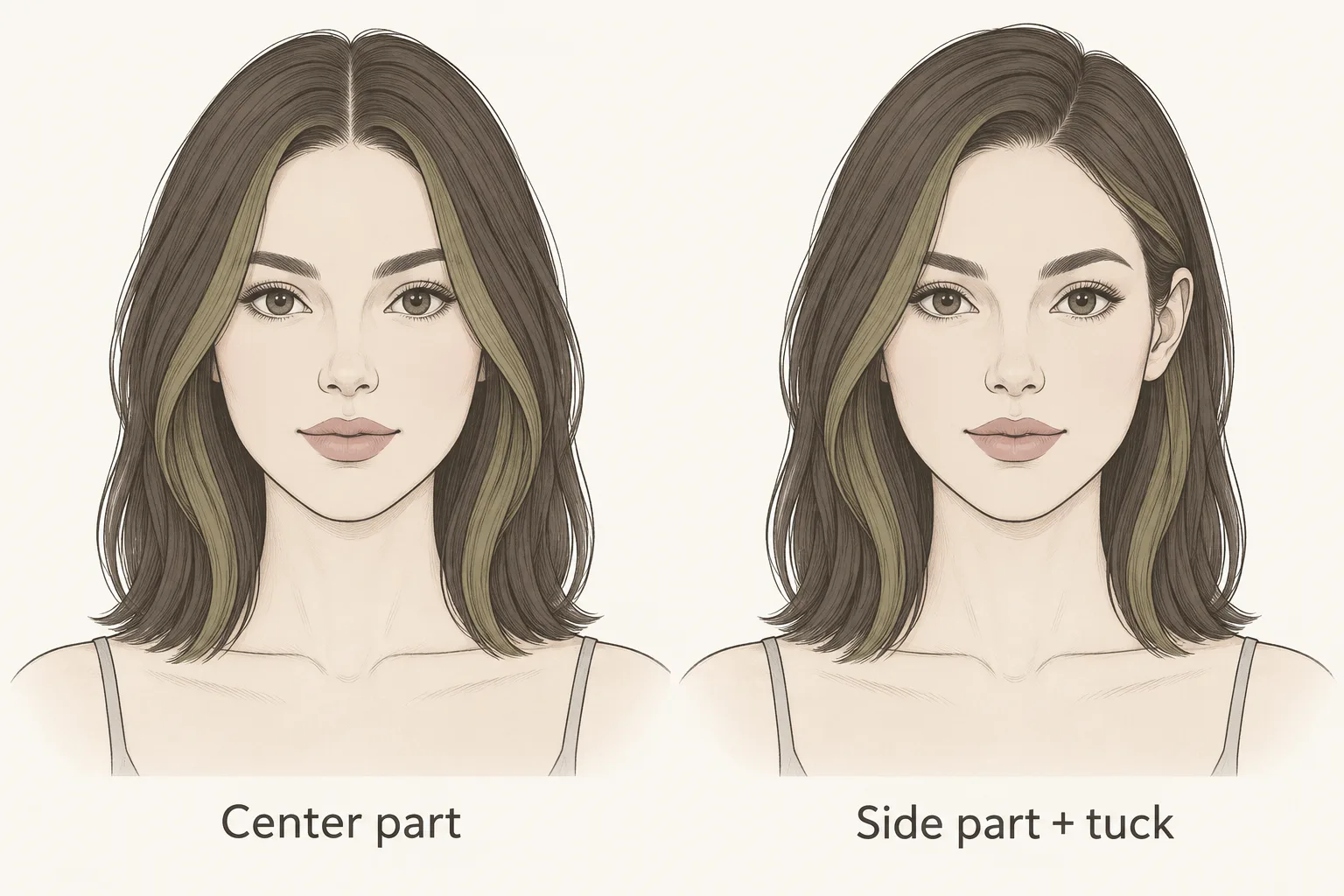
Generated editorial comparison figure. It explains placement, not a real before-and-after or a promise of facial preservation.
Before cutting, wear your proposed part for a normal day. Try your glasses, headphones and usual work hairstyle. Note which pieces repeatedly fall forward. This gives the stylist a concrete problem to solve instead of a request for universally flattering framing.
Distinguish ear-tuck length from ponytail length. A piece may reach behind your ear but not reach the tie at the back of your head. Show the stylist your actual clip or tying position and ask them to demonstrate the proposed shortest section. Do not measure from a flat inspiration image and assume the same length will work on you.
If you need every piece secured for work or exercise, a longer frame may be a better comparison than a short fringe. If you are happy using pins or a headband, that opens different options. Short pieces are not a mistake when their routine is intentional.
Adapt to natural texture and density
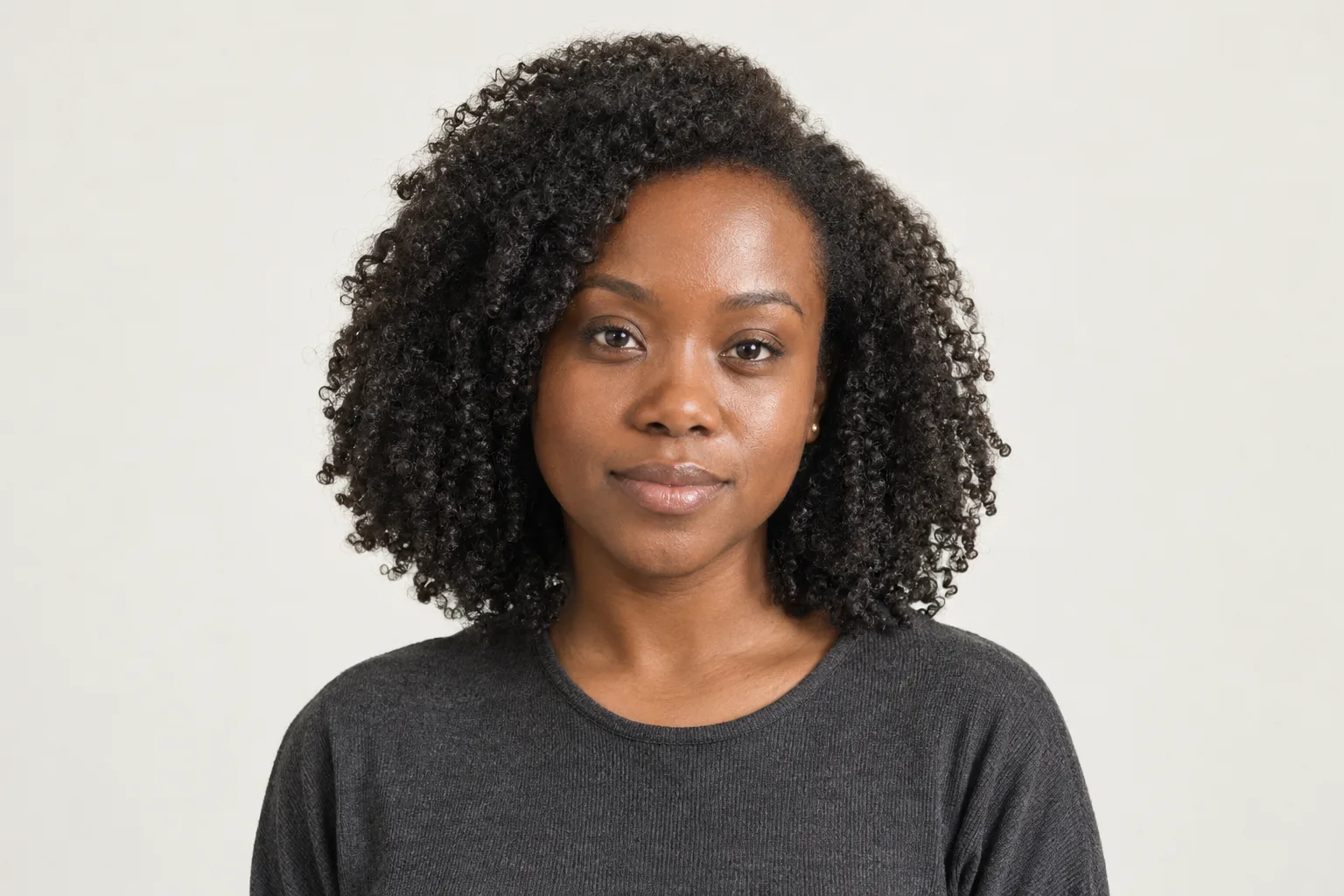
Generated editorial illustration of a curly and coily direction, not evidence of achievable density or an exact dry length.
For curls and coils, discuss the shape on your usual dry hair, including the front's spring-back. A stretched strand ending at the jaw may sit much higher when released. Ask where the dry outer silhouette will be widest, and whether you want that width at the temples, lower cheeks or below the chin. Do not treat a straight-hair fringe reference as a cutting template for coils.
Bring photos from your ordinary routine rather than only a freshly stretched or straightened finish. Preserve the care practices you want to keep: the American Academy of Dermatology's curly-hair guidance recommends conditioning and detangling with moisture, and advises against dry brushing that can cause breakage and frizz. That is care guidance, not a source for a universal face-shape haircut.
Density also changes the options. Fine strands and low density are different, and neither should be estimated from a face-shape label. If you want a full chin-level edge but the ends are delicate, discuss retaining weight before adding lots of short layers. If the sides are dense, ask how shaping would distribute that weight without assuming aggressive thinning is necessary.
Finally, count the whole routine. A fringe reset, drying the sides, maintaining a pixie outline and preserving coils between washes are different kinds of work. “Low maintenance” only means something when you name the work you are willing to do.
Shortlist two directions and write your salon brief
Choose two options that answer the same question, rather than five unrelated transformations. For example, compare an open-forehead collarbone cut with the same length plus a longer fringe. Keeping length and color similar makes the forehead choice easier to see.
Hypothetical example, not a client story: Mina likes her visible forehead, has naturally wavy shoulder-length hair and needs the front secured during shifts. She usually spends ten minutes on her morning hair and does not want daily straightening. She compares a chin bob with collarbone waves, then rules out the shorter front because she does not want to use pins at work. That is a routine-based choice, not evidence that the longer cut is more flattering.
Her salon brief might read:
Keep my forehead visible. I want a soft bend beside my chin, with the shortest front pieces reaching my usual tie when dry. Please preserve a substantial perimeter and explain how my natural waves will fall without a tong. I can spend about ten minutes styling, but I do not want a daily straightened fringe. Show me the dry-length difference between the bob and collarbone option before we decide.
If you want a digital comparison first, the official Naee website describes hairstyle previews on your photo and saving references for a stylist. It also states that previews are not guaranteed exact matches to salon results. Use the illustration to discuss length, parting and coverage, then have a stylist assess feasibility on your real hair.
Use the same clear photo and change one feature at a time. Check that the forehead, jaw and chin did not change along with the hair using our face-preservation checklist. A reshaped face would confuse the very framing choice this guide is meant to clarify. Our guide to face-shape hairstyle apps also separates recommendations from visualization.
Naee is an optional planning tool, not a required step. Its official website identifies it as a free download with in-app purchases; check current allowances rather than assuming unlimited free previews. The useful final result is a brief your stylist can act on, whether you arrive with generated images, ordinary references or written notes.
FAQ
Are bangs necessary for a heart-shaped face?
No. Bangs are a way to choose forehead coverage, not a requirement. An open hairline, longer front pieces or a pixie can be equally intentional choices. Compare your preferred coverage with your growth pattern and willingness to style the front.
Is a chin-length bob a good option?
It is worth comparing if you want a visible hair edge and movement near the chin. Ask where the dry ends will land and whether your texture naturally forms that bend. Check the loss of tie-back length before choosing it.
Should I always wear a middle part?
No. A middle part divides the front more evenly; a side part or tuck changes which side of the face is exposed. Try both on your existing length and use your preferred placement, cowlick and practical routine to decide.
Can curly or coily hair keep the same framing idea?
Yes, but translate the idea into a dry silhouette rather than copying straight-hair lengths. Discuss shrinkage, where curls create width and the shape of the shortest front section. A generated reference cannot establish your curl pattern or density.
Can an AI preview tell me which cut will be most flattering?
It can help you compare illustrated outlines, but it cannot decide your preference or establish salon feasibility. Verify the face remains recognizable, separate generated fullness from achievable hair, and take the framing question to your stylist.