
Shag Haircut for Women: Types, Textures and Styling
A shag haircut uses shorter layers through the crown and sides, with texture spread across the whole head rather than saved for the ends. The choice is less about whether you want a shag and more about which kind: how short the top layers go, whether you want a fringe, how much length you keep at the bottom, and whether your own texture will do the work the reference photo seems to do on its own.
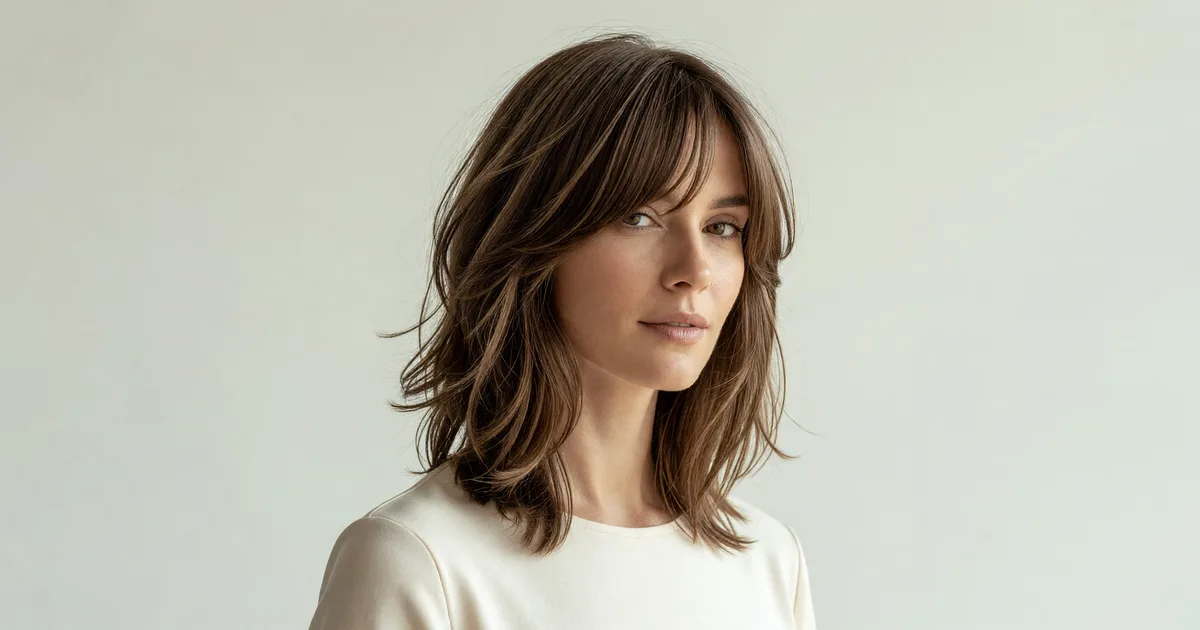
Generated editorial illustration, not Naee output or a real haircut result. The feathered crown, curtain fringe and textured ends show one soft shag interpretation, not a standard every salon follows.
Shags show up everywhere because they look relaxed and lived in. That relaxed look still depends on decisions: where the shortest layer sits, how much weight comes out, and how the cut behaves on your normal wash day. This guide walks through the main types, who each tends to suit by texture and density, how to style and maintain one, and how a shag differs from a butterfly cut or plain long layers.
Publisher disclosure: This is the Naee blog, and we have a commercial interest in the Naee app mentioned near the end. The illustrations here were generated for this article and are not Naee results or client photos.
Contents
- What makes a haircut a shag
- Types of shag haircut
- Who a shag suits by texture and density
- Shag vs butterfly cut vs long layers
- How to style a shag haircut
- Shag maintenance and grow-out
- Preview a shag, then brief your stylist
- FAQ
What makes a haircut a shag
Salons use the word loosely, but most shags share three features:
- Short crown layers. The top of the head has noticeably shorter pieces than a typical layered cut. That is where the lift and the slightly tousled outline come from.
- Texture throughout. Layers are distributed around the head, not only at the front or the bottom. The ends are often softened or cut to look piecey rather than blunt.
- A lighter perimeter. Because many strands are shortened, fewer of them reach the bottom. The longest ends can still be long, but they usually look less solid than a one-length cut.
Many shags also include a fringe, often curtain bangs or a wispy full fringe. That is common but not required. If you do not want a fringe, say so clearly, because some stylists treat it as part of the look. Our guide on whether you should get bangs covers that separate decision.
The important thing to understand before booking is that a shag removes weight on purpose. That is the point of the cut, and it is also the main trade-off. If your hair already feels thin at the ends, the question is how much weight you can afford to lose, not just whether you like the shape.
Types of shag haircut
Most shag requests fall into one of six directions. The names overlap, so treat them as a vocabulary for describing what you want, then point to a photo.
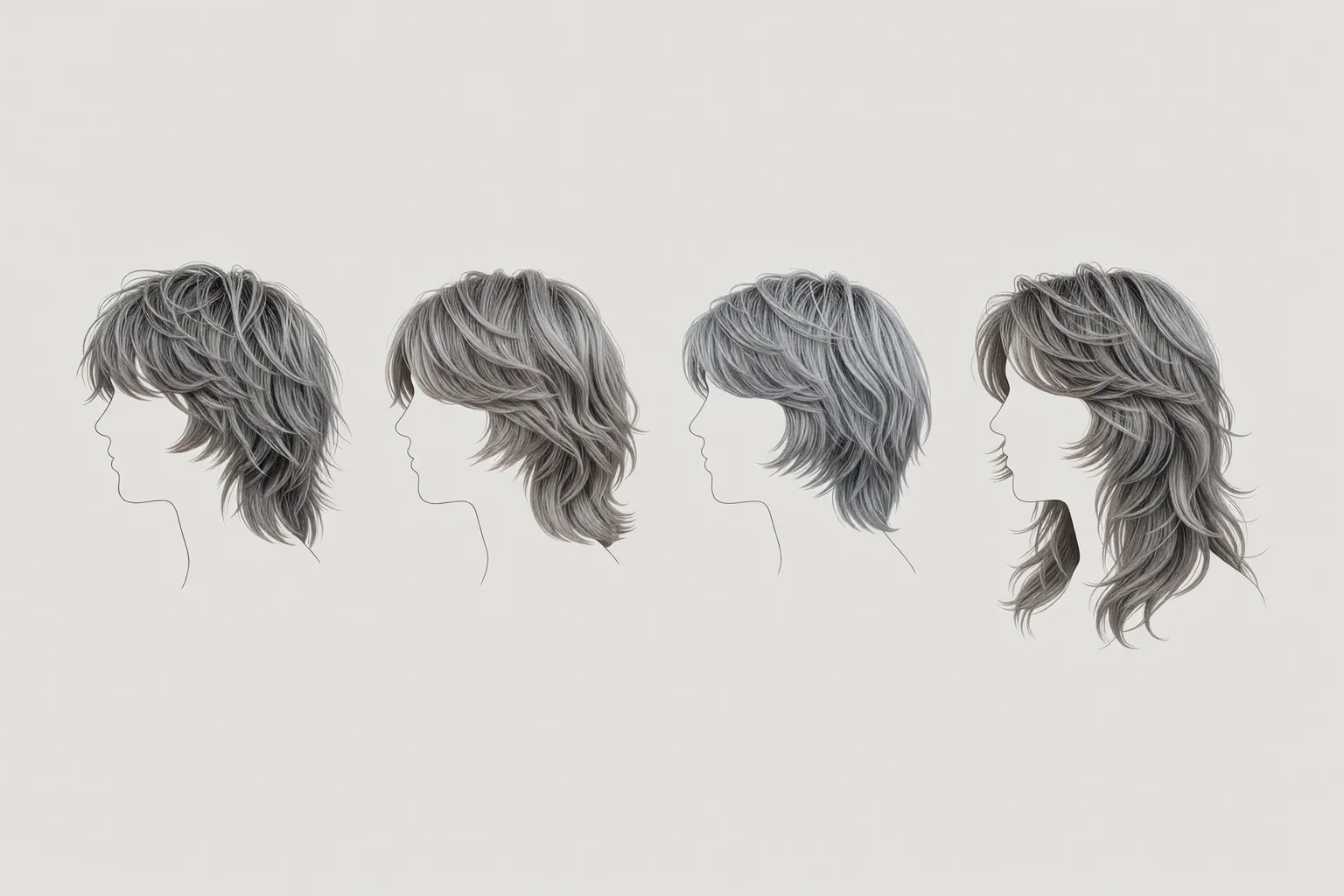
Generated editorial illustration, not a cutting diagram. From left: a choppier classic shag, a softer modern shag, a short shag and a long shag. Real versions vary by stylist and hair type.
Classic shag
The classic shag is the most textured and the most obvious. Crown layers are short and choppy, the sides are layered heavily, and the ends look broken up. It usually comes with a full or curtain fringe. This version reads as deliberately undone and often looks best when it is a little messy.
It tends to need hair with some natural body or bend. On very straight, fine hair, heavy choppy layering can look sparse instead of tousled.
Modern soft shag
The soft shag is the version most people mean today. The layers are still distributed through the head, but the transitions are more blended, the crown is less extreme, and the ends are softened rather than chopped. It often sits around the shoulders or collarbone with curtain bangs.
This is a sensible starting point if you like the shag idea but are nervous about losing too much weight. You can always ask for more texture at the next appointment. You cannot put weight back.
Short shag
A short shag usually ends around the chin or jaw, sometimes a little longer at the back. It overlaps with layered bobs and pixie-length cuts, and the difference is mostly in the crown layering and the piecey finish.
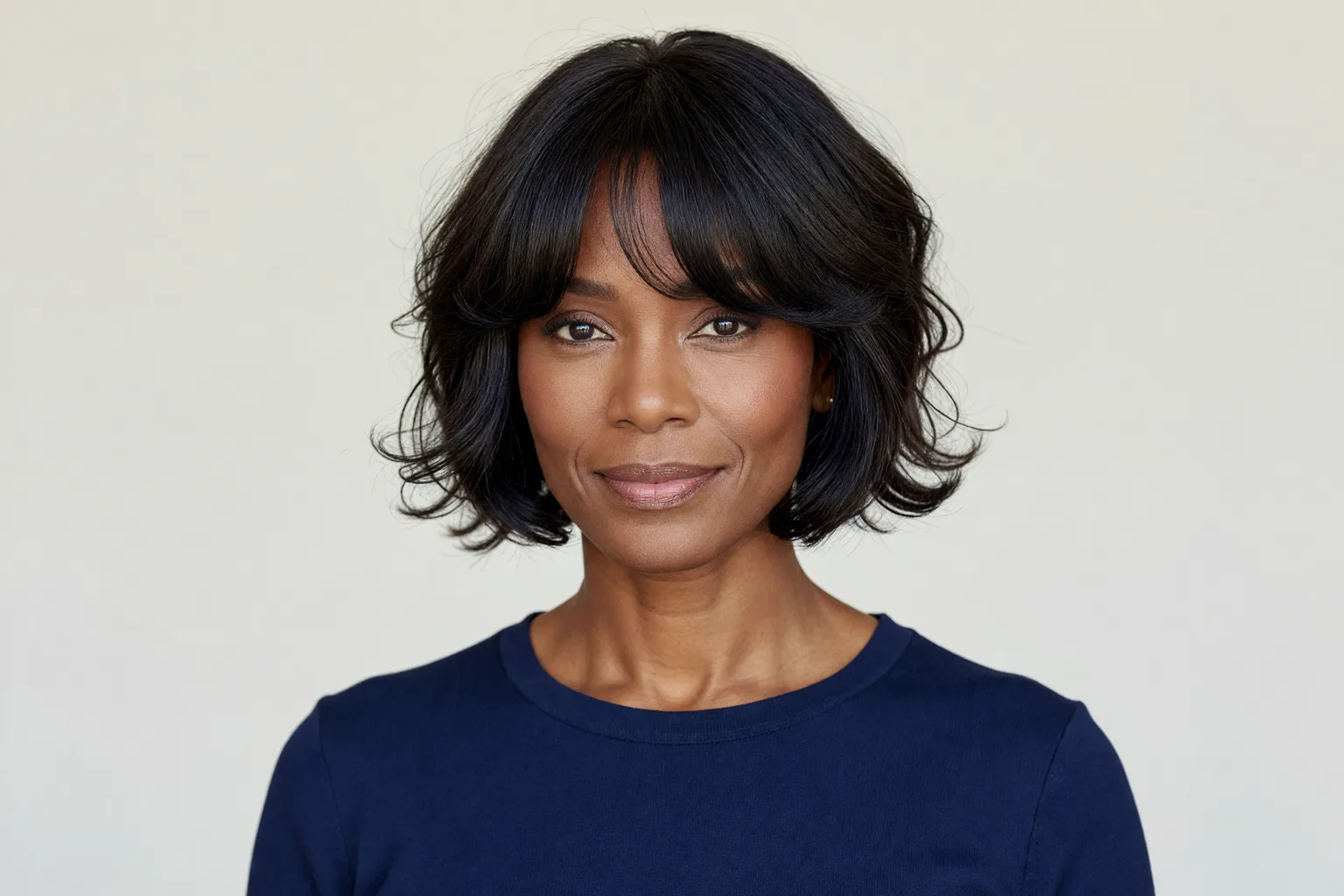
Generated editorial illustration, not a real transformation. A chin-length shag with piecey crown layers and a wispy fringe; actual lift depends on your hair and styling.
A short shag can give lift at the crown without much length to weigh it down. It also grows out faster in the sense that the shape changes noticeably within a few weeks, so it suits people who are happy to book regular trims. If you are still deciding whether to go short at all, our guide on whether to cut your hair short is a useful first step.
Long shag
A long shag keeps the crown and face layers but leaves the bottom length past the shoulders. The top has movement while the overall outline stays long.
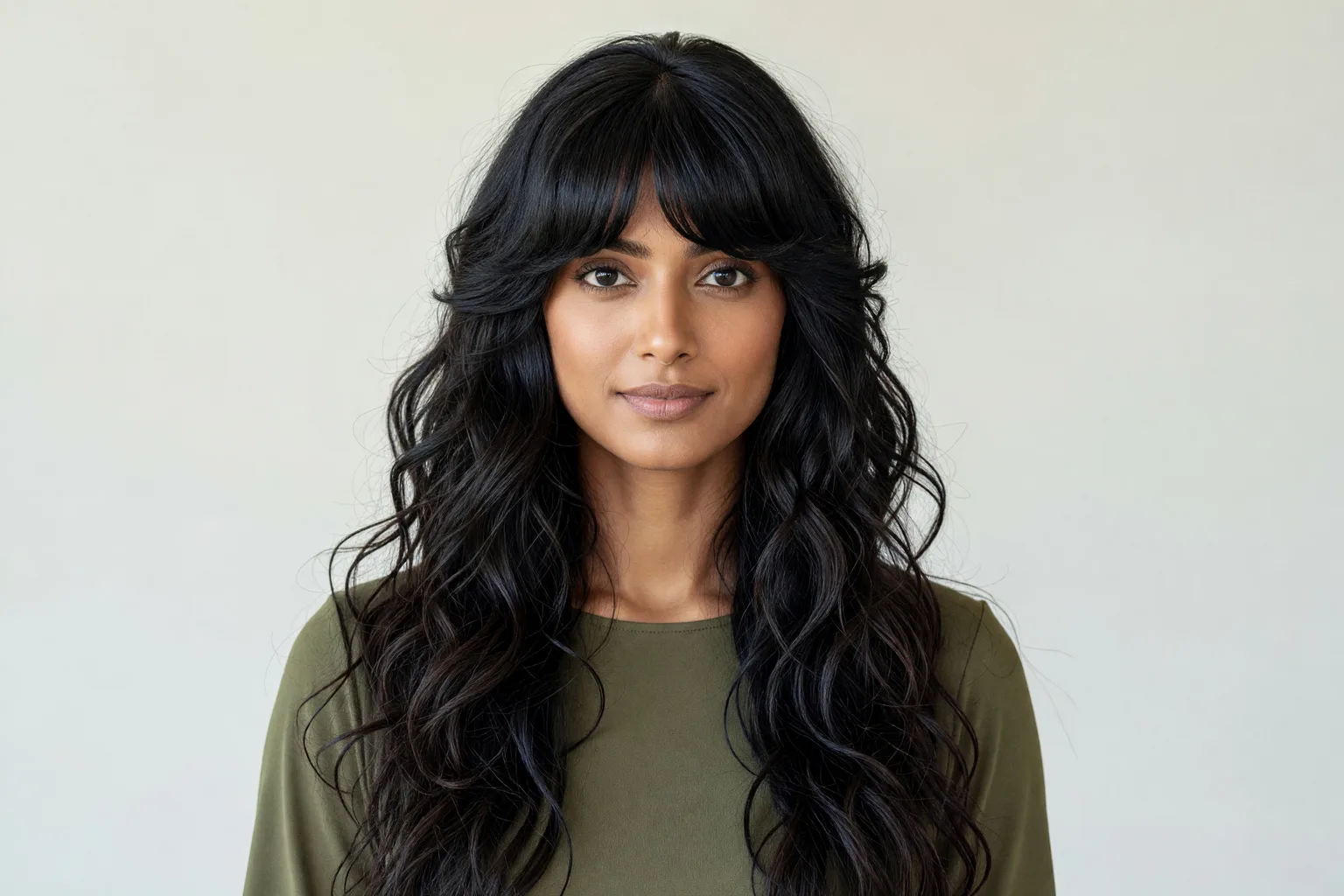
Generated editorial illustration, not Naee output. Shorter crown layers blend into long textured ends on dense wavy hair; density in your own hair changes how full the bottom looks.
This is often the best fit for dense hair, because there is plenty of weight to remove before the ends look thin. On finer hair, a long shag can leave the bottom looking wispy, so ask how much perimeter will remain.
Curly shag
A curly shag is cut to work with curls rather than against them. Layers are placed so curls stack into a rounded shape with volume at the crown, instead of the triangle shape that long, one-length curly hair can fall into. Many stylists cut curls dry or curl by curl so they can see where each one lands.
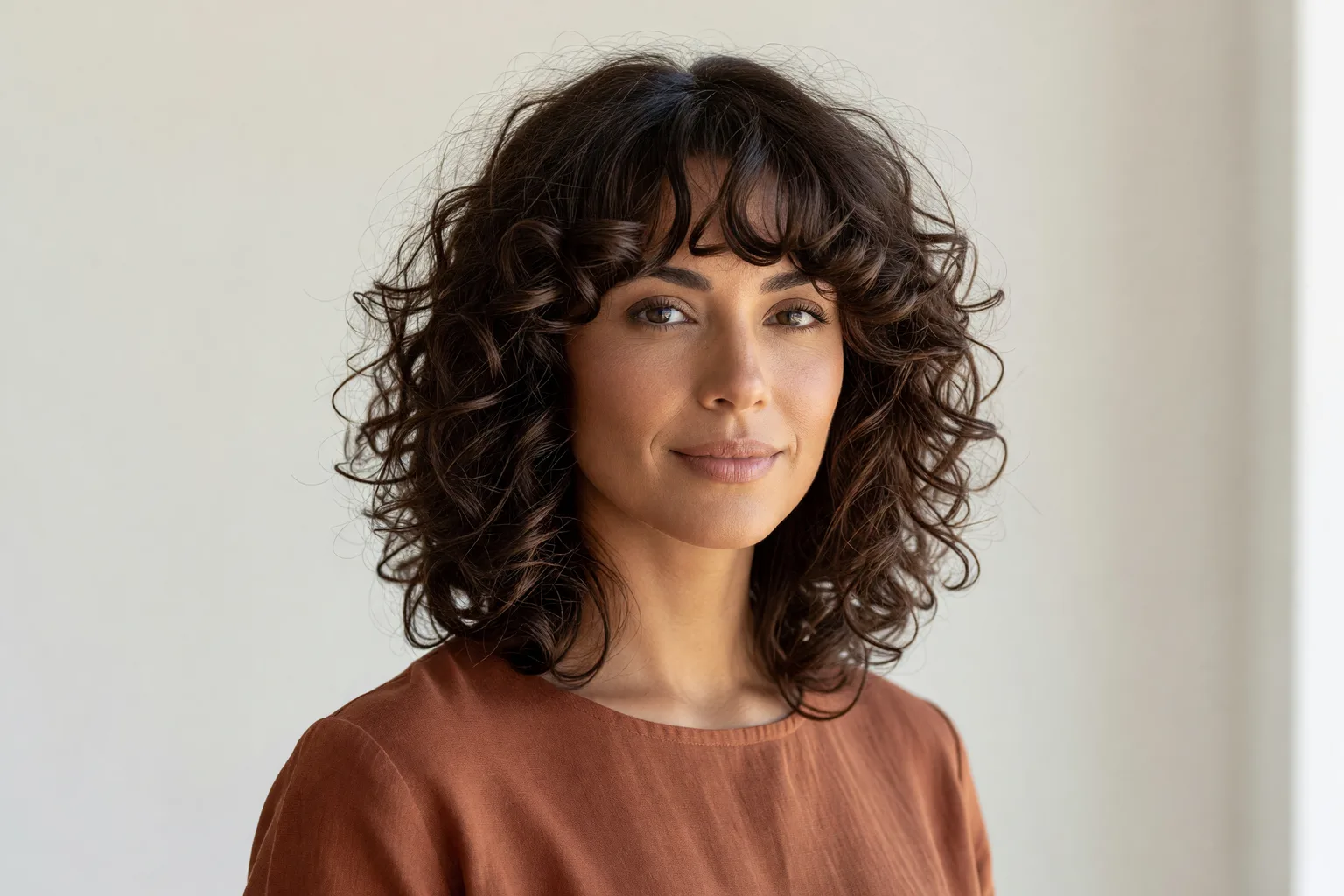
Generated editorial illustration, not an air-dry prediction. Rounded curly layers and a curly fringe; how your curls shrink and stack decides the real shape.
If you have curls, look for a stylist who regularly cuts curly hair and bring a photo of your hair on a normal day. Shrinkage changes how short each layer ends up, so a straight-hair reference is not a good guide here.
Wolf-cut adjacent shags
The wolf cut sits between a shag and a mullet. It has a lot of crown volume, short choppy top layers, and noticeably longer, thinner pieces at the back. A shag can borrow some of that energy without the strong short-to-long contrast.
If you like a wolf cut photo but want something easier to wear at work, ask for a shag with extra crown texture and a more connected back. Naming the parts you like is more reliable than asking for "a bit wolf cut", which different stylists will read differently.
Who a shag suits by texture and density
Face shape gets a lot of attention in haircut advice, but for a shag, your texture and density matter more. Texture is whether your hair is straight, wavy, curly or coily. Density is how many strands you have. Strand thickness, fine or coarse, is a third separate factor.
Wavy hair
Wavy hair is the easiest match. A shag's layers let waves form at different levels instead of being pulled flat by the weight below them, so the cut often looks finished with very little styling. If your waves only appear at the ends right now, a shag may let them show higher up. Our guide to haircuts for wavy hair goes deeper on how layering changes a wave pattern.
Curly and coily hair
Curls can suit a shag very well when the layers are placed with the curl pattern in mind. The main risk is a stylist cutting curly hair wet and straight, which can leave layers much shorter than expected once curls spring back. Ask how the stylist will account for shrinkage.
Straight hair
Straight hair can wear a shag, but it will usually need more styling to look textured. Without some bend, short crown layers can lie flat or stick out unevenly. A soft shag with a blow-dry, or a little texture spray and a loose bend at the ends, is usually more realistic than a classic choppy shag that depends on natural wave.
Fine or lower-density hair
This is where a shag needs the most care. Shorter crown layers can create lift, which many people with fine hair want. The trade-off is that the ends lose weight, and fine hair has less weight to spare.
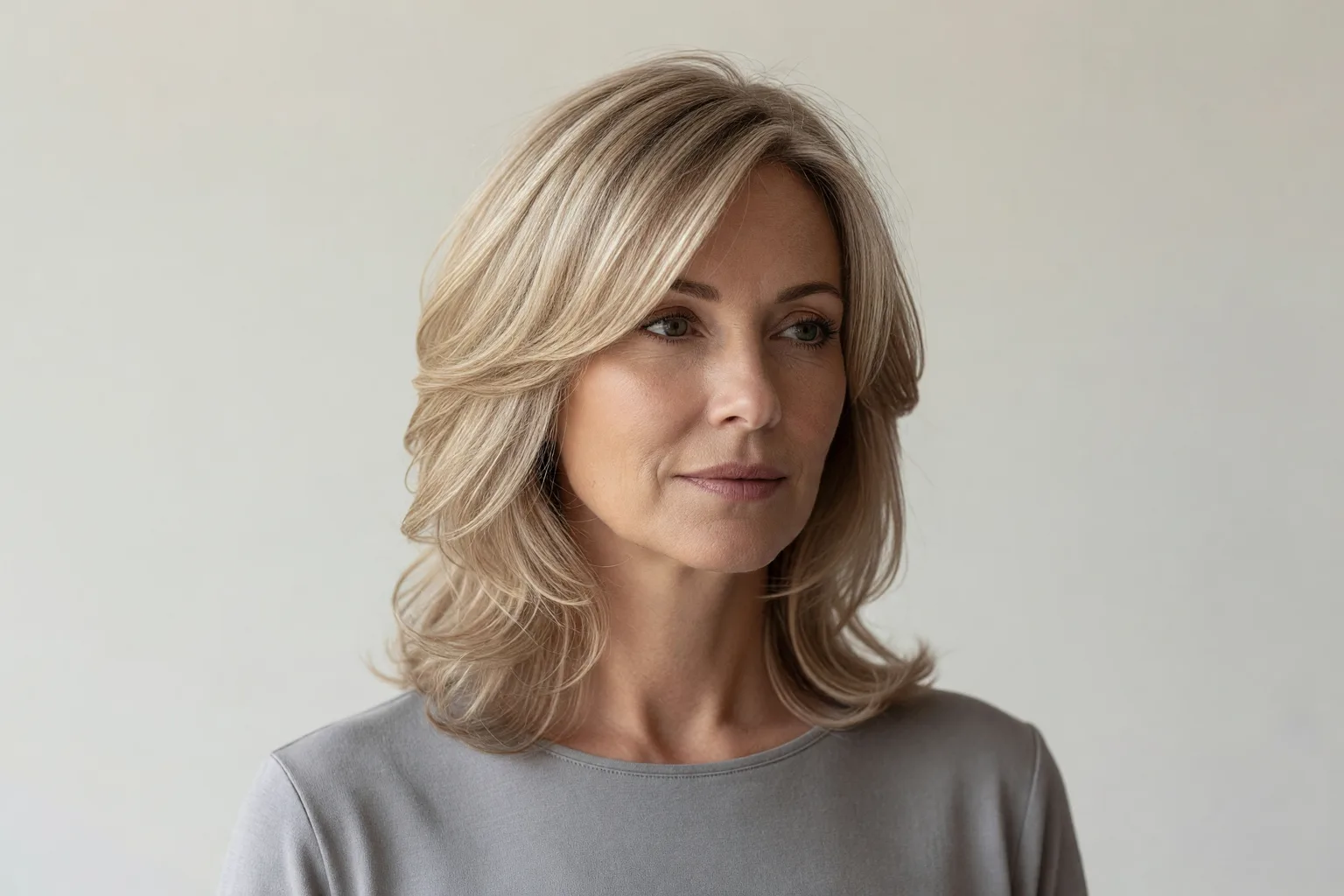
Generated editorial illustration, not a density measurement. Light feathered layers sit over a perimeter left fuller on purpose; this is a direction to discuss, not a promised result.
Ask for a soft shag with layers concentrated at the crown and around the face, and a perimeter left fuller than the reference. Shorter overall lengths, like a collarbone or chin-length shag, often hold their shape better on fine hair than a long shag does. Our guide to the best hairstyles for fine hair explains that perimeter-versus-movement trade-off in more detail.
Thick or dense hair
Dense hair has the opposite problem: it can feel heavy and wide. A shag removes bulk and adds movement, which is often the reason people with thick hair ask for one. Still be specific. "Take a lot of weight out" can mean many things. Say whether you want less width at the sides, more movement through the middle, or a lighter feel at the crown.
Shag vs butterfly cut vs long layers
These three cuts get confused because they all involve layers. The difference is where the layers go and how much texture shows.
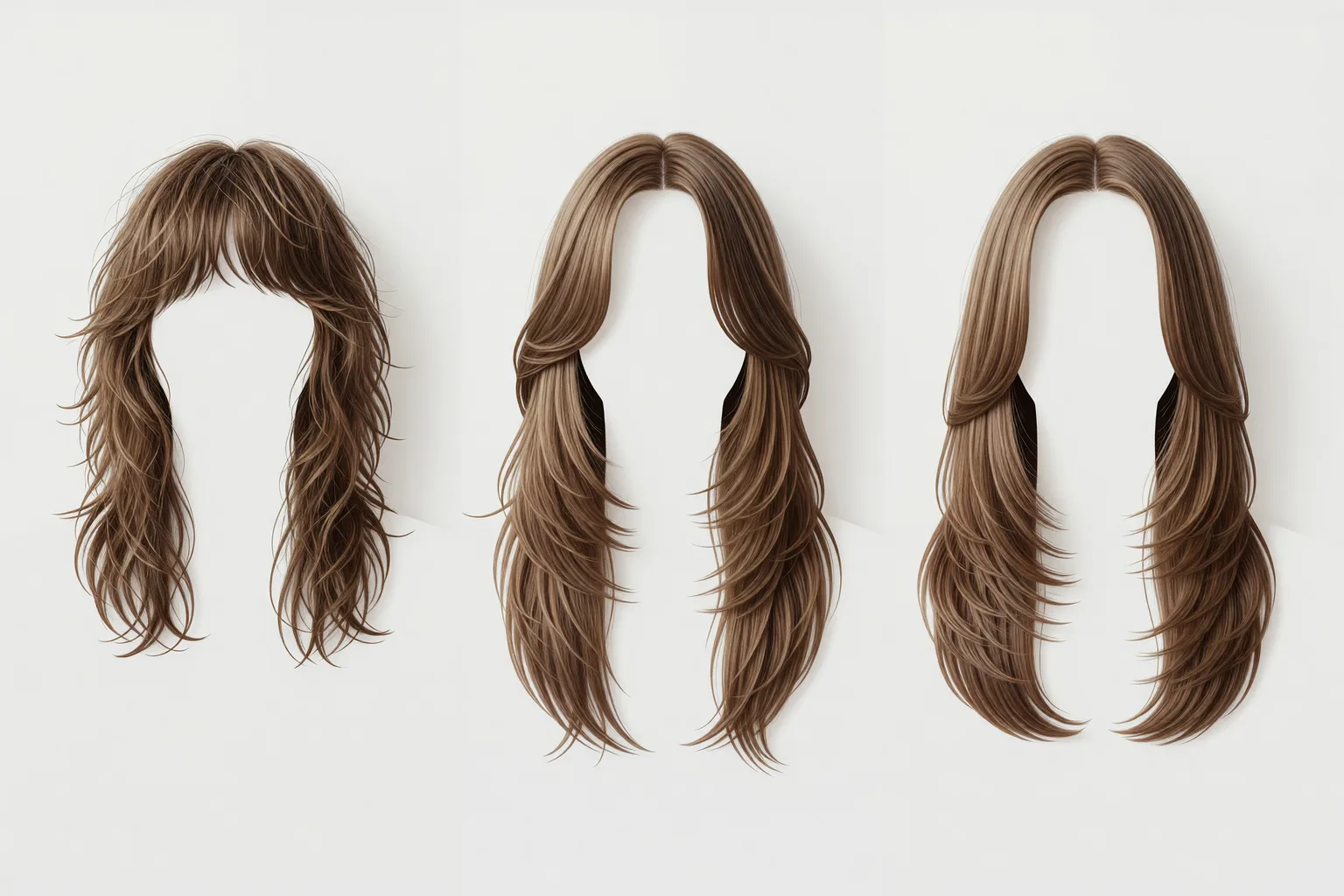
Generated editorial comparison, not a cutting standard. Left to right: a shag with texture throughout, a butterfly cut with sweeping framing into long ends, and long layers with a fuller perimeter.
| Cut | Where the layers go | Overall look | Trade-off |
|---|---|---|---|
| Shag | Throughout, with short crown layers | Tousled, textured, lifted at the top | Most weight removed; lighter ends |
| Butterfly cut | Short face framing connected into long layers | Sweeping, polished, voluminous around the face | Often relies on a blow-dry to look like the photo |
| Long layers | Mostly through the mid-lengths and ends | Soft movement, fuller bottom | Less crown lift and less obvious texture |
A rough rule: choose a shag if you want texture and lift all over and you are fine with a more undone finish. Choose a butterfly haircut if you mostly like the dramatic framing around the face and want to keep long, swingy ends. Choose long layers if you want movement without losing much fullness at the bottom.
These are not strict categories. A long soft shag and a butterfly cut can look close in some photos. When in doubt, circle what you like on the reference: the crown, the face pieces or the ends. That tells your stylist more than the name.
How to style a shag haircut
A good shag should look decent with your normal routine. If it only works after forty minutes with a round brush, it may be the wrong type for your hair.
For wavy and curly hair:
- Apply a leave-in conditioner or curl cream to wet hair, then a light gel or mousse if you want more hold.
- Scrunch and let it air-dry, or use a diffuser on low heat.
- Once dry, break up any stiffness by scrunching gently or shaking at the roots.
For straight hair:
- Rough-dry with your fingers, lifting at the crown, rather than brushing flat.
- Add a few loose bends with a flat iron or large curling iron, leaving the ends out.
- Finish with a texture spray or a small amount of light paste, worked through with your fingers.
For the fringe: Curtain bangs and wispy fringes usually need the most daily attention. A quick blast with a dryer while pushing the fringe from side to side is often enough. On second-day hair, you can re-wet just the fringe and dry it again.
Heavy, rich products tend to flatten a shag, especially on fine hair. Lighter products usually keep the layers separate. Use any heat tools on a setting that suits your hair and follow their safety guidance.
Shag maintenance and grow-out
Shags are often called low maintenance, and day to day that can be true, especially on wavy hair. The cut itself needs more upkeep than a one-length style, because the short crown layers lose their shape first.
- Trims: Short shags typically need a trim more often than long ones. Ask your stylist what interval suits your cut and how fast your hair grows. Some people stretch a long shag much further than a short one.
- Fringe: If you have bangs, they will likely need trimming between full cuts. Many salons offer quick fringe trims.
- Grow-out: Growing out a shag means waiting for the crown layers to catch up with the rest. It can pass through an awkward phase where the top is mid-length and the bottom looks thin. Regular trims of the bottom, while leaving the crown alone, help even it out over time.
If you want a cut that grows out with little fuss, a soft shag or long layers is usually easier than a classic choppy shag. Our guide to low-maintenance medium-length haircuts covers more options if upkeep is your main concern.
Preview a shag, then brief your stylist
Because a shag removes weight you cannot quickly get back, it helps to see a few versions on your own face before the appointment. A photo of someone else's thick, wavy shag tells you little about how it will look on your fine, straight hair.
Naee is an iPhone app that can generate hairstyle previews from your selfie. It offers facial analysis with hairstyle suggestions, hair color changes, a way to copy a style from a reference photo, and an AI chat for questions about a look. Naee aims to keep previews matched to your hair type, density and color, so a soft shag on fine hair should look like a soft shag on fine hair, not on someone else's. A preview is still an illustration, not a guarantee of how a salon cut will turn out, and it cannot tell you how layers will behave once dry or how they will tie back.
To get useful previews:
- Use an evenly lit, unfiltered selfie with your hair down in its usual state.
- Try two or three shag types side by side, for example a soft shag and a long shag, keeping your color and part the same.
- Check whether the preview changed your face, hairline or density. If it added a lot of fullness, discard that part of the idea.
- If you have a reference photo you love, use the copy-from-photo feature, then compare it with a softer version. Our guide to copying a hairstyle from a photo explains how to separate the cut from the styling.
Then bring a short brief to the salon:
- Keep: The bottom length you need, your usual part, and whether you want to tie your hair back.
- Change: How short the crown layers should go, and whether you want a fringe.
- Check: How full the ends will look, how the cut behaves on your normal wash day, and how often it needs trimming.
A sample request: "I'd like a soft shag with layers mostly at the crown and around my face, a curtain fringe, and the bottom kept at my collarbone and fairly full. My hair is fine and slightly wavy, and I usually air-dry."
If seeing a few options first would help, download Naee for iPhone. It is a free download with a trial that includes limited credits; generating more previews after that requires a subscription or a credit purchase. Check the current in-app terms rather than assuming unlimited free previews.
The takeaway: Pick the shag type that matches your texture and density, protect the length and fullness you actually use, and judge the cut on how it looks with your normal routine, not the styled photo.
FAQ
Is a shag haircut good for fine hair?
It can be, if it is a soft shag with layers kept mostly at the crown and around the face, and the perimeter left fuller. A heavily choppy shag can make fine ends look thin. Shorter lengths often hold the shape better than a very long shag on fine hair.
What is the difference between a shag and a wolf cut?
A wolf cut has more crown volume and a stronger contrast between short top layers and longer back pieces, closer to a mullet. A shag is usually more connected around the head. You can ask for a shag with extra crown texture if you want some wolf cut feel without the full contrast.
Do you need bangs with a shag?
No. Many shags include a curtain or wispy fringe, but you can ask for longer face-framing layers instead. State it clearly at the appointment, since some stylists assume a fringe is part of the cut.
How often does a shag need a trim?
It depends on length and how fast your hair grows. Short shags lose their shape sooner than long shags, and fringes usually need trims between cuts. Ask your stylist what interval suits your specific cut.
Is a shag or a butterfly cut better for long hair?
Both can keep length. A shag spreads texture and lift throughout, with a lighter bottom. A butterfly cut focuses on sweeping face framing into long ends and often looks closest to the photo after a blow-dry. Choose based on whether you want all-over texture or mainly framing.
Can an AI preview show how my shag will look?
A preview can help you compare shag types on your own face and narrow down what to ask for. It cannot show exactly how a stylist's layers will fall, how the cut looks after air-drying, or whether pieces will reach a ponytail. Use it to pick a direction, then confirm details with your stylist.