
Curtain Bangs: Lengths, Face Shapes, Hair Types and Styling
Curtain bangs are a fringe parted near the center that falls away to each side, shortest in the middle and longer toward the cheekbones. Getting them right comes down to three choices: where the shortest piece lands, how wide the section is, and how the fringe will behave in your natural texture on an ordinary morning.

Generated editorial illustration, not Naee output or a real haircut result. The center part, the short middle pieces and the longer sweep at the cheekbones are the three parts of the shape to describe to a stylist.
This guide assumes you already want curtain bangs. If you are still deciding whether to get bangs at all, start there and come back once you have a direction. Here we cover lengths, face shapes, hair types, the salon conversation, daily styling and the grow-out.
Contents
- What curtain bangs are
- Choose your curtain bang length
- Curtain bangs by face shape
- Curtain bangs by hair texture
- How to ask your stylist for curtain bangs
- How to style curtain bangs at home
- Growing out curtain bangs
- Preview the fringe before the appointment
- FAQ
What curtain bangs are
A curtain fringe opens at the center like a pair of drapes. The middle pieces are the shortest, and the length increases gradually as the hair moves outward, so the sides blend into face-framing layers instead of stopping in a straight line.
That is the key difference from a blunt fringe. A blunt fringe covers the forehead in one solid line and usually has to be worn down. Curtain bangs leave part of the forehead visible, move to either side, and can often be pushed back or pinned on days you want them out of the way.
A few terms that get mixed up in reference photos:
- Curtain bangs: a parted fringe with a soft, gradual sweep to both sides. The shortest point usually sits somewhere between the brow and the cheekbone.
- Wispy bangs: a thinner, see-through fringe that may or may not be parted. Lightness is the defining feature, not the part.
- Face-framing layers: longer front pieces, typically chin length or below. Long curtain bangs and face-framing layers overlap, which is why grown-out curtain bangs often become layers. Our face-framing layers guide covers that longer version in detail.
When you save a reference, check which of these you are actually looking at. Two photos labeled "curtain bangs" can show a heavy fringe that sits on the brows and a light chin-length frame. Those are different cuts with different upkeep.
Choose your curtain bang length
The length of the shortest middle piece changes almost everything: how often you trim, how much you style, and how easily the fringe tucks away. It also changes the look more than any other choice.
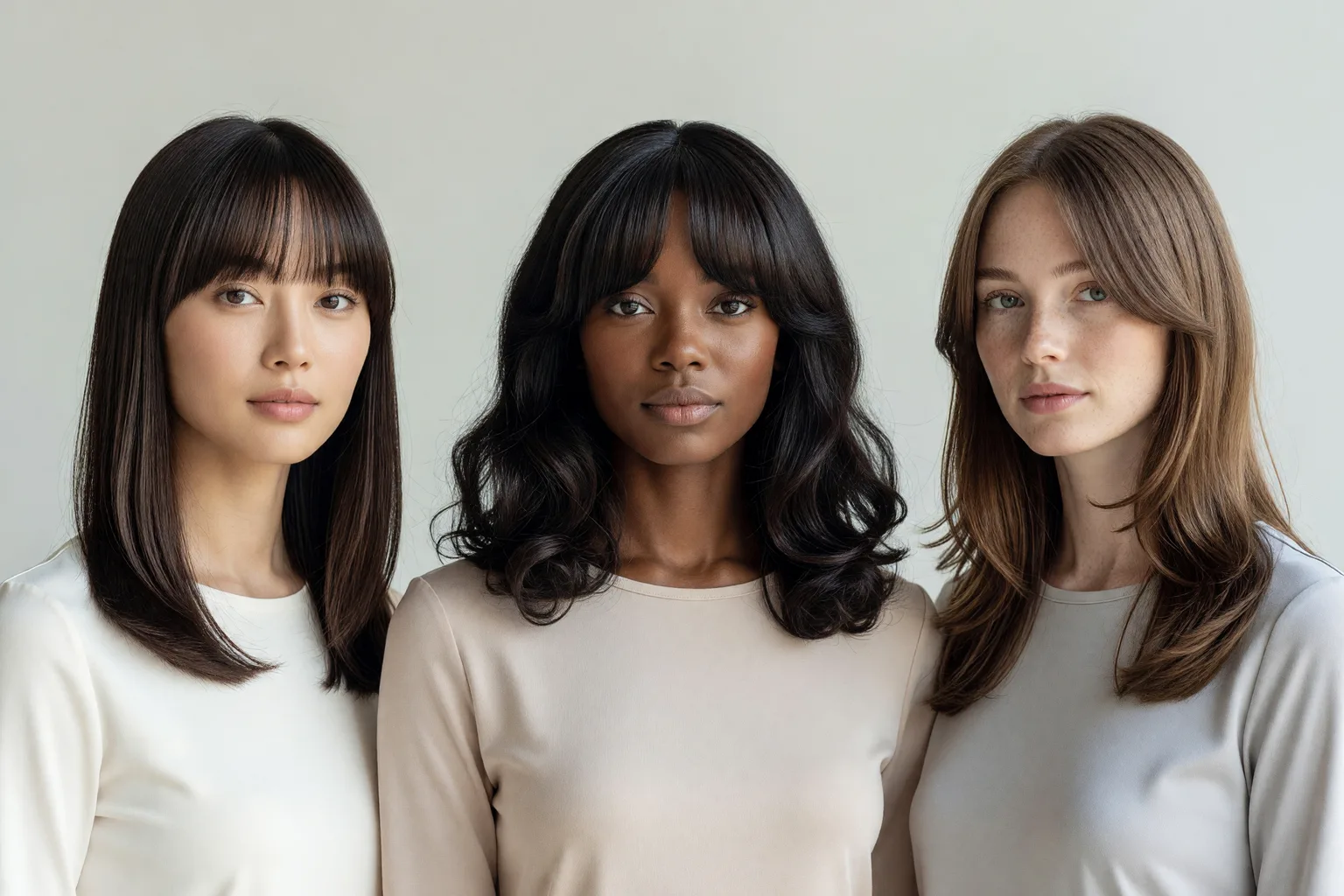
Generated editorial illustration, not a real client result. From left: a fuller fringe near the brows, a cheekbone-level fringe that opens at the sides, and longer pieces that read as face framing. Real curtain bangs vary within each range.
Brow-length curtain bangs
The shortest pieces graze the eyebrows. This is the most noticeable version and the closest to a classic fringe. It shows the curtain shape clearly but grows into your eyes quickly, so plan on more frequent fringe trims. It also needs the most styling, because short pieces show every cowlick and every night of sleep.
Cheekbone-length curtain bangs
The middle sits around the top of the cheekbones or the bridge of the nose. This is the length most people mean when they say curtain bangs. It is long enough to sweep aside with a brush or your fingers, and short enough to read as a fringe rather than layers. For a first try, this is usually the easiest place to start.
Long curtain bangs
The shortest pieces fall near the cheekbones or lower and the sides blend toward the chin. This is the lowest-commitment option: it tucks behind the ears, pins back easily and grows out with little awkwardness. The trade-off is a softer effect. In some photos it reads as layers rather than bangs.
A useful rule: you can always cut shorter at the next visit, but you cannot add length back. If you are torn between two lengths, start with the longer one and live with it for a couple of weeks.
Curtain bangs by face shape
Curtain bangs are one of the more adaptable fringes because the length and the opening at the center can be adjusted. Face shape is a starting point for that adjustment, not a rule about who is allowed to wear them. Your hair texture, cowlicks and routine matter at least as much.
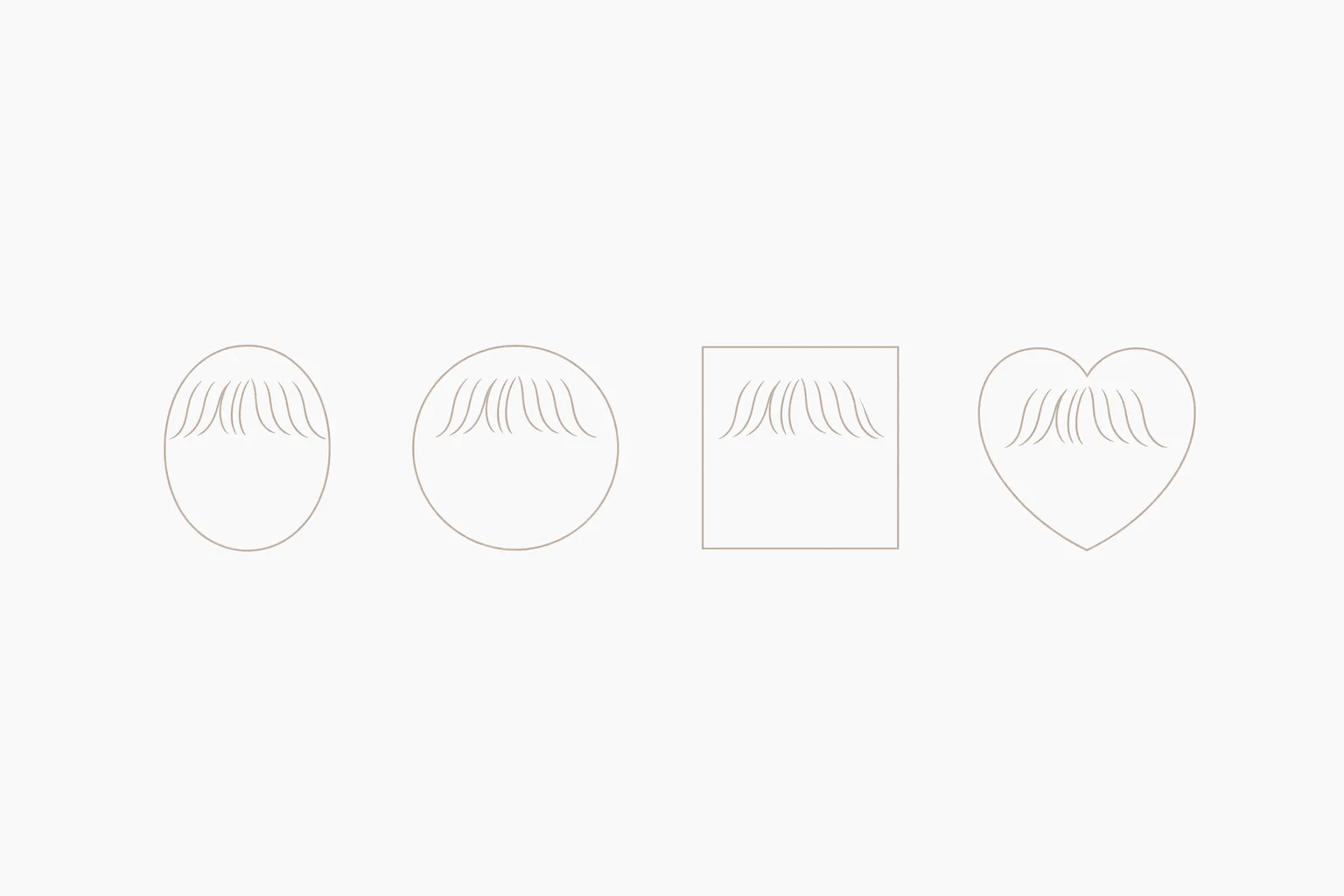
Generated editorial illustration, not a face-shape measurement. Simple outlines show that the same parted fringe can sit on different shapes; the adjustments below concern length and where the sides end.
Here is how stylists often think about the adjustment:
| Face shape | Common starting point | What to discuss |
|---|---|---|
| Oval | Almost any length works | Pick based on routine and texture rather than shape |
| Round | Longer bangs that end below the cheekbones | Ending the sides lower so the fringe does not add width at the widest point |
| Square | Soft, longer pieces with a lighter edge | Where the sides fall relative to the jaw, so they soften rather than echo it |
| Heart | Cheekbone-length bangs with sides that sweep toward the jaw | Balancing a wider forehead without making the fringe heavy |
| Oblong or long | Brow-to-cheekbone length with a little more fullness | Whether a slightly shorter, fuller fringe shortens the face visually |
| Diamond | Bangs that open around the cheekbones | Softening the cheekbone width without covering it completely |
For more on each shape, see our hairstyles by face shape guide and the dedicated round face and heart-shaped face posts.
Two practical notes. First, most faces are a mix of shapes, so do not choose a length from a table alone. Second, a fringe affects how your eyes, brows and glasses frames read. If you wear glasses daily, bring them to the appointment and ask the stylist to check where the bangs sit against the frames.
Curtain bangs by hair texture
This is where most curtain bang disappointment starts. A reference photo shows one hair type, one density and usually a fresh blowout. Your fringe will follow your own texture, so the cut needs to be planned around it.
Fine refers to the width of each strand, density is how many strands you have, and texture is how the hair bends. They combine differently on every head, so treat the sections below as starting points.
Fine hair
Fine strands can make curtain bangs look light and soft, which is part of the appeal. They can also separate into thin pieces or go flat and oily by midday because they sit against the forehead.
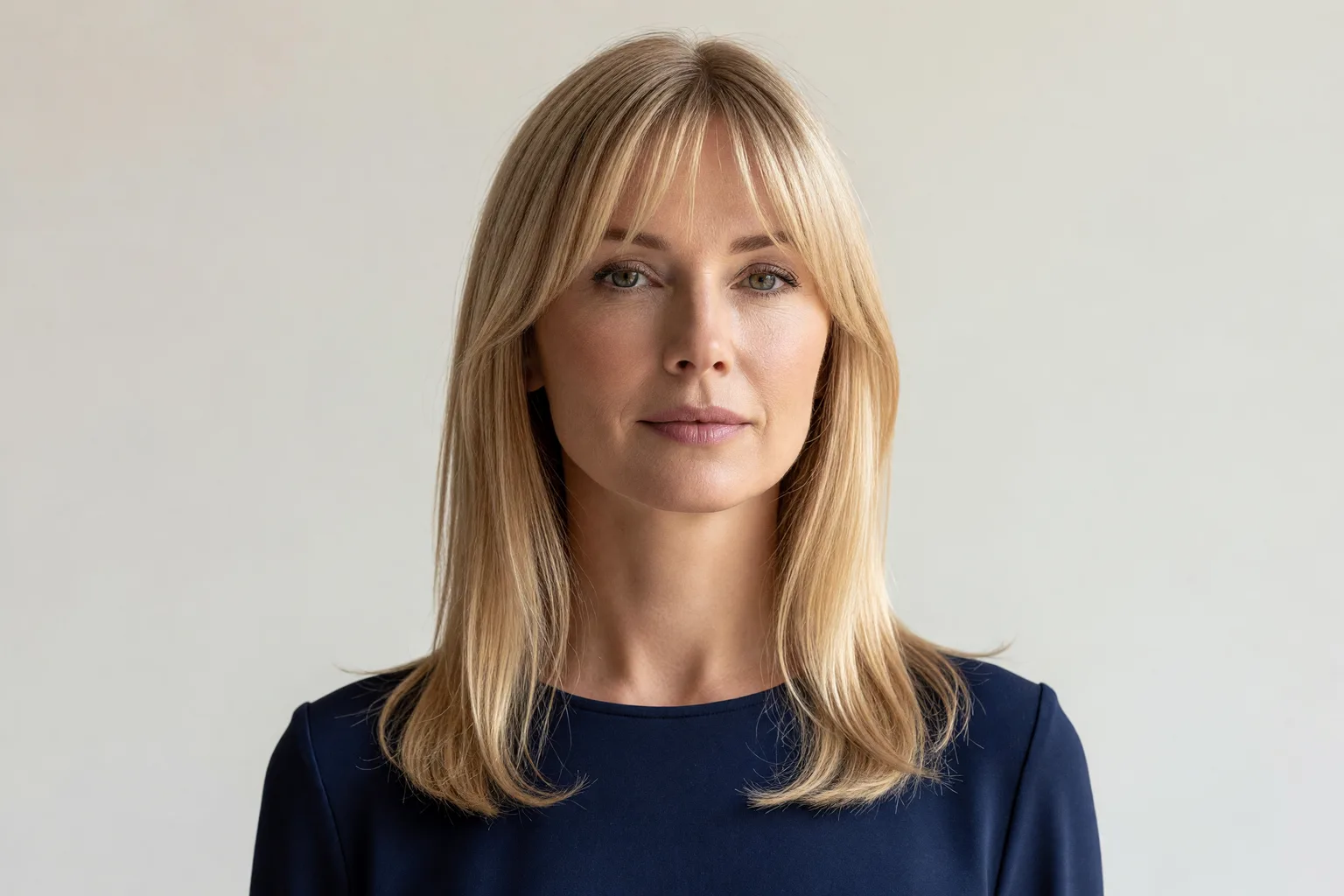
Generated editorial illustration, not Naee output. A lighter fringe on fine straight hair; the section is kept modest so the lengths behind it still look full.
What to ask for:
- A section that is not too deep. Taking a large triangle of hair forward for the fringe can leave the lengths behind it looking thinner.
- Minimal thinning or texturizing. Fine hair often needs the weight it has.
- A longer cheekbone length, which tends to hold a sweep better than very short pieces.
At home, dry shampoo or a light powder at the roots of the fringe can help it last between washes. Many people with fine hair simply rinse and re-dry the bangs in the morning. Our best hairstyles for fine hair guide covers cuts that pair well with a light fringe.
Thick hair
Thick, dense hair gives curtain bangs a full, defined shape that holds a sweep well. The common problem is bulk: a heavy fringe can sit straight down like a block instead of parting.
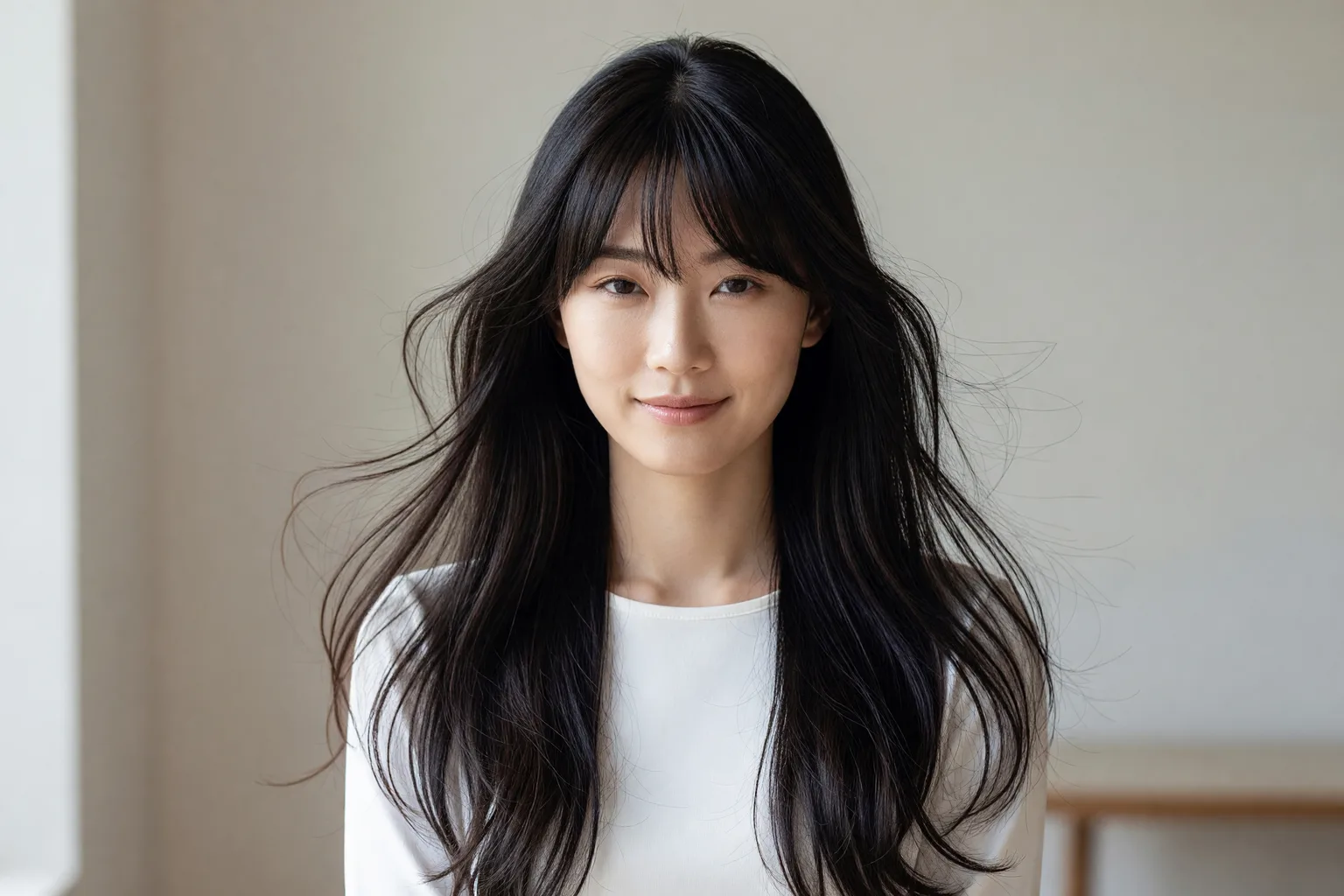
Generated editorial illustration, not a real haircut result. Dense hair holds a clear sweep; the outward curve here comes from a blow-dry, not from the cut alone.
Ask the stylist how they plan to remove weight from the fringe so it opens at the center, such as point cutting into the ends. Also ask for the section to be placed so the sides blend into the rest of the hair rather than forming a ledge. Expect to blow-dry thick bangs more often; they tend to hold whatever shape they dried in.
Wavy hair
Waves can make curtain bangs look effortless because the bend naturally pushes the pieces outward. The catch is spring: wavy pieces dry shorter than they look wet, and each side can bend differently.
Ask for the fringe to be cut dry or checked dry, and cut slightly longer than your target. Point out any cowlick at the front hairline, since waves exaggerate it. On non-styling days, scrunch the bangs with a little of the product you already use and let them dry in place, or twist each side away from the face while damp. Our haircuts for wavy hair guide explains the dry-cutting conversation in more depth.
Curly hair
Curly curtain bangs can look beautiful, and they are a different cut from straight curtain bangs. Curls shrink, sometimes a lot, so a fringe cut to the cheekbones when stretched can sit at the brows once dry.
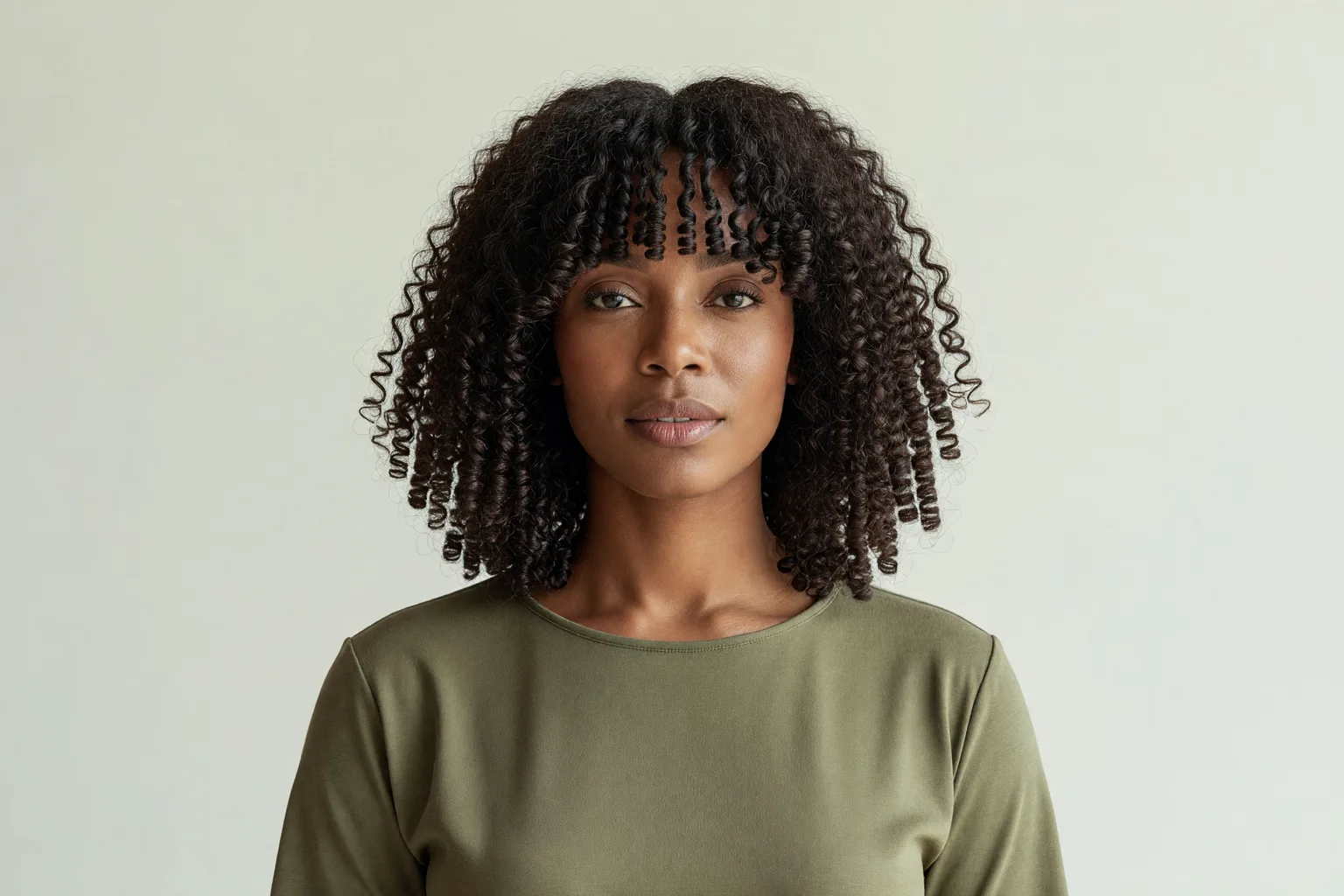
Generated editorial illustration, not an air-dry prediction. Curly bangs are cut longer to allow for shrinkage, and each curl sits as its own shape rather than forming a straight sweep.
What helps:
- See a stylist who regularly cuts curls, ideally dry and curl by curl.
- Start longer than you think. Shrinkage varies from curl to curl.
- Decide how you will wear the bangs most days: in their natural pattern, or stretched. The cut should be planned for that.
Curly bangs usually need less daily heat styling than straight ones, but they still need attention: a refresh with water and your usual curl product, and sometimes a clip while the rest of the hair dries.
How to ask your stylist for curtain bangs
"Curtain bangs, please" is not enough of a brief. Stylists interpret the term differently, and the reference photo may hide a lot of styling. Bring a short, specific request.
Cover these points:
- Shortest point. Touch the spot on your face where the middle pieces should fall when dry: brows, under the brows, cheekbones.
- Where the sides end. Show whether the longest fringe pieces should stop at the cheekbones, the mouth or the jaw.
- Width. Ask for a narrow section if you want a subtle frame, or a wider one for a fuller fringe. Width often matters more than length for how dramatic the result looks.
- Your part. Wear your hair with its usual part. A curtain fringe works best when the stylist knows whether you part in the center, slightly off center, or switch.
- Your texture and routine. Bring a photo of your hair on a normal day and say how long you spend on it. "I air-dry most days" changes the cut.
- Cowlicks. Push your front hairline back so the stylist can see how it grows.
A copyable request: "I would like curtain bangs with the shortest pieces at my cheekbones when dry, blending into my face-framing pieces at about chin level. I part in the center and usually air-dry, so please cut them a little long and check them dry before finishing."
Bring one or two reference photos rather than ten. Point out what you like about each: the length, the softness, the way the sides curve. Also say what you do not want, such as a heavy block over the forehead. If your references show a different hair type from yours, our guide to copying a hairstyle from a photo helps separate the cut from the styling.
Most salons offer quick fringe trims between full appointments. Ask about it before you leave, since curtain bangs tend to need attention sooner than the rest of the haircut.
How to style curtain bangs at home
The salon finish usually comes from a blow-dry. You do not need a long routine, but a few minutes on the fringe makes most of the difference. Always follow the instructions and heat settings for your own tools.
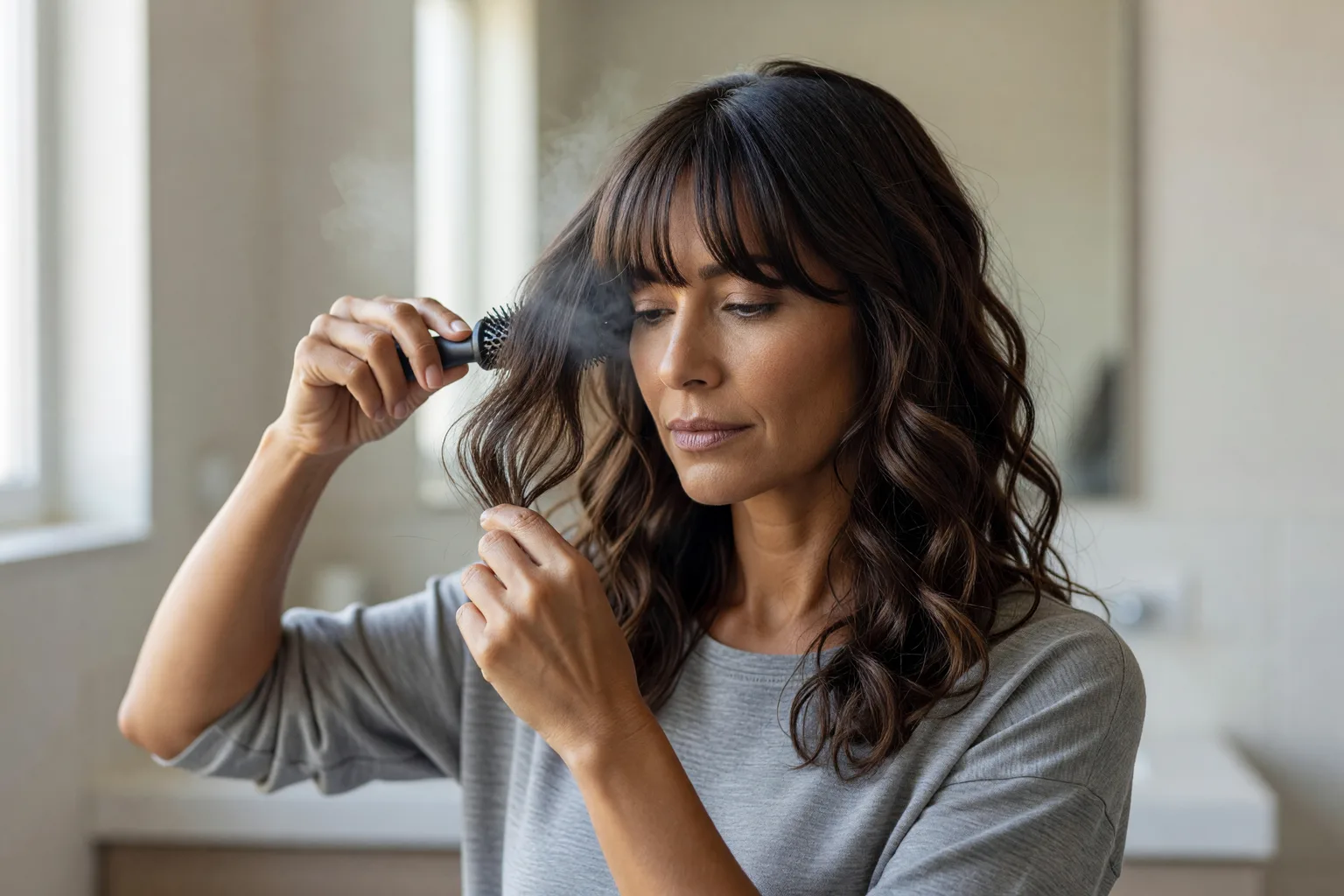
Generated editorial illustration, not a styling tutorial video. A small round brush lifts the fringe up and away from the face while the dryer points down the hair shaft.
The basic blow-dry
- Start with damp bangs. If the rest of your hair is dry, wet just the fringe. Bangs that dry on their own set into whatever shape they land in, including cowlicks.
- Dry the roots first. Use your fingers or a flat brush to push the fringe from side to side while drying. This cancels a strong cowlick and helps the part open naturally.
- Shape the sweep. Split the bangs at your part. Wrap each side over a small round brush, roll it away from your face and dry, pointing the airflow downward for a smoother finish.
- Let it cool. Hold the brush in place for a few seconds after drying, or use the cool setting. The shape holds better once the hair has cooled.
Quicker options
- Velcro roller: after drying, roll each side of the fringe away from the face on one medium roller and leave it while you get ready.
- Flat iron flick: take a small section, clamp near the root and turn the iron gently away from your face as you glide down.
- Air-dry twist: while damp, twist each side away from the face and secure with a small clip. Remove when dry. This suits wavy hair especially.
Keeping them fresh
Bangs pick up oil from the forehead and skin products faster than the rest of your hair. Washing just the fringe in the sink is common, and dry shampoo at the roots helps. Avoid touching them throughout the day, and keep heavy skincare away from the hairline when you can.
Day-two and off days
On days the fringe will not cooperate, curtain bangs are easy to hide. Tuck them behind your ears, pin each side back with a small clip, or sweep them into a half-up style. A center part and a low bun with the bangs falling loosely at the sides also works well, since that is close to how the fringe is meant to look anyway.
Growing out curtain bangs
Curtain bangs are often described as one of the easier fringes to grow out, because they are already longer at the sides and blend into layers. That is broadly true, but there is still an in-between stage when the middle pieces sit right in your eyes.
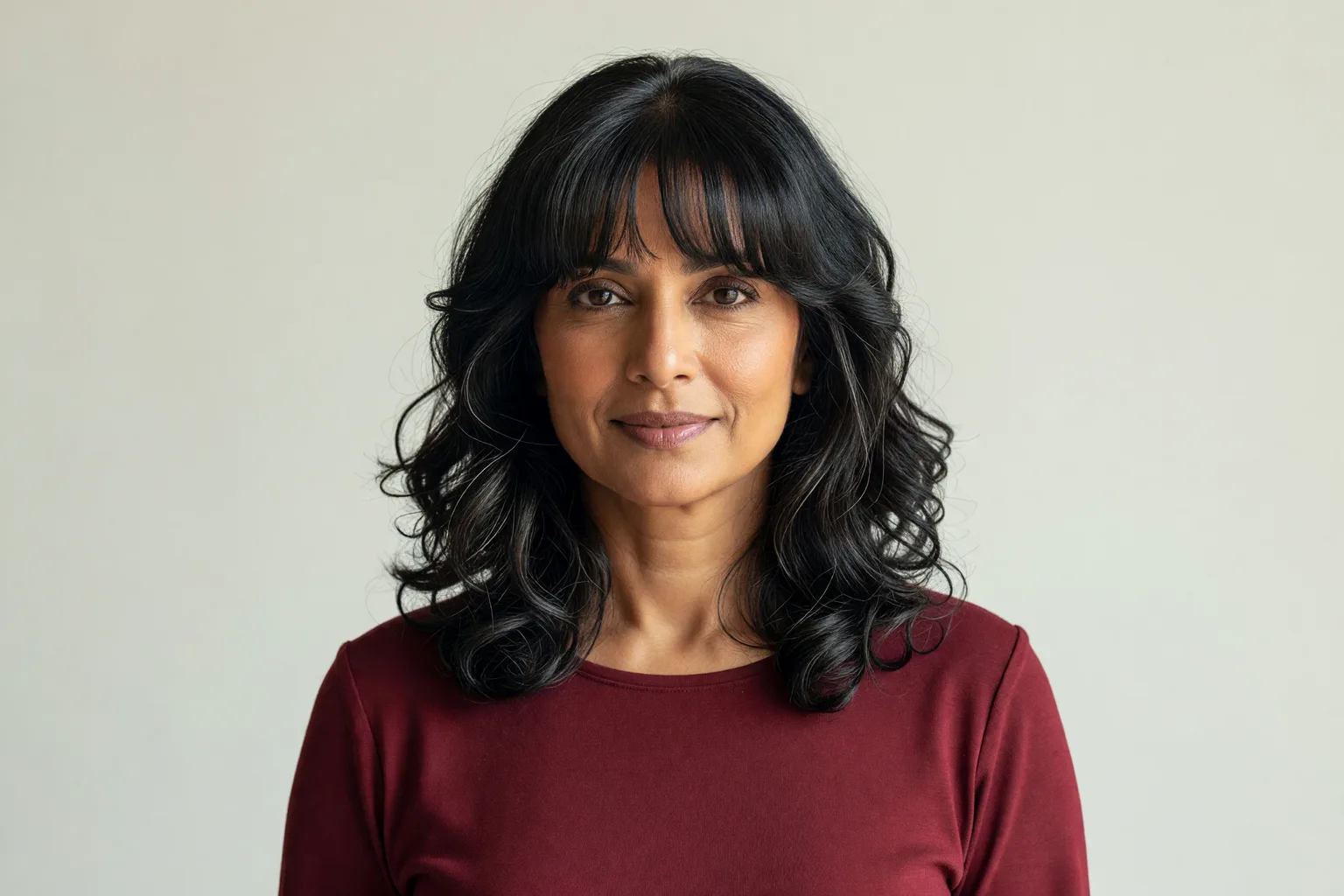
Generated editorial illustration, not a real grow-out timeline. Once the middle pieces pass the chin they behave like face-framing layers and can be tucked behind the ears.
How to make the grow-out easier:
- Keep trimming the sides, not the middle. Ask your stylist to blend the longest pieces into the layers while the center grows. This keeps the shape intentional.
- Change your part. A deep side part turns an in-between fringe into a side-swept piece.
- Use the sweep. Blow-drying the bangs outward, as above, keeps them off your eyes for longer.
- Lean on accessories. Clips, a soft headband, or a twist pinned at each temple cover the awkward weeks.
- Plan for layers. When the middle passes the cheekbones, ask for face-framing layers. Many people decide to keep them at that point.
If you know you get impatient with growing out a fringe, start with long curtain bangs. The grow-out will be shorter and you will learn how your hair behaves with a front section before you go shorter.
Preview the fringe before the appointment
The hardest part of curtain bangs is imagining how a fringe will look on your own face and with your own hair. A preview can help you narrow choices like length and width before you sit in the chair.
Publisher disclosure: This is the Naee blog, and we have a commercial interest in the app. We have not tested the illustrations in this article in Naee, and no preview can promise a salon result.
Naee is an iPhone app for trying hairstyles on your own photo. It offers facial analysis with hairstyle recommendations, hair color changes, copying a hairstyle from a reference photo, and an AI chat for questions about a cut. Generations are designed to follow your hair type, density and color, which matters for a fringe: the same curtain bangs read differently on fine blonde hair and on dense black curls.
A simple way to use it for curtain bangs:
- Take a clear, evenly lit front photo with your hair in its usual part. Avoid beauty filters.
- Try two lengths, for example cheekbone-length and longer face-framing bangs. Keep color and overall length the same so you are only comparing the fringe.
- If you have a reference photo you love, try copying it onto your own picture and look at whether the fringe still makes sense with your texture.
- Check each preview for changes to your face, hairline or density. Discard any that alter more than the fringe. Our face preservation guide explains what to look for.
- Bring your favorite preview and a normal-day photo of your hair to the salon, along with the brief above.
Download Naee for iPhone to compare curtain bang lengths on your own photo. The app is free to download and includes a trial with limited credits; continued generation requires a subscription or credit purchase. Check the current allowance in the app rather than assuming unlimited free previews.
The takeaway: Choose the shortest point deliberately, cut slightly longer than you think, plan the fringe around your real texture, and learn one quick styling method. Curtain bangs reward a clear brief and a few minutes in the morning.
FAQ
What is the difference between curtain bangs and regular bangs?
Regular, or blunt, bangs fall straight across the forehead in one line. Curtain bangs are parted near the center and sweep to each side, longer at the edges than in the middle. They show part of the forehead and blend into face-framing layers.
Do curtain bangs work on fine hair?
They can, especially at cheekbone length with a modest section. The main risks are the fringe separating or getting oily quickly, and a deep section making the rest of the hair look thinner. Ask for minimal thinning and plan on refreshing the fringe between washes.
Can you get curtain bangs with curly hair?
Yes, but they should be cut by someone experienced with curls, usually dry, and longer than the target length to allow for shrinkage. Decide whether you will wear them curly or stretched most days so the cut matches.
How often do curtain bangs need a trim?
It depends on how fast your hair grows and how short the fringe is. Shorter curtain bangs reach your eyes sooner than long ones. Many salons offer quick fringe trims between full appointments; ask your stylist what interval they suggest for your length.
How long does it take to grow out curtain bangs?
It depends on your starting length and growth rate. Because the sides are already longer, the fringe often blends into face-framing layers once the middle passes the cheekbones. Trimming the sides to blend and switching your part make the in-between stage easier.
Can I cut curtain bangs myself?
It is possible, but small mistakes are very visible at the front of the face and you cannot add length back. For the first cut, a stylist can place the section and check it against your cowlicks and texture. If you trim between appointments, take off very little at a time and check it dry.