
Hairstyles for Oblong Faces: Where to Add Width and Fringe
Choose hairstyles for oblong faces by deciding two things: whether you want any forehead coverage, and at what height you want the hair to be widest. A chin bob with side fullness, curtain bangs at shoulder length, collarbone waves, a rounded curly shape or a longer layered cut can each work. None is a rule. Your texture, density and the routine you will actually keep should decide which two make your shortlist.

Generated editorial illustration, not Naee output, a real client transformation or a promised haircut result.
The useful question is not "How do I make my face look shorter?" It is "Where do I want the eye to land, and how much styling am I willing to do to get there?" A long face is not a problem to correct. Some people love a sleek, long, center-parted look that leans into the length. Others prefer to break it up with a fringe or soft width at the cheeks. Both are valid choices.
Publisher disclosure: This is the Naee blog. We have a commercial interest in Naee. This guide combines common salon reasoning with editorial planning examples, not an independent app test or an assessment of your individual haircut suitability.
Contents
- What "oblong" usually means
- Five hairstyles for oblong faces to compare
- Width at the sides and height on top do different jobs
- Adapt to texture and density
- A short note for men
- Shortlist two directions and write your salon brief
- Preview your shortlist with Naee
- FAQ
What "oblong" usually means
"Oblong" or "long" usually describes a face that is noticeably longer than it is wide, with the forehead, cheekbones and jaw at fairly similar widths. The sides can look relatively straight rather than curving in strongly at the jaw. It is an approximate visual label, not a measurement you need to pass. Camera distance, lens angle, a high hairline or a heavy fringe can all change how long a face looks in a selfie.
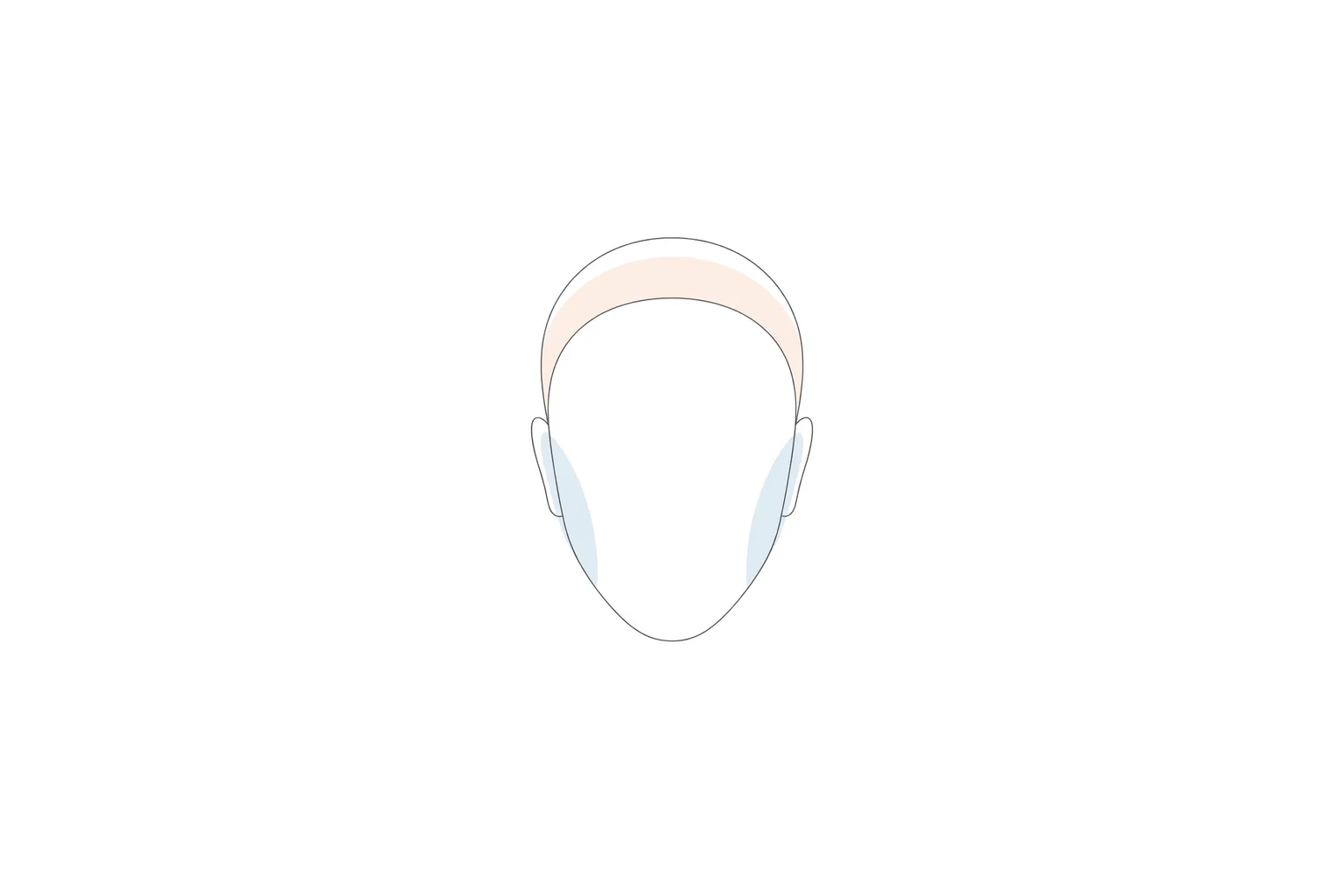
Generated editorial diagram. The shaded areas are styling zones, not facial measurements or an app analysis.
Keep it distinct from nearby labels. An oval face is also longer than wide, but the outline usually curves more gently toward the chin. A square face shares the similar widths at forehead and jaw but is closer to equal in length and width. A diamond face is widest at the cheekbones, and a heart-shaped face is widest at the forehead. If you sit between two labels, borrow ideas from both. Our hairstyles-by-face-shape guide explains the wider vocabulary.
The diagram marks the two places most oblong-face advice focuses on:
- Forehead zone: whether you show the full hairline, soften part of it, or cover it with a fringe.
- Side zone: whether you want hair to sit out from the face between the cheekbones and jaw, or fall close and straight.
A third question sits behind both:
- Routine: how many minutes you will spend drying, and whether short front pieces need to stay out of your eyes at work or the gym.
Five hairstyles for oblong faces to compare
The common salon logic for longer faces is simple: hair that is widest at the sides tends to read as horizontal, while extra height on top and very long, flat lengths tend to read as vertical. That is a tendency, not a law. Treat each option below as a starting point, and separate the cut itself from the styling used in any reference photo.
A chin bob with side fullness

Generated editorial illustration of a bob direction, not a real salon result or Naee preview.
A bob that ends near the chin puts a strong horizontal line across the lower face. When the sides have a little roundness, the widest part of the hair sits beside the cheeks rather than on top. That is why chin and jaw-length bobs come up so often for long faces.
Ask your stylist where the dry ends will land. Straight hair can spring up less than wavy hair, but a bob cut at the chin when wet may finish higher than you expect. Also ask how the side fullness is created. On dense hair, the weight itself may hold a rounded shape. On fine hair, the fullness may depend on a round brush every morning. If you are working with fine strands, our bob haircuts for fine hair guide explains why a fuller, blunter perimeter can matter more than layers. The trade-off: a chin bob usually gives up most of your tie-back length.
Curtain bangs at shoulder length
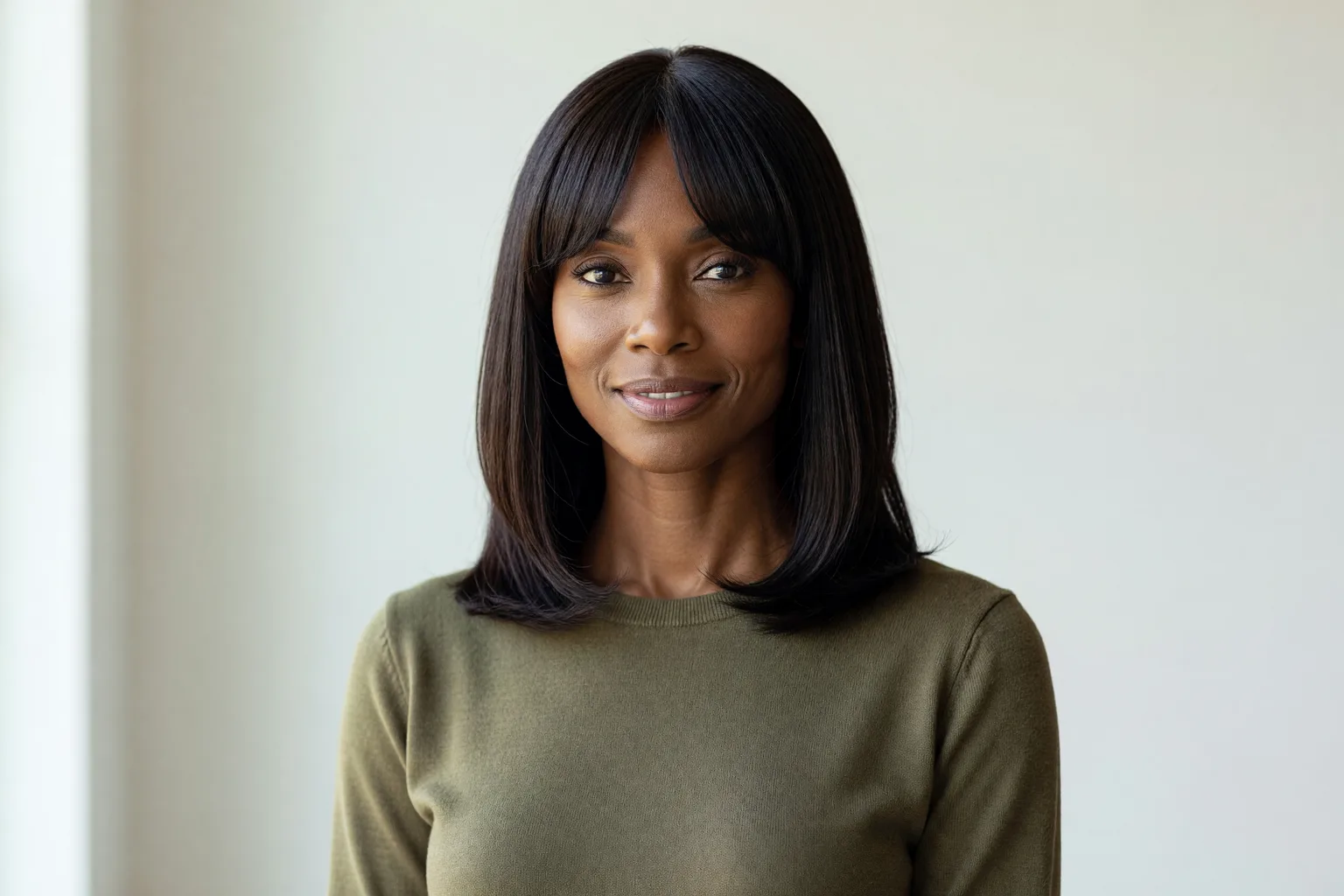
Generated editorial illustration of optional forehead coverage, not Naee output or a guaranteed fringe shape.
A fringe changes the top border of the face. Curtain bangs cover part of the forehead while leaving a gap in the middle, then sweep outward toward the cheekbones. For a long face, that outward sweep does two things at once: it shortens the visible forehead a little and puts movement at the sides.
Curtain bangs are often a gentler first step than a full, blunt fringe. They also grow out more easily into face-framing pieces. They are not maintenance-free. Ask how they will behave at your usual part and any cowlick, and whether they need a blow-dryer to open in the center. If you are still deciding whether you want a fringe at all, our should I get bangs guide walks through that decision on its own.
Collarbone waves with mid-length movement
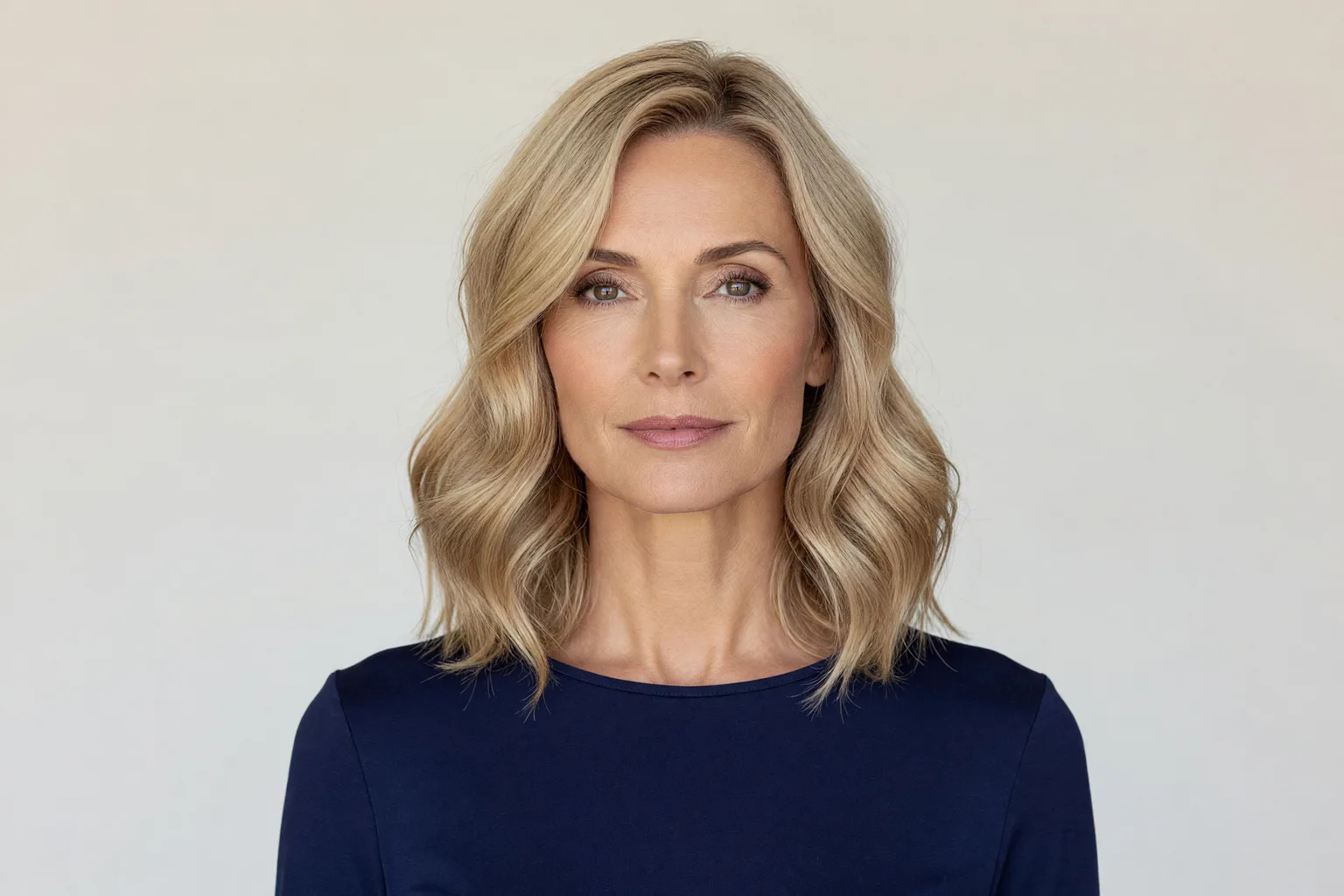
Generated editorial illustration of wave placement, not a prediction of anyone's natural drying pattern.
If you do not want short hair, a collarbone cut is a useful middle ground. It keeps enough length to tie back for most people, while staying short enough that waves can sit beside the cheeks and jaw rather than far below them. The key request is where the movement starts. "Waves from about cheekbone level, with the crown kept fairly flat" describes the shape far better than "more volume."
Check where your natural bend actually begins. If your waves only appear lower down the length, a shorter cut may remove them, and the illustrated shape would need a curling tool. Our haircuts for wavy hair guide helps separate natural pattern from a styled reference. If your hair is fine and you want the ends to stay full, discuss keeping the perimeter solid before adding lots of layers.
A rounded curly shape
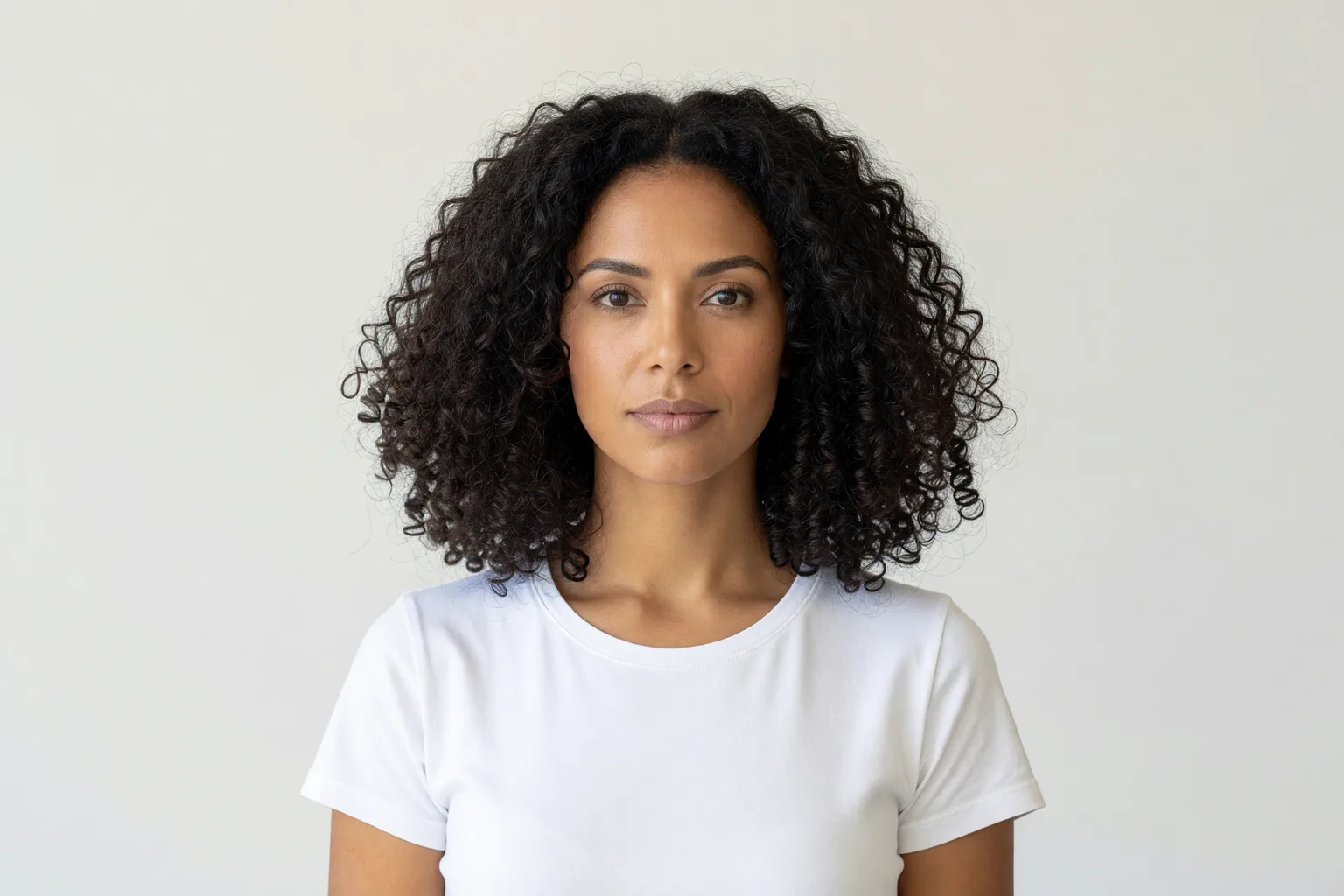
Generated editorial illustration of a curly direction, not evidence of achievable density or an exact dry length.
Curls and coils naturally build width, which can suit a long face well. The point to discuss is where that width sits. A cut that stacks curls high on the crown adds height. A cut shaped so the fullest part sits around the cheeks and jaw keeps the silhouette more horizontal. Neither is wrong; they are different looks.
Talk about the dry shape, not the stretched length. Shrinkage can make a curl that reaches the collarbone when pulled straight sit at the jaw once released. Ask your stylist to show where the outer edge of the shape will be when dry, and bring photos of your hair on an ordinary day rather than only a fresh wash. Our curly bob haircuts guide covers shorter curly shapes in more detail.
Long layers with face framing
Long hair is not off the table. The risk with very long, one-length hair on an oblong face is that it falls straight and close, which extends the vertical line. The usual fix is not cutting it all off but adding face-framing pieces that start somewhere between the cheekbone and chin, so there is a shorter, wider layer near the face while the length stays.
Be specific about the shortest front piece. "Starts at my cheekbone when dry" is clearer than "some layers around the face." Decide whether those pieces need to reach a ponytail or only tuck behind your ear. Our face-framing layers guide explains how to brief front lengths separately from the rest of the cut.
Width at the sides and height on top do different jobs
These are two independent levers. Side fullness changes how wide the hair outline reads at cheek level; height on top changes how tall it reads. You can use either, combine them, or choose neither. There is no requirement to make your face appear oval.
| Your preference | Direction to compare | Explain this to the stylist | Important limitation |
|---|---|---|---|
| Break up a long forehead without going short | Curtain bangs at shoulder or collarbone length | Open in the center, sweep toward the cheekbones | Cowlicks and front density affect how they fall |
| Make the outline read wider at the cheeks | Chin bob with soft side fullness | Place the roundness beside the cheeks, not at the crown | Fine hair may need daily brushing to hold the shape |
| Keep length but avoid a flat vertical curtain | Long layers with face framing | Shortest front piece between cheekbone and chin when dry | Too many layers can thin out the ends |
| Lean into natural texture | Rounded curly or wavy shape | Fullest part at cheeks and jaw, crown kept lower | Shrinkage changes the dry length |
| Enjoy the length as it is | Sleek long hair or a high ponytail | Clean perimeter, no added side volume | Reads more vertical; that can be the point |
Be careful with reference photos. Much of the side width in an editorial image comes from a blowout, rollers or extensions. Save the placement idea, then ask what your own hair can produce in the time you have.
Adapt to texture and density
Density and texture matter more than the face-shape label. A chin bob on thick, straight hair can hold its width with almost no styling. The same cut on fine, low-density hair may lie flat against the face unless it is blow-dried. Neither outcome tells you anything about your face; it tells you about your hair.
Fine or thinning hair. Side fullness is harder to hold, so a blunter perimeter and a modest fringe often do more than heavy layering. Ask whether added layers would make the ends look sparse. Our best hairstyles for fine hair guide and haircuts for thinning hair guide go deeper.
Thick hair. Width comes easily, sometimes too easily. Discuss where you want weight removed so the fullness sits at the cheeks instead of puffing out at the ends.
Wavy hair. Find where your natural bend begins and set the length so that bend lands around the cheeks and jaw.
Curly and coily hair. Brief the dry silhouette, including shrinkage, and say clearly whether you want height or width to dominate.
Finally, count the full routine. A fringe that needs a reset each morning, sides that need a round brush, and curls that need refreshing between washes are three different kinds of work. "Low maintenance" only means something when you name the work you are willing to do. If you want a cut that holds its shape with little effort, our low-maintenance medium-length haircuts guide is a useful companion.
A short note for men
The same two levers apply to shorter men's cuts. Very high volume on top, such as a tall quiff or pompadour paired with skin-faded sides, adds height and removes width, which stretches the vertical line. Many men with longer faces prefer the opposite balance.
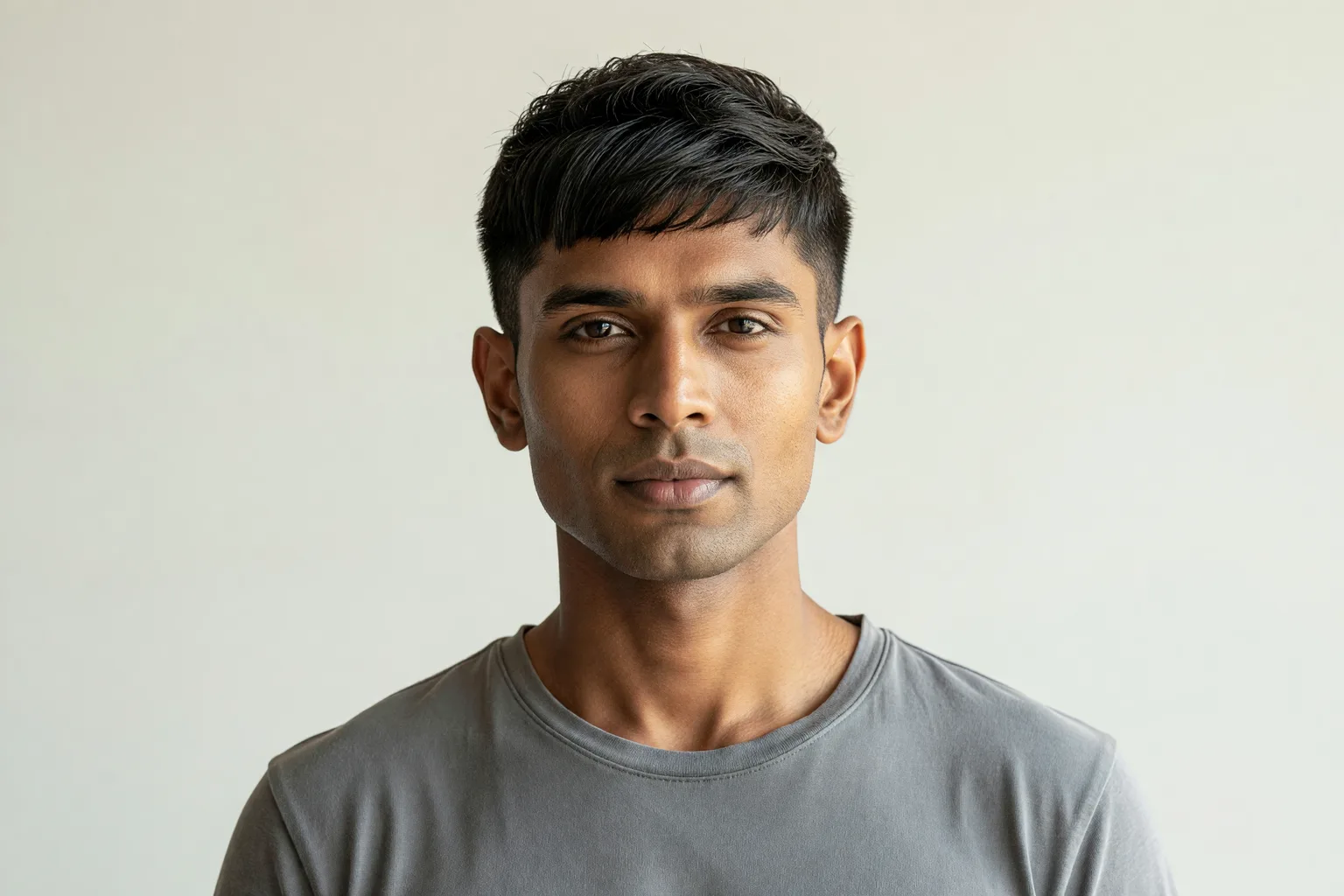
Generated editorial illustration of a men's crop direction, not Naee output or a real barbershop result.
Directions to compare:
- Textured crop: a short forward fringe softens the forehead and keeps the top low.
- Side part with medium sides: leaving a bit more length on the sides than a skin fade keeps the head shape from reading narrow.
- Short, loose waves or curls: natural texture worn at an even length adds width without height.
Ask your barber for "a fade that starts lower" or "scissor-cut sides" if you want to keep some side fullness. A beard that is fuller at the sides than at the chin works on the same principle, but it is a personal choice, not a requirement.
Shortlist two directions and write your salon brief
Pick two options that answer the same question, rather than five unrelated makeovers. For example, compare the same shoulder length with and without curtain bangs. Keeping length and color the same makes the forehead decision easier to see.
Hypothetical example, not a client story: Lena has straight, medium-density hair past her shoulders and a forehead she has always felt is the first thing people notice. She dries her hair in about ten minutes and does not want to use a round brush daily. She compares a chin bob with collarbone length plus curtain bangs, and rules out the bob because her hair lies flat without styling. That is a routine-based choice, not proof that one cut is more flattering.
Her salon brief might read:
I want to soften my forehead without a heavy fringe. Please cut curtain bangs that open in the center and sweep toward my cheekbones, and keep the rest at collarbone length when dry so I can still tie it back. I'd like the most movement around my cheeks and jaw, not on top. I spend about ten minutes drying my hair and won't use a round brush every day. Can you show me how the bangs will fall at my usual part before you cut?
Use the same clear photo for every comparison and change one feature at a time. Then check that the forehead, cheekbones and jaw in each preview still match your real face, using our face-preservation checklist. A preview that quietly shortens your face would mislead the exact decision this guide is about.
Preview your shortlist with Naee
Naee is an iPhone app for trying hairstyles on your own photo before you book. It analyzes your face, suggests hairstyle directions, and lets you preview cuts, fringes and colors. You can also copy a hairstyle from a reference photo or ask the AI chat follow-up questions, such as how curtain bangs might look at collarbone length versus a chin bob.
Naee aims to keep each preview true to your own hair type, density and color rather than swapping in an idealized head of hair. That makes it more useful for the side-fullness question above, because a fine-haired preview should not suddenly show thick, blown-out width. Treat previews as planning illustrations, not guarantees of a salon result; your stylist still decides what your hair can do.
Naee is a free download with limited trial credits. Ongoing use requires a subscription or a credit purchase, so check the current options in the app rather than assuming unlimited free previews. If you want to compare your two shortlisted directions side by side and bring the images to your appointment, download Naee on the App Store.
FAQ
What is the best haircut for an oblong face?
There is no single best cut. Chin-length bobs, curtain bangs, collarbone waves and rounded curly shapes are common starting points because they add width at the sides or soften the forehead. Choose based on your texture, density and how much daily styling you want.
Should people with long faces avoid long hair?
No. Long hair can work well, especially with face-framing pieces that start between the cheekbone and chin. Very long, flat, one-length hair reads more vertical, which you may or may not want.
Are bangs necessary for an oblong face?
No. Bangs are one way to change how much forehead shows. Curtain bangs are a softer option to try first. An open hairline with side fullness is an equally intentional choice.
Does a middle part make a long face look longer?
A sleek middle part with flat sides tends to emphasize vertical lines. A middle part with curtain bangs or waves at the cheeks does not have the same effect. Try both parts on your current length before you cut.
Can an AI preview tell me which cut suits me best?
It can help you compare outlines on your own photo, but it cannot decide your preference or confirm what your hair will do in a salon. Check that your face stays recognizable in each preview, then take your shortlist and brief to a stylist.